Nouvelle version de cet émulateur de Playstation 2, celle-ci n’est compatible qu’à partir de Windows 10.


Un rapport des améliorations avec illustrations, est visible ici.
 
Le détails ci-dessous:
 

- [ci skip] PAD: Update to latest controller database. (PCSX2 Bot)
- GS/DX11: DS as RT/UAV binding fixes. (lightningterror)
- Achievements: Fix deadlock when enabling achievements in FullscreenUI (SternXD)
- GHActions:MacOS: Add MoltenVK patch for older GPUs (TellowKrinkle)
- GS:VK: Use swizzle value compatible with MoltenVK on older GPUs (TellowKrinkle)


Un tutorial est disponible ici et un pack de shaders (probablement incompatible avec les versions 2.0 et supérieur). Pack de textures ici et , et Patchs disponibles ici (écran large, correction de bugs, fréquence d’images, etc).
 
Et si vous voulez davantage d’effets graphiques, un site expliquant comment customiser l’émulateur avec Reshade et autre shaders, est disponible ici.
 
NB: Notez que la version 64 bits est à présent la seule version stable possible. Il est également recommandé de tout reconfigurer car les changements sont trop nombreux entre la précédente version et celle-ci.
 
Site de développement du projet.

Télécharger PCSX2 (32 bits | XP/Vista) v1.4.0 / v1.6.0 (14.8 Mo)

Télécharger PCSX2 (32 bits | 7/8/8.1) v1.6.0 (6.2 Mo)

Télécharger PCSX2 (64 bits) v2.8.2 (24.5 Mo)

Site Officiel

En savoir plus…

Créé par Avery Lee (l’auteur de VirtualDub), il s’agit d’un émulateur d’Atari 8 bits (800/800XL/130XE) disponible en 32 et 64 bits. Il dispose de beaucoup d’options ainsi que d’une bonne compatibilité. Il prend en charge les jeux protégés conformément à l’émulation. Il s’agit d’une version de développement au stade de béta.


Topic des versions Beta.

Télécharger Altirra (Beta) v4.50 Test 20 (7.7 Mo)

Site Officiel

En savoir plus…

PS5PCEM est un émulateur PlayStation 5 expérimental et un projet de recherche sur l’interopérabilité, développé en Zig. Il permet notamment l’exécution native de code x86-64, le chargement d’exécutables PS5 déchiffrés, l’exécution de commandes graphiques AGC, la traduction de shaders RDNA2 vers SPIR-V et le rendu via Vulkan.


Fonctionnalités
– Exécution native du code x86-64 invité sous Windows.
– Chargement des exécutables ELF/SELF, relocation, liaison des modules et gestion du TLS.
– HLE de plusieurs fonctions du firmware PS5.
– Exécution des flux de commandes AGC pour le GPU.
– Traduction progressive des shaders RDNA2 vers SPIR-V.
– Rendu Vulkan avec gestion des render targets, du depth/stencil et du MSAA.
– Gestion de la mémoire GPU et des textures avec notamment le detiling.
– Prise en charge du VideoOut Vulkan.
– Audio hôte et lecture H.264/AAC via FFmpeg.
– Support des contrôleurs DualSense et DualShock via HID.
– Support XInput et clavier.
– Gestion des sauvegardes par titre.
– Lanceur Windows natif avec jaquettes locales, profils de contrôleurs et lancement direct des jeux.
– Jusqu’à huit titres récents peuvent être conservés dans le lanceur.
– Plusieurs jeux atteignent désormais le gameplay et certains sont déjà jouables, mais la compatibilité, les performances, les graphismes, l’audio et la stabilité restent variables selon les titres et le matériel.


Jeux ayant atteint différents niveaux de fonctionnement
– Terminator 2D: No Fate
– Jets ‘n’ Guns 2
– Asterix & Obelix: Slap Them All!
– The Precinct
– Cat Quest III
– Jurassic Park Classic Games Collection
 

Les captures et résultats présentés par le projet sont des résultats de développement et ne constituent pas nécessairement des indications de compatibilité générale.
 

Configuration
– Windows 10 version 2004 ou ultérieure.
– Processeur x86-64.
– GPU compatible Vulkan 1.2.
 

Développement
PS5PCEM est développé en Zig et est distribué sous licence GNU GPL v3 ou ultérieure.
 

Le projet ne fournit ni jeux, ni firmware PS5, ni clés, ni bibliothèques système de la console.
 

État du projet
PS5PCEM est toujours en développement actif. L’émulation PS5 reste incomplète et la compatibilité varie fortement selon les jeux. Le projet dispose néanmoins déjà d’une implémentation fonctionnelle de plusieurs éléments importants de l’architecture PS5, notamment l’exécution x86-64, le système graphique RDNA2/AGC, la traduction des shaders et le rendu Vulkan.
 

Les changements:
 
Playable and completable games
– Terminator 2D: No Fate — Fully playable and completable; completed without reported problems
– Asterix & Obelix: Slap Them All! — Fully playable and completable
– Cat Quest III — Fully playable and completable
– Jurassic Park Classic Games Collection — Fully playable and completable
 
Launcher: eight interface languages
– Add Simplified Chinese, Spanish, Arabic and Portuguese alongside English, Russian, German and French. Navigation, game-library prompts, input settings, saves, preferences and status/error messages are translated.
– Expand language selection to two rows, with matching click areas and room for the sound, FPS and project-information panels.
– Give Arabic text right-to-left paragraph direction and appropriate alignment, preserving centered buttons and the original direction of paths and key names.
– Preserve existing saved language IDs and restore all eight choices after a restart. Update Windows executable and installer version metadata to this release.
 
Ghost of Yōtei: beyond the intro
– Restore continuous intro playback at approximately the stream’s native 30 FPS in ReleaseFast on the current RTX 3070 Ti host. Sampled movie frames take about 30–32 ms, without the former freeze after a few pictures.
– Correct Videodec2 picture fields, 256-byte NV12 row alignment, picture-specific acknowledgements and end-of-stream draining. Separate decoder instances and derive cadence from the stream so clips neither race to the end nor stall on the guest’s former 100 ms polling timeout.
– Advance through streamed menu-resource loading and into the animated loading indicator, Digital Deluxe Bonus, Gift of the Northern Star, Pre-order Bonus, and brightness calibration. The reference captures show readable text, confirmation glyphs, and the calibration wolf image, instruction and slider.
– Render parts of the interface and 3D background; the maintainer observed trees in the scene and heard menu music. Audio-library support now includes more of the interfaces bound by the title, including AudioOut2 speaker/port state and queued-grain accounting.
– Unblock the menu resource catalog and asynchronous scene work, preserve compute queue ownership and completion labels, and retire validated SDK 1.1 command ranges without repeatedly replaying stranded work.
– Verification boundary: the complete bonus/brightness sequence was verified on reference build 796a484. The latest renderer was checked through the intro into scene loading, but that full sequence has not been repeated on this release candidate. A complete title menu, its full animated background and gameplay are still unverified. Scene preparation and UI remain very slow: reference runs took minutes to prepare resources and seconds per UI frame. See the build-specific investigation.
 
Cat Quest III and Jurassic Park rendering
– Fix Cat Quest III’s upside-down world and intro composition while retaining the UI’s orientation. Procedural fullscreen passes preserve their UV direction.
– Preserve fragment coverage, alpha-to-coverage state and stencil-only passes. This removes the observed menu-text corruption and keeps language-list text visible and clipped inside its panel instead of covering it with a white fill.
– Implement the original AGC interpolant-mapping interface used by Cat Quest III. Adventure-selection artwork and labels, mountains and other scenery now use the correct vertex-to-fragment exports.
– Honor registered RGBA/BGRA scanout formats. The captured island now has blue sea and sky and the expected character/scenery colors instead of swapped red and blue channels.
– Restore Jurassic Park startup rendering, including its title logo, confirmation prompt, collection cover art and animated preview. Respect explicit color disable and DX clipping while retaining reset-depth extent recovery for Ghost of Yōtei’s active HTILE-backed surfaces.
 
3D shaders, materials and GPU correctness
– Recover pointer-backed and indirect material resources through scalar/vector register moves, VCC offsets, restored execution masks, branches and bounded loops. Support large global texture tables and mixed sampled-image dimensions at runtime, with typed bounds and validation of malformed descriptors.
– Execute bounded absolute/FLAT memory reads used by scene shaders and report the first unmapped active address. Resource recovery now follows instructions actually visited, avoiding invented bindings from inactive shader branches.
– Correct wave32/wave64 masks, both words of vector conditions, SAVEEXEC operand order and SCC, unsigned carry, lane identity and cross-subgroup synchronization. Preserve DPP row/permutation behavior and whole-quad execution.
– Add or correct explicit-LOD image gathers and depth comparisons, array gradients, RDNA2 sampling operands, fragment storage-image writes, BC4 and RG16 SNORM sampling, visible array-layer uploads and mixed integer exports.
– Preserve flat attribute channels and scalar spills. Support D16 loads into previously undefined vector registers, high-halfword stores, scene mask comparisons and bounded GDS word reads/writes.
– Apply uniform HTILE clears to resident depth images, preserve stencil during depth-only clears, support matching D32 depth bias, and improve depth/stencil barriers and compute-buffer synchronization.
– Retain descriptors, prepared render targets and image pins until queued draws finish using them, preventing cache eviction or command flushes from invalidating live GPU work.
 
Performance and runtime stability
– Cache translated graphics SPIR-V with explicit memory/entry limits and cheaper field serialization. Reuse compatible smaller prefixes of uploaded buffers while retaining exact descriptor bounds.
– Cat Quest III opening-island samples improve from roughly 148 ms (~6.8 FPS) to a 124 ms median (~8 FPS) on the test host. Shader-translation work drops from about 40 to 7 ms and buffer uploads from about 124–127 to 65–75 MiB per sampled frame. The later capture has a local co-op HUD, so this is an observed comparison of the same area, not a controlled benchmark of identical frames.
– Reuse prepared graphics/compute resources and driver compute-pipeline caches; index resident sampled images by guest address and shader control flow for resource recovery. Share immutable FLAT snapshot headers and retain more small storage images within the cache budget.
– Prefer host-cached readback memory, cache reads of resident compute buffers, accelerate Windows x64 memory fills, and reuse swizzle offsets for volume/MSAA copies. Reduce scene index checks and unnecessary depth readbacks.
– Fix Windows placeholder handling when a small guest mapping occupies the tail of a coalesced reservation, preventing the observed Cat Quest III startup HostCommitFailed. Bound permission checks to overlapping mappings and prevent thread diagnostics from suspending their own calling thread.
 
Validation and remaining limits
– Build the launcher and runner in ReleaseFast. Exercise all eight launcher languages across settings, library, controls and saves, including restart persistence and visual checks of the four new translations.
– Focused checks during development cover guest-memory mapping, interpolant mapping, shader caching and Vulkan scanout/orientation, fragment coverage, stencil/UI and HTILE behavior. Shader changes include targeted SDK GPU probes; this does not establish correctness for every game or shader.
– Jurassic Park’s collection frontend still has a known AvPlayer handle-pool limit when repeatedly cycling preview videos; later previews can become static. The maintainer’s playable/completable report concerns the games themselves.
– Ghost of Yōtei’s full menu and gameplay remain work in progress. Other titles can still have missing graphics, stalls or crashes; consult the status document for each title’s observed milestone.
 
Downloads and requirements
– Windows x64 portable ZIP, per-user installer, and SHA256SUMS.txt are attached to this release. Keep ps5pcem.exe and game-run.exe together.
– Windows 10 2004 or newer, x86-64, with a Vulkan 1.2-capable graphics driver.
– Games, firmware, keys and console system software are not included.
– These prototype binaries are not Authenticode-signed, so Windows may show an Unknown Publisher or Microsoft Defender SmartScreen warning.


Télécharger PS5PCEM v0.3.0 alpha 4 (16.1 Mo)

Site Officiel

En savoir plus…

OpenROM est une suite logicielle universelle, gratuite et open-source dédiée à la conversion de ROMs rétro. Conçue pour remplacer les outils propriétaires et fragmentés, elle fonctionne entièrement en local (100 % hors ligne) sans aucune collecte de données.


Interface et Ergonomie
– Esthétique Gaming : Propose une interface sombre moderne développée sous Flutter, inspirée des menus PS5 et Xbox, intégrant un tableau de bord, des cartes pour chaque ROM et des badges de plateforme.
– Personnalisable : Propose plusieurs thèmes intégrés (Cyberpunk, Terminal, Minimal, Gaming) et la possibilité d’en créer via des fichiers JSON.
– Prise en main fluide : Prise en charge native du glisser-déposer pour les fichiers et dossiers isolés ou groupés (traitement par lot).
 
Performances et Fonctionnalités Techniques
– Matrice de conversion complète : Prend en charge plus de 20 parcours de conversion parmi les formats majeurs (ISO, BIN, CUE, GDI, IMG, ECM, CHD, CSO, ZSO, XISO, RVZ, WIA, WBFS, GCZ).
– Détection intelligente : Identifie avec précision les consoles (PS1, PS2, PSP, Xbox, GameCube, Wii, Dreamcast) grâce aux signatures numériques (magic bytes) et analyse les en-têtes CHD (v4/v5) pour différencier CD et DVD.
– Génération et Vérification : Crée automatiquement les fichiers CUE manquants pour les fichiers BIN et vérifie l’intégrité des fichiers CHD générés via chdman.
 
Fonctionnalités Avancées
– Terminal et Automatisation : Intègre un journal de bord en temps réel pendant la conversion et propose un outil en ligne de commande complet (openrom-core) pour l’automatisation et les scripts.
 

Télécharger OpenROM v2.6.0 (26.3 Mo)

Site Officiel

En savoir plus…

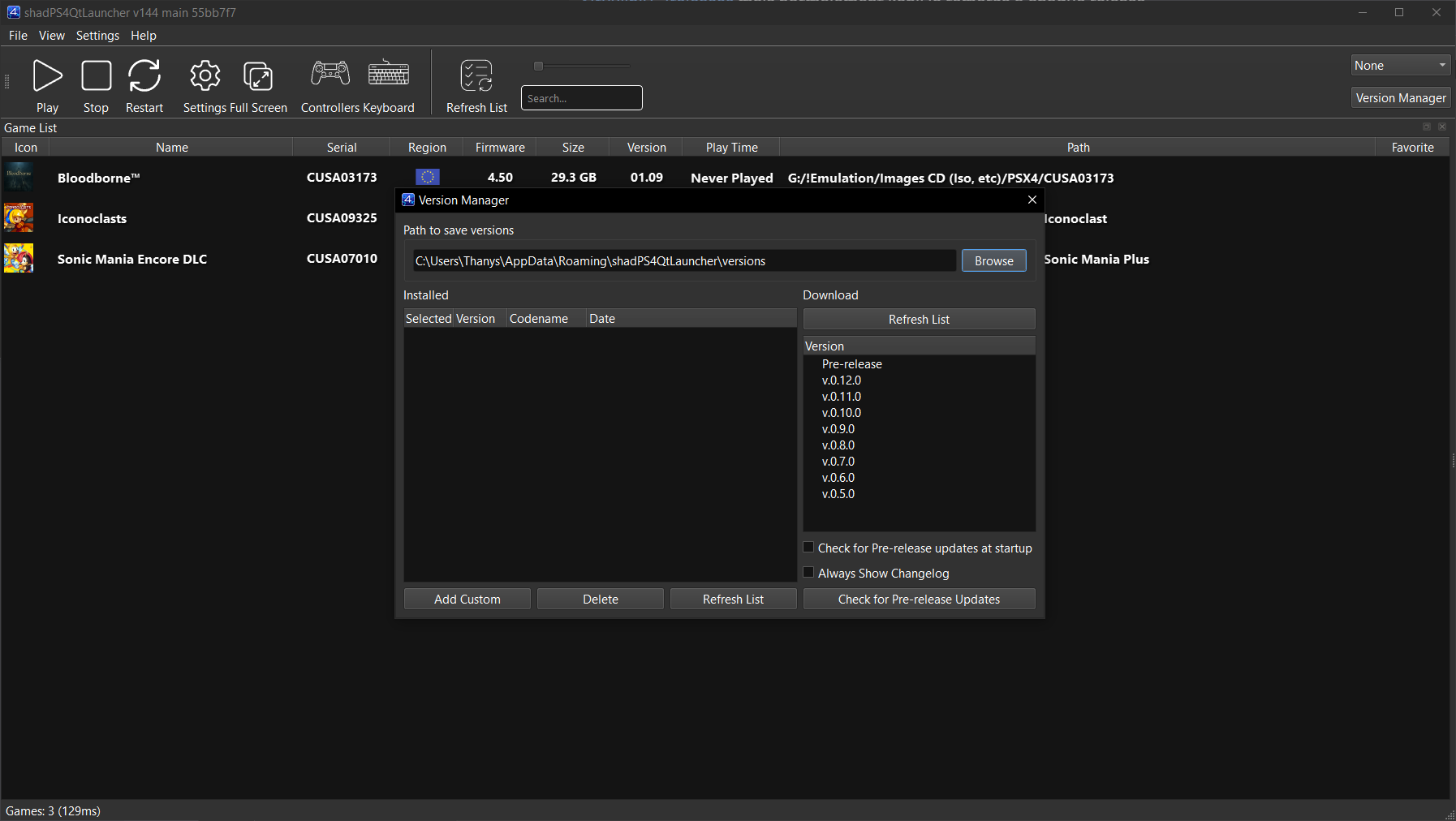
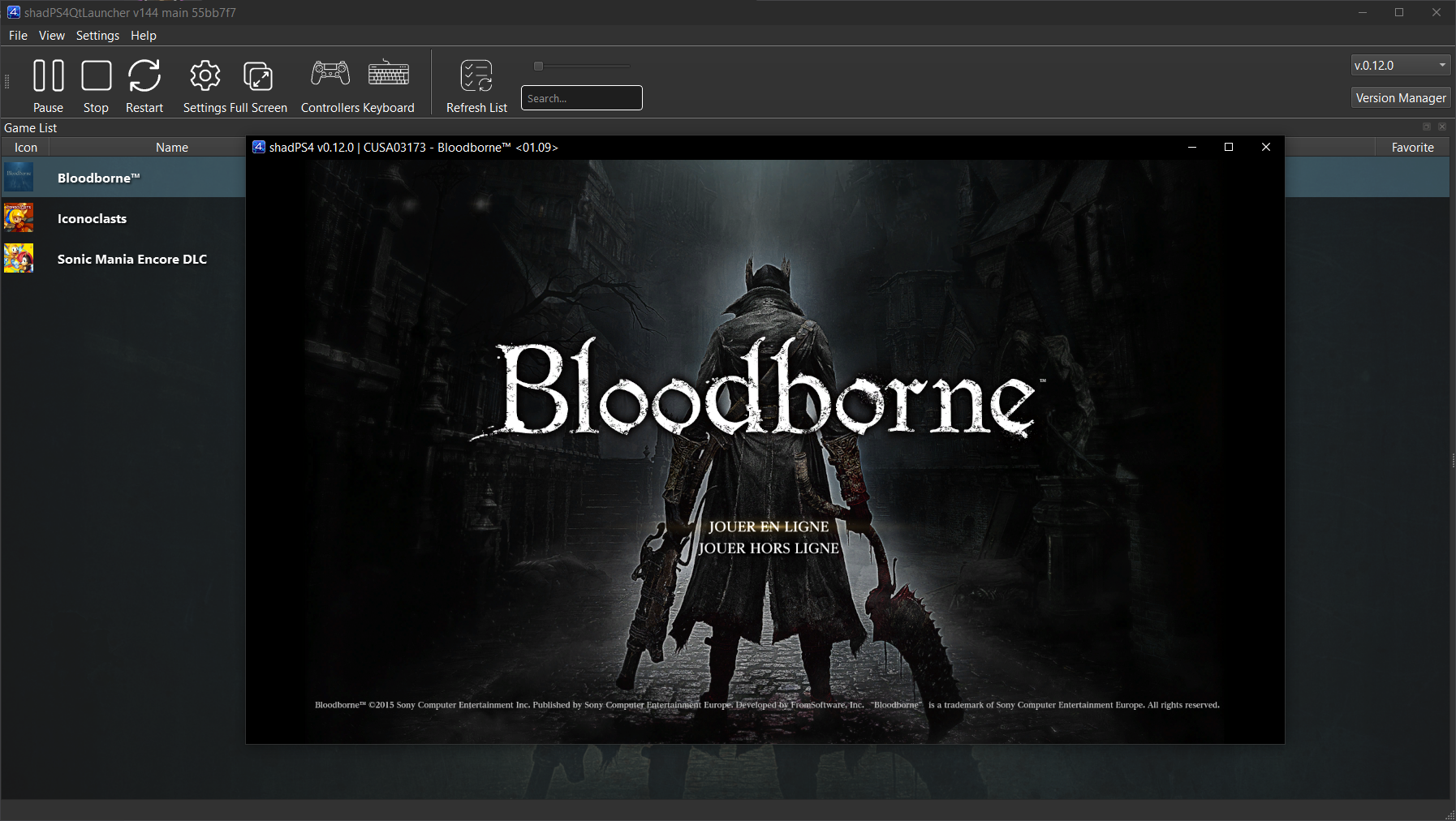
Simple Launcher est une interface moderne pour émulateurs qui facilite le lancement de jeux rétro et ajoute surtout un support CHD universel grâce à son module CHDMounter, permettant d’utiliser des fichiers CHD même avec des émulateurs qui ne les prennent pas en charge nativement, comme RPCS3, Xenia , Xemu ou autres.


Les changements sont les suivants:
 
RetroAchievements Compatibility Filter (Hash-Based)
– Hash-based filtering — The « RetroAchievements-compatible games » filter now matches games by real ROM hash instead of fuzzy name matching.
– Background hash scanning — Scans run off the UI thread with progress toasts, so the app never freezes while calculating hashes.
– Archive-aware hashing — ROM content is hashed directly from .zip archives (and per-game zips) without extraction, so zipped games match their RetroAchievements entries.
– Bundled hashing tool — Hashing is delegated to a bundled RetroAchievementsSharp CLI tool for accuracy and performance.
– Updated RetroAchievements database — Refreshed RetroAchievements.dat with new systems and games.
 
Update Flow
– Multi-source update fallback chain — Update checks now try the primary GitHub repository, then the transferred GitHub organization, then the secondary server (assets.purelogiccode.com), so updates keep working through the GitHub organization transfer.
– Updater fixes — Fixed an updater bug where waiting for the app to exit could throw InvalidOperationException and abort the update; the updater now disposes process handles safely.
– Download resilience — Raised the download timeout to 5 minutes so slow connections can complete large update packages.
– Toast notifications — Replaced tray balloon notifications with modern toast notifications.
 
Launch Fixes
– Missing emulator executable — Launching with an emulator whose executable no longer exists now shows an actionable dialog (with the configured path) instead of a generic error.
– Invalid executable format — Games pointing at invalid executables (Win32 error 193) now show a direct, localized dialog explaining the problem instead of an error-log prompt.
– Ymir — Archives are force-extracted before launching Ymir, since it does not support mounted archives.
– Elevation — The elevation message now instructs users to disable the « Run as administrator » requirement on the emulator, and the Avalonia app gained an equivalent elevation dialog.
– Parameter suggestions — System names are validated before calling the ParameterResolver API; API rejections and network failures are logged as info and handled gracefully.
 
Favorites & Play History
– Rename/remove sync — Favorites and play history now stay in sync when systems are renamed or removed, in both the WPF and Avalonia apps.
– Subfolder resolution — Favorites and play-history entries pointing to files stored in system-folder subfolders resolve correctly again.
– Protection against wiping favorites — Favorites are never wiped when the systems file fails to load (e.g., corrupt or transient system.xml failure).
 
Easy Mode
– Temp folder fix — Easy Mode downloads no longer fail when startup cleanup removes the temp folder; the folder is re-created on demand.
 
Other Fixes
– Unified log path resolution — WPF and Avalonia now resolve log files identically; opening the log from dialogs always opens the actual rolling log file.
– Storefront icon extraction — Fixed a DestroyIconW entry-point error that threw on every successful icon extraction (handle leak + false error reports).
– Microsoft Windows folders — Windows/Microsoft Games folders are created before store scans, with a warning for protected locations.
– Raine config window — Opening the Raine configuration window with a null emulator path no longer crashes; it prompts for the executable instead.
– Edit System stability — Fixed a crash from WPF-only cursor definitions and refreshed sidebar counts after the dialog closes.
– Debug window — No longer owned by the main window, so it stays usable independently.
 
Tooling
– Dependencies — NAudio 3, Markdown.Avalonia 12, Meziantou.Analyzer 3.0.224 and other library updates.


Télécharger SimpleLauncher v5.7 (139 Mo)

Site Officiel

En savoir plus…

WineD3D For Windows est un wrapper DirectX 1-11 vers OpenGL basé sur WineD3D, qui est une implémentation presque complète de DirectX utilisée dans Wine.


Même si Windows prend en charge DirectX de manière native, l’utilisation de WineD3D peut améliorer la compatibilité avec les jeux plus anciens, en particulier sur Windows 8 et supérieurs qui ne prennent pas en charge les modes d’écran 16 bits. Une autre utilisation possible est d’imiter les versions non prises en charge de DirectX ou de transférer des applications DirectX vers OpenGL sans avoir à réécrire le code de rendu.
Notez que WineD3D est loin d’être parfait, et de nombreux jeux ne fonctionneront pas.
 
Des instructions sur l’utilisation des DLL sont également incluses.
 
Version 1.7.x fonctionne à partir de Windows 2000.
Version 7.x fonctionne à partir de Windows Vista.
Version supérieur à 8.x fonctionne à partir de Windows 8.


Télécharger Wine D3D For Windows (Win 2K et +) v1.7.52 (1.7 Mo)

Télécharger Wine D3D For Windows (Vista et +) v7.8 (2.0 Mo)

Télécharger Wine D3D For Windows (32 Bits | Win8 et +) v11.17 (1.9 Mo)

Télécharger Wine D3D For Windows (64 Bits | Win8 et +) v11.17 (1.9 Mo)

Site Officiel

En savoir plus…

Ruffle est un émulateur Adobe Flash Player écrit dans le langage de programmation Rust. Ruffle cible à la fois le bureau et le Web à l’aide de WebAssembly. Il s’intégrera parfaitement dans votre navigateur en toute transparence et vous permettra ainsi de lire des vieux sites web comme par exemple celui de notre Mamu_ international 😀


Site de développement.
 

Site Officiel

DOSBox Automation est un fork de DOSBox Staging qui transforme l’émulateur en un environnement fortement orienté vers l’automatisation et le contrôle externe. Il ajoute notamment une API HTTP REST, des scripts Lua sandboxés, l’enregistrement et la relecture des entrées, la capture audio/vidéo, la lecture du texte affiché à l’écran ainsi que des fonctions d’accès et de manipulation de la mémoire, des registres CPU et des ports d’E/S. Il intègre également des mécanismes pour automatiser les installations et les changements de disques, avec une politique de montage sécurisée.


Différence avec DOSBox Staging: Staging reste avant tout un émulateur DOS destiné à faire fonctionner les logiciels et jeux DOS avec une émulation et une compatibilité modernes. DOSBox Automation reprend sa base mais ajoute une importante couche d’automatisation, de scripting et d’introspection, permettant à des programmes externes de contrôler l’émulation et d’interagir avec son état interne. Il s’adresse donc principalement aux launchers, tests automatisés, outils de développement, debugging et reverse engineering, plutôt qu’à l’utilisateur qui cherche simplement à jouer.


Télécharger DOSBox Automation v0.85.1 (137 Mo)

Site Officiel

En savoir plus…

TetaNES est un émulateur multiplateforme de Nintendo Entertainment System (NES) sortie au Japon en 1983 et en Amérique du Nord en 1986, écrit en utilisant Rust et wgpu. Il fonctionne sous Linux, macOS, Windows et dans un navigateur web avec WebAssembly. Bien que la version web soit jouable, la version de bureau est beaucoup plus performante et complète.


Télécharger TetaNES v0.17 (9.2 Mo)

Site Officiel

En savoir plus…

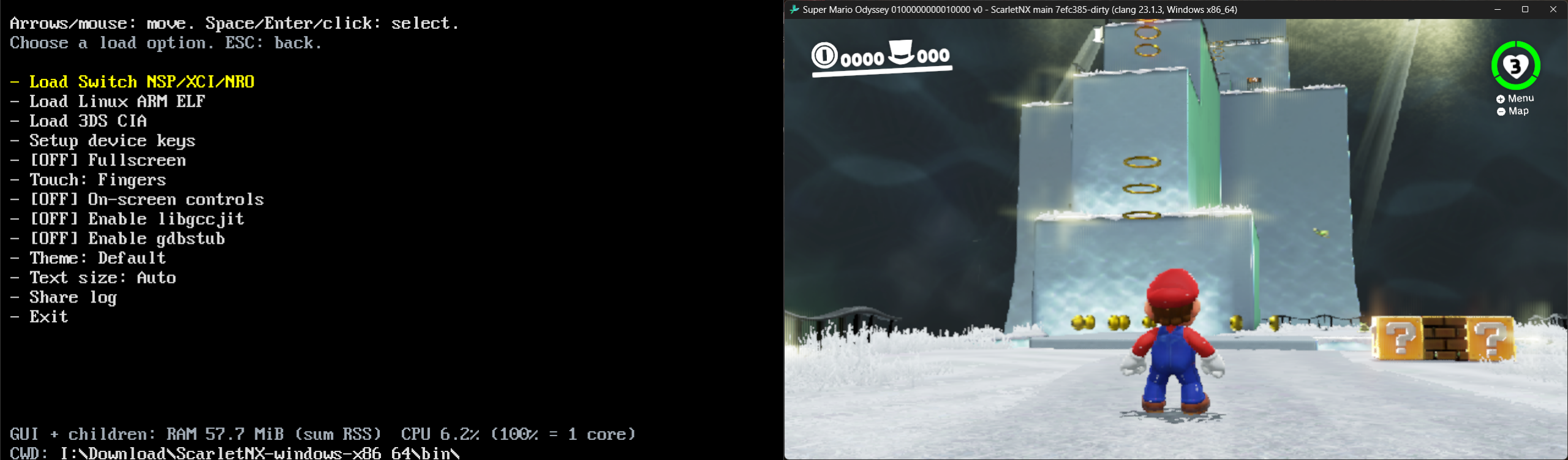
Ryujinx-Nextendo est un émulateur Nintendo Switch basé sur Ryujinx, auquel a été intégré nativement le support du Nextendo Network, un service en ligne privé et communautaire destiné à remplacer le service officiel de Nintendo.
 
Le projet reprend le cœur d’émulation de Ryujinx, notamment pour le processeur, le GPU, l’audio, les contrôles et le système de fichiers. Les modifications apportées par Nextendo concernent principalement la partie réseau et l’interface utilisateur.
 
L’objectif est notamment de permettre aux jeux compatibles de retrouver des fonctionnalités de jeu en ligne via le Nextendo Network, sans nécessiter de configuration manuelle particulière, de modification du fichier hosts ou de contournement SSL de la part de l’utilisateur.


Les changements sont:
 
– Mario Kart 8 Deluxe now requires game version 4.0.0.
– Nintendo’s 4.0.0 update landed on 1 September. We held off until someone had played a
full race on it against our servers, not just connected: this week Mario Maker’s versus
mode connected, formed the lobby and started the match before crashing at the finish line,
so « it connects » isn’t the same as « it works ».
– CTGP Deluxe players are not affected. That path still runs on base 3.0.3 with the verified
mod, and it has always been checked separately.
– Smash Bros. Ultimate stays on 13.0.5 and Super Mario Maker 2 on 3.0.3, unchanged from v1.8.1.
– Only one game version is supported at a time, on purpose: two different builds in the same
lobby desync. If you’re still on Mario Kart 3.0.5, update the game.


Télécharger Ryujinx-Nextendo v1.8.2 (34.2 Mo)

Site Officiel

En savoir plus…

A l’instar de MAMEinfo pour MAME(Arcade), le fichier MESSinfo vous permet de suivre les changements entre les versions concernant les différents systèmes émulés par MAME (partie consoles et ordinateurs).


Télécharger MESSinfo.dat v0.289 (7.1 Mo)

Site Officiel

En savoir plus…

VMA 486 Emulator est un émulateur de IBM PC/AT de classe 486 pour Windows, permettant d’exécuter des logiciels et jeux PC/DOS (jusqu’à Win95) anciens. Il propose une vitesse de processeur configurable jusqu’à 100 MHz, ainsi que l’émulation des modes vidéo CGA, EGA, VGA et SVGA. L’émulation sonore prend en charge le PC Speaker ainsi que le Sound Blaster avec OPL2/OPL3. L’émulateur gère également les lecteurs de disquettes, les disques durs et les CD-ROM. Il intègre enfin un débogueur avec désassembleur, éditeur mémoire et points d’arrêt, ainsi qu’un Trainer / Cheat Finder et des fonctions de sauvegarde d’état.


Télécharger VMA Emulator (2026/09/03) (1.7 Mo)

Site Officiel

En savoir plus…


https://getourbonus.com/fr/accueil

https://www.romspedia.com/