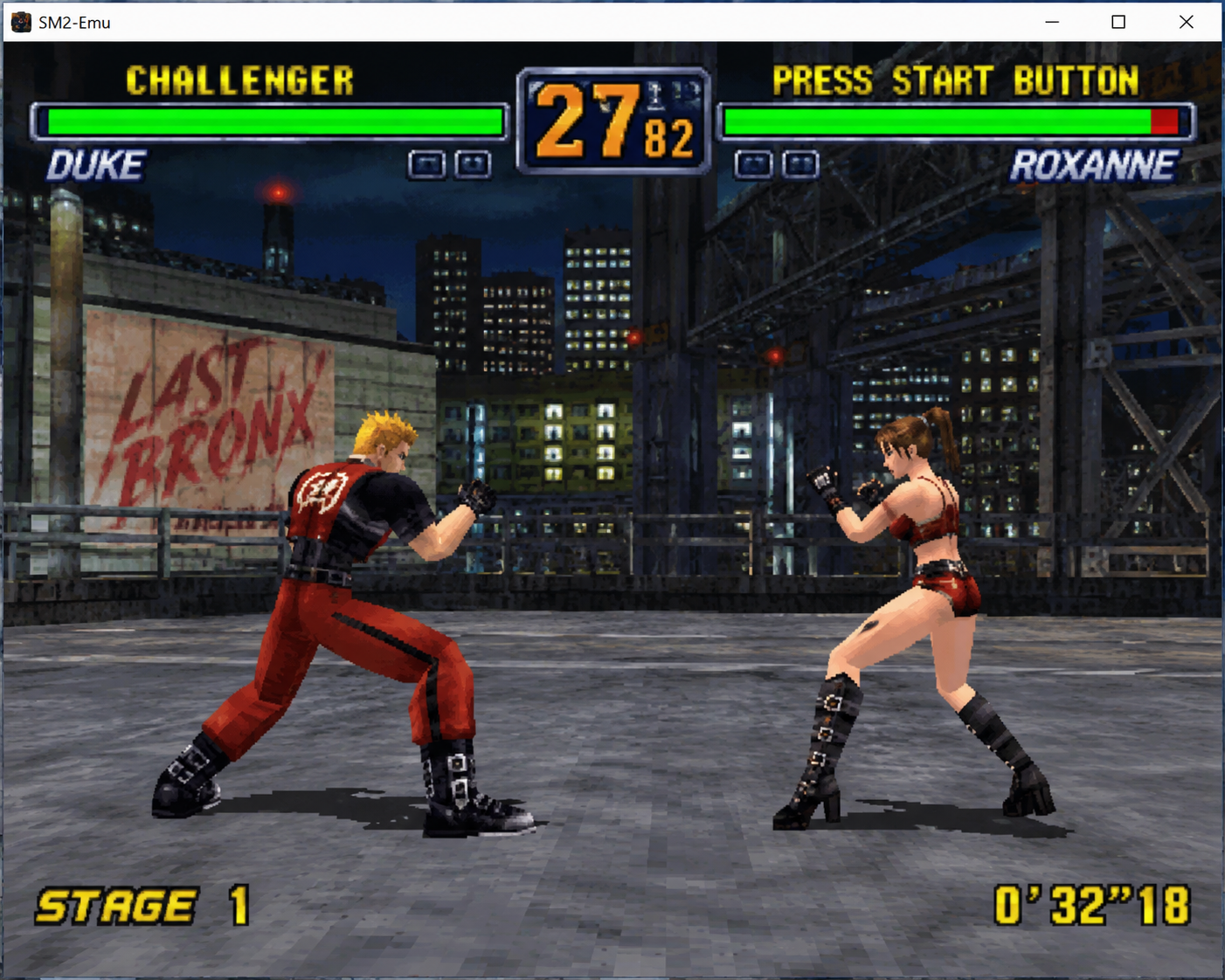


ArcadeDuck est un émulateur open source spécialisé dans les systèmes d’arcade basés sur l’architecture de la PlayStation 1, développé par StillJC à partir du code de DuckStation. Il prend en charge le matériel d’arcade dérivé de la PS1 — notamment les cartes Namco System 10/11/12, Taito G-Net, Konami GV/GQ/System 573 et Sony ZN-1/ZN-2 — ainsi que leurs périphériques dédiés (JVS, trackballs, monnayeurs). Pensé pour l’arcade, il gère directement les archives ROMs au format MAME, le lancement par ligne de commande et les codes de triche XML.
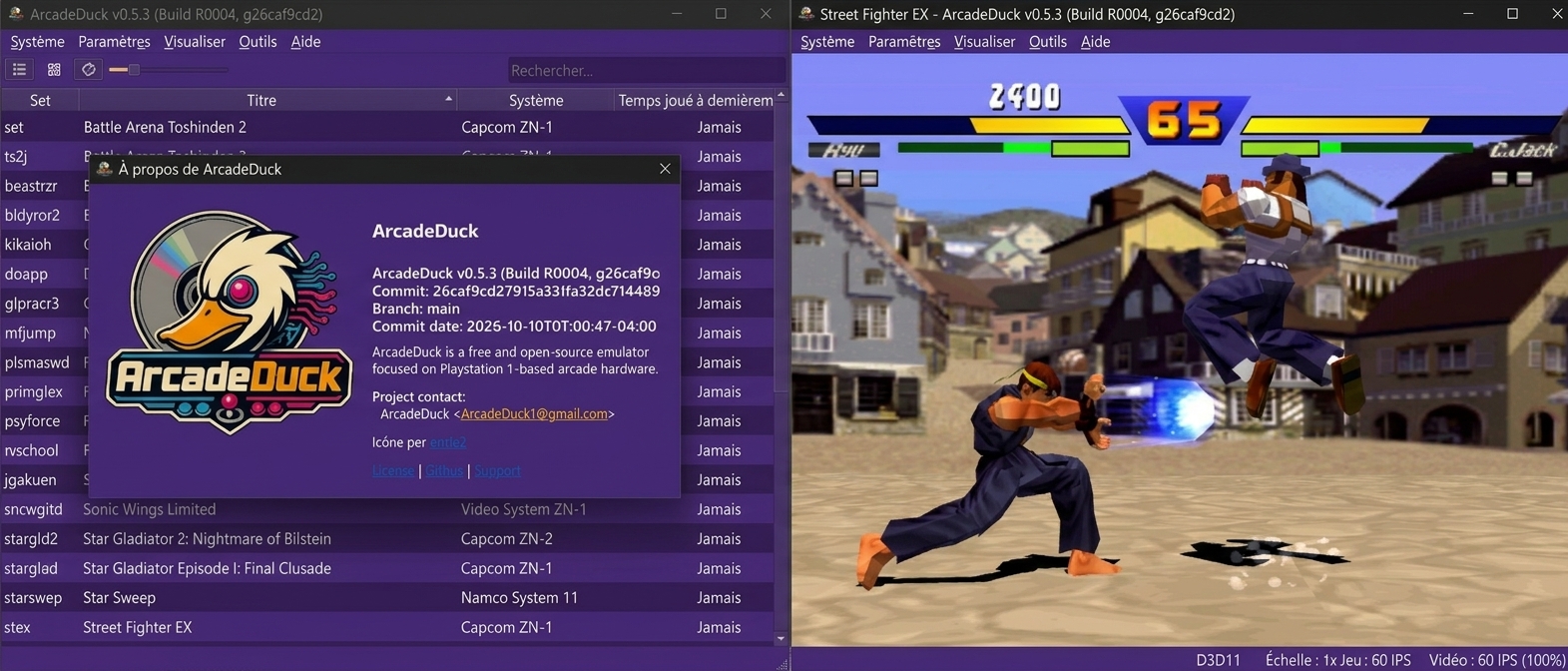
Contrairement à DuckStation, qui vise l’émulation de la PlayStation commerciale, ArcadeDuck intègre les spécificités des bornes d’arcade: BIOS dédiés, ROM et images de stockage CHD, commandes spécifiques aux jeux, gestion des monnayeurs, boutons de service, trackballs et pistolets optiques. Il propose également des profils de commandes et de configuration propres à chaque jeu.
Les changements sont (stable/dev):
– Add regtest set command and nested -set sections
– Report regtest gpustat horizontal mode from core decoding
– Add regtest gpustat and timer script commands
– Keep simple field extraction paths free of band arithmetic
– Select upscaled interlaced fields by VRAM line
– Add resume save setting and disable it by default
– Fix Techno Drive pedal input ranges
– Fix Cyber Lead JVS coin subtraction slot numbering
– Limit simulated trackball movement to 127 counts
– Fix System 12 CDXA volume address decoding
– Fix Tekken controls and isolate per-game input bindings
– Complete System 12 release hardening cleanup
– Harden System 12 device handling and clean up comments
– Fix G-Net parent relationships
– Restore development suffix for v0.7.0
– Bump System 12 release version to 0.7.0
– Skip CyberLead LED firmware loading when disabled in the UI settings
– Merge dev and add reviewed System 12 save states
– Add arcade save states with identity and NVRAM validation
– Add G-Net clone grouping and launch options
– Merge branch ‘refs/heads/dev’ into experimental/system12
– Persist raw-device button mappings and enable native input automatically
– Fix mapped controller axis range and lightgun corner aiming
– Add fullscreen exit button and application exit hotkey
– Add accelerating button controls for trackball axes
– Simplify one-shot cheat activation and show activation status
– Add direct G-Net CHD loading and improve handle input and SPU volume
– Fix loading logo clipping and add fade animation
– Only advance System 12 H8 SCI0/SCI1 timing while a byte is in flight
– Check SH-2 interrupts and the main fetch region inline in Step()
– Inline the SH7014 peripheral cycle check
– Step SH7014 peripherals only when they have work to do
– Trim per-instruction work in the System 12 H8 scheduler loop
– Test the address before the Golgo 13 write check in WriteEXP1
– Step Cyber Lead LED C77 peripherals only when they have work to do
– Repaint the Cyber Lead LED window only when the panel changes
– Skip Cyber Lead LED snapshots with no consumer or no change
– Cache the Cyber Lead game check used by presentation
– Advance the Cyber Lead LED board once per H8 slice
– Fetch Cyber Lead LED C77 opcodes directly from flash
– Track Cyber Lead LED C77 pending interrupts as a bit mask
– Avoid initializer-list std::min in the Cyber Lead LED clock loop
– Update H8/3002 Timer16 channels only when an event can occur
– Skip the H8/3002 INTC vector scan when nothing is pending
Si vous rencontrez des erreurs au lancement, un pack de bibliothèques et runtimes nécessaires est téléchargeable ici.