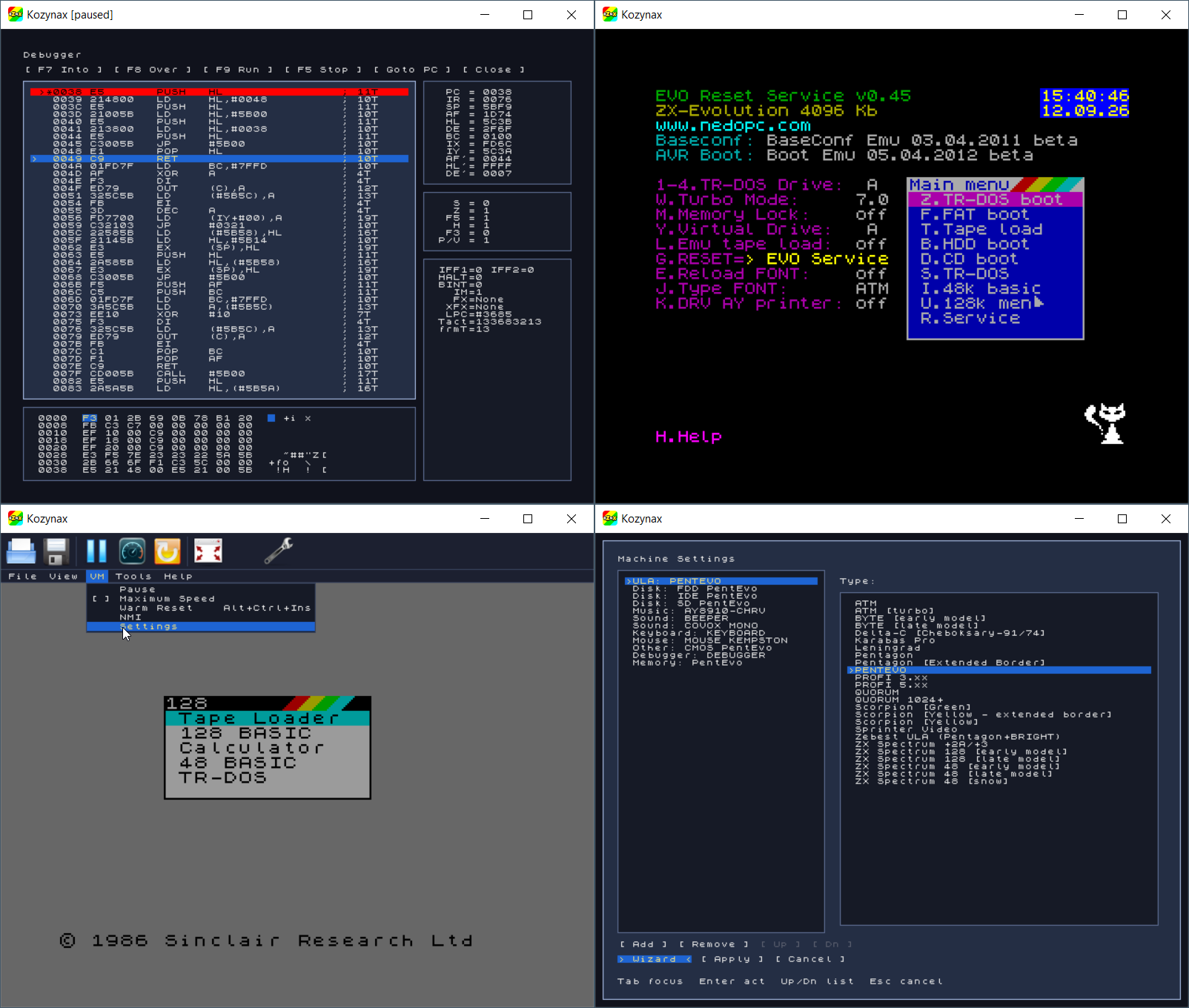
Kozynax est un émulateur ZX Spectrum multiplateforme développé en .NET pour Windows, Linux et macOS. Basé sur le moteur d’émulation de ZXMAK2, ce projet expérimental issu des travaux de la communauté Speccy combine une précision d’affichage au pixel près avec une excellente portabilité. Il permet de faire tourner les logiciels et jeux originaux de la machine sur les systèmes modernes tout en servant de banc d’essai pour le développement d’architectures d’émulation.


Télécharger Kozynax v0.95 (35.6 Mo)

Site Officiel

En savoir plus…

SuperSNES9X est un fork avancé de SNES9X, développé par shanytc, qui ajoute de nombreuses améliorations modernes tout en conservant la rapidité et la simplicité du SNES9X original. Il vise autant les joueurs (retroachievements, online) que les créateurs (sprite ripping, hacking, debugging).


Principales améliorations:
– Support multi-système : Super NES, GameBoy, GameBoy Color et Super GameBoy (1 et 2) intégrés
– Support Super FX 3 (FX3) pour les nouvelles sorties LRG 2026, avec synchronisation GSU cycle par cycle
– Support du dongle de vibration LRG SNES (Ultimate Doom FX3, RT.SFC)
– Core libretro pour SNES / SGB / GB / GBC
– Émulation du périphérique Voicer-kun et lecture de ses CD audio depuis des images CUE/BIN
– Émulation du Super Famicom Box (SNES d’hôtel), avec traduction OSD anglaise en temps réel
– Support des cartouches événementielles : PowerFest ’94 et Nintendo Campus Challenge ’92
– Émulation du Voicer-kun : transmetteur/récepteur infrarouge connecté au deuxième port manette
– RetroAchievements intégrés, avec support du mode Hardcore
– Kaillera (Client/Serveur) pour le jeu en ligne
– Run-Ahead pour réduire la latence d’entrée
– Correction colorimétrique et couleurs CRT natives
– Viewers PPU avancés (Sprites/Tiles) pour SNES, GB, GBC et SGB, destinés notamment aux rippers et map-makers
– Visualiseur de forme d’onde audio avec pistes par canal, fonctions solo/muet et vumètres
– Cheat Search & Editor améliorés : support SNES et GB, clic droit et fonctions avancées
– Assignation Multi-Bind-Controller : mixage clavier + manette sur une même entrée
– Support SDL (Simple DirectMedia Layer)
– Pack multilingue
– Convertisseur de sauvegarde SNES9X <-> MESEN, disponible ici.
 
A noter que les fichiers de configuration et sauvegardes sont 100% compatibles entre SNES9X et SuperSNES9X.
 
Les changements sont:
 
Super Game Boy Color (new, Experimental)
– New SGBC mode: an SGB2 with a Game Boy Color inside with customs borders support.
– This mode runs a memory patched SGB2 BIOS with per-game in-memory patch to support colors and borders.
– Color now comes from the cart instead of the stale SGB palette.
– Pre-palette fallback goes through BGP.
– DMG-compatibility color is routed through BGP/OBP.
– Carts whose SGB detect beats the Color branch get dedicated patches.
– Note: not all games might work out of the box – some issues might occur during game play / boot.
 
Super Game Boy
– MLT_REQ is latched in the ICD2 instead of waiting for the BIOS.
– BIOS mode carries its cycle remainder instead of flooring twice, and deducts GB cycle overshoot (fixes audio pacing).
– Packet bits latch on the rising edge, not the falling one.
– MASK_EN honored on the BIOS pane, LCD-off treated as a freeze.
– Boot logo held on displayed content, hidden under the SGB BIOS, and shown only when a boot ROM was actually assigned.
– GBC-only carts are no longer forced out of SGB BIOS mode on the container path.
– Sprite-limit hack offered in SGB BIOS sessions.
 
Game Boy
– Mode 3 split into a timing skeleton and an output machine.
– Window insertion-glitch kill latched per machine, DMG window-kill narrowed to the tile-number stage, window output latch no longer double-counted.
– Mode-0 STAT interrupt sourced from the transition, CGB gets its own STAT mode-window edges.
– LCD-enable line timing passes mooneye lcdon_timing and lcdon_write_timing.
– WY comparator re-run on LCDC and WY writes.
– Pre-DMA OAM bytes kept for scan slots read before the transfer.
– Several emulator cores can run at once (used by the shootout pool).
– New « Suppress NRx Glitches » sound setting, default on (fixes the CH1 zombie click).
 
New Game Boy Mappers
– Added support for Unlicensed mapper families: Rocket, Makon/NT, BBD, Sintax, Li Cheng, Vast Fame, and kin.
– Enabled support for Zook Hero Z mapper and protection.
 
BIOS Manager, Game Boy Model selector
– GB/GBC carts boot through a real boot ROM for the power-on logo, offered as a fourth BIOS choice.
– New: File > BIOS Manager: assign BIOS files by path, now the source of truth for all BIOS files. Console list reordered, Super Game Boy 2 split out, SGB revision named, optional slots marked.
– SGB boot ROM slots with per-slot validation. Real SGB-CPU boot ROM dumps found by their No-Intro names. Blank slots resolved from the whole BIOS folder, zipped or renamed.
– Emulation > BIOS renamed to Game Boy Model. One Automatic model decided from the cart header. Entries with missing BIOS greyed. Model hotkeys added (win32 hotkey tab, Qt/GTK).
– Missing BIOS reported on the OSD instead of a modal box, UI stays in its no-game state.
– Hard reset picks up BIOS Manager changes. Both Super Famicom Box BIOS files named, only the required one blocks.
– Sufami Turbo and Satellaview carts load through File > Load Game (or double click on the rom file.)
– Mono carts boot on the Color without its BIOS.
– Cheat lifecycle fixed in the SGB BIOS-mode load paths.
 
SNES emulation
– PPU: A.S.P. Air Strike Patrol beam-raced mid-scanline effects (INIDISP brightness windows, raster spans bounded to their horizontal extent, mosaic onset, scroll boundaries, per-line backdrop).
– gfx: frames no longer skipped mid-interlace (half the scanlines went black).
– SuperFX: cycle-accurate GSU timing (Winter Gold), GSU ROM/RAM buffer overlap modelled (Yoshi’s Island slowdown), 11MB SuperFX mapper, new vars moved into the gsu struct with a settings/command-line mode switch.
– MSU-1 packs load from archives, with an offer to rename plain .zip ones.
 
Audio (win32)
– WaveOut sound-sync pacing could lock about 20% below real time. Now paced from the play cursor.
 
RetroAchievements
– User agent now « SuperSnes9x/1.63.1 », unicode truncation fixed.
– Logging out no longer disables RetroAchievements. The running game is identified on a mid-session login.
– Hardcore will not work anymore, it was declined by the RA team.
 
Qt/GTK (Linux)
– Updated to match win32’s features: Added run ahead, output image processing filters, save state banks and state hotkeys.
– Added sound menu with per-channel toggles and mute plus Sound Settings, Color Correction dialog, LRG rumble cart support.
– Added input menu with controller device list, File > Save Other.
– Added movie and AVI recording, Audio Waveform viewer.
– Added SNES image and Game Boy Image settings.
– Added File > Choose Icon.
– Game Boy ROMs listed in the Open dialog.
– BIOS-less Game Boy frames shown instead of a black screen. SGB BIOS preference persisted.
– Config file migrated to the shared conffile format with comments and toggles, header written as « SuperSnes9x ».
– Fixes: SRAM autosave interval, scrambled SoundFilter token map, Wayland segfault with Qt < 6.5, black menubar text on KDE dark schemes, Shader Settings only enabled with a preset, GTK Vulkan build and lockup, GTK accelerator table.   Win32 - Choose Logo renamed to Choose Icon, with an option to register file types under the chosen icon. - Duplicate SuperFX speed control removed from Hacks. - Sound Settings item moved to the end of its menu. - OSD message fixes. - American spelling in fork text.   Acid Tests - When installed as acid/ folder next to the executable, a new Tests > Acid Tests menu will appear. SuperSnes9x passes all 264 tests, matching Coffee GB.
– Acid baselines per emulator from the shootout table, baselines fetch script replaces tracked files.
– Acid Tests dialog supports thread count, live rows, screenshots, pause, filters, export, per-emulator baselines, Test Diagnosis dialog, own Tests menu.
 
i18n
– Updated translation files (added missing keys / updated keys).
 
Build, CI, packaging
– macOS: Qt .app and universal libretro core, both self-signed. Info.plist regenerated after clean.
– GitHub Actions nightlies for win32, Qt/GTK AppImages, macOS, and the libretro cores.
– Android: minizip built without the fopen64 family, 32-bit file API.
– libretro: reports 1.63.29 without a git hash, ROM extension not stripped twice, built with zip support for MSU-1.
– Dangling libco submodule pointer dropped, gitignore cleanups, unzip includes fixed without SYSTEM_ZIP.
– Screenshot PNG output ordering and png_set_shift placement fixed.


Télécharger SuperSnes9x v1.63.30 (7.1 Mo)

Site Officiel

En savoir plus…

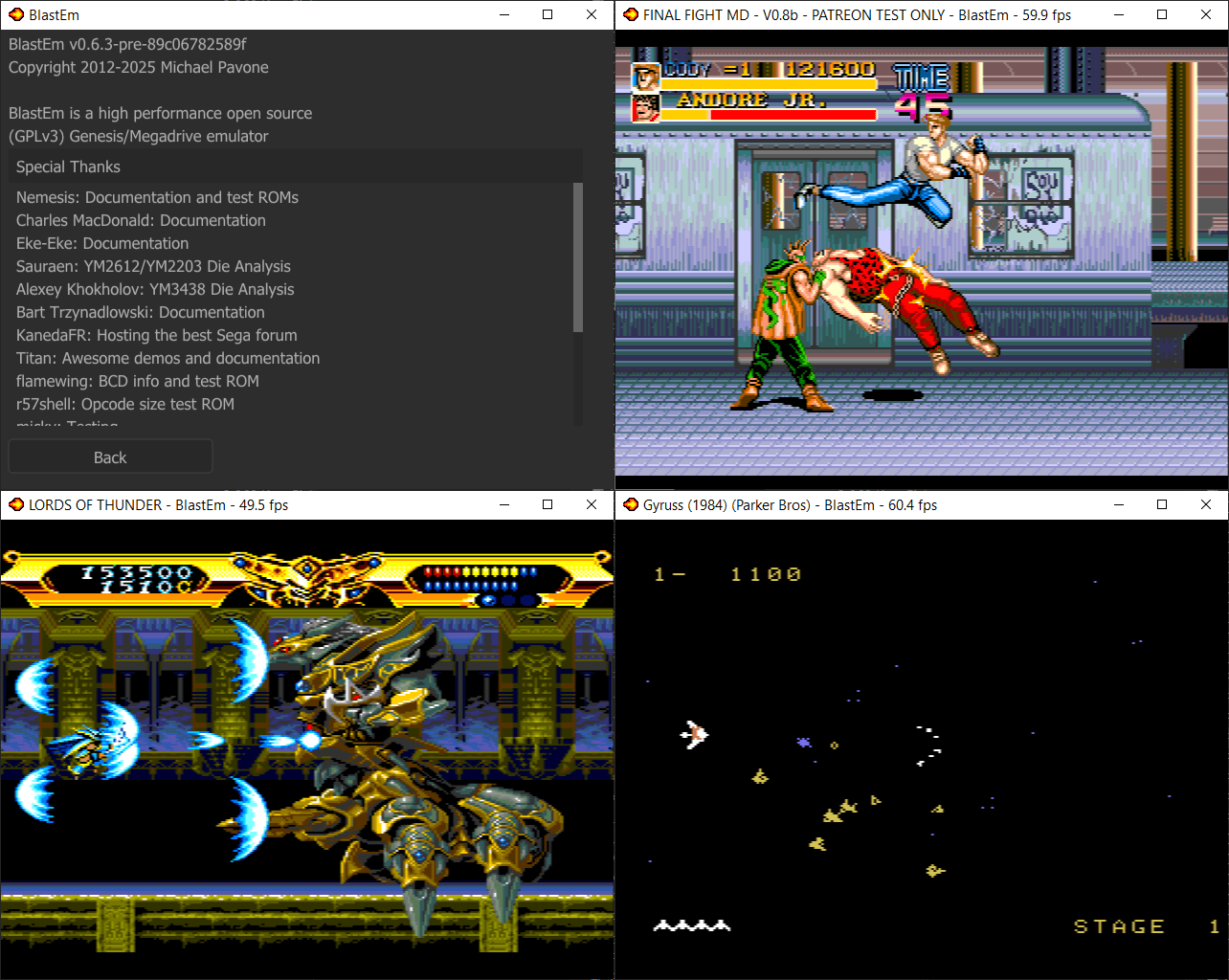
BlastEm est un émulateur Genesis/Mega Drive extrêmement précis, conçu pour fonctionner sur du matériel relativement modeste en utilisant des techniques d’émulation avancées. Il prend également en charge le Mega CD, le 32X, la Sega Pico, la Game Gear, la Master System, le SC-3000/SG-1000, le ColecoVision et le Yamaha Copera. Le Heartbeat Personal Trainer, nécessaire notamment pour Outback Joey et d’autres jeux HPBT, ainsi que le Sega Multitap sont également supportés.
 
Voici quelques caractéristiques :
 
– Sauvegardes d’état (savestates)
– Émulation de la Mega/Sega Mouse
– Émulation des claviers XBAND et Saturn
– Émulation des cartouches lock-on Sonic & Knuckles et XBAND
– Prise en charge de la RAM de sauvegarde et des EEPROM
– Prise en charge des homebrews utilisant le mapper SSF2 (avec heuristiques Mega Everdrive)
– Modes turbo et ralenti
– Filtre passe-bas configurable
– Shaders GLSL
– Sélection du modèle de Genesis/Mega Drive (pour reproduire les spécificités matérielles)
– Enregistrement audio au format VGM
– Affichage en vue oscilloscope
– Lecteur multimédia intégré (compatible formats VGM, WAVE et FLAC)
– Enregistrement vidéo en APNG avec piste audio WAVE
– Débogueurs 68K et Z80 intégrés avec langage de script Turing-complet
– Débogage à distance via GDB
– Points d’arrêt (watchpoints) sur la mémoire 68K et les registres/RAM du VDP
– Visualisation avancée de la palette et des plans du VDP
– Prise en charge des manettes et joysticks
– Interface intégralement contrôlable au clavier ou à la manette
– Reconfiguration à chaud des contrôleurs
– Prise en charge de la mise à l’échelle DPI (DPI scaling)
– Prise en charge des chemins de fichiers Unicode et longs sous Windows
– Mode d’utilisation portable (sans installation)


Les changements sont les suivants:
 
Newly Supported Hardware
– Sega/Mega CD
– Sega 32X
– Sega Pico
– Yamaha Copera (OPL3 emulation missing, but all known games are playable)
– Game Gear
– SC-3000/SG-1000
– Colecovision
– Hearbeat Personal Trainer peripheral (needed for Outback Joey and other HPBT games)
– Sega Multitap
 
Quality of Life Improvements
– Nuklear UI now works even if OpenGL is disabled/unavailable
– Nuklear UI can now be navigated by keyboard or game controller
– Controller type and SDL2 mapping can now be changed after initial configuration
– Controllers are now ordered based on which one receives input first
– Implemented DPI scaling
– Added multiple new shaders, including some 3rd party contributions
– Added option to use system file picker on Windows and Linux (GTK only for the latter)
– Added support for Unicode and long paths on Windows
– Some 6-button style controllers now have correct mappings out of the box
– New option to save config files in the application folder for « portable » setups
 
New Features
– Genesis/Mega Drive model selection: Enables emulation of model-specific hardware quirks
– VGM logging
– Oscilloscope View
– New media player mode that can play VGM files along with WAVE and FLAC files
– « Video » recording (APNG + WAVE)
 
Debugging Improvements
– Completely reworked the CPU debuggers with a turing complete scripting language
– Added watchpoints for both 68K memory and VDP registers/RAM
– Enhanced palette viewer
– Enhanced VDP plane viewer
– Implemented KMod logging extensions
 
Accuracy Improvements
– Separated comopsiting from final output. Fixes minor glitch in the DF Retro Direct Color DMA demo
– Reworked sprite rendering phase 3 to better match documentation by Kabuto/TiTan. Fixes Alex Kidd minigame
– Fixed reading version reg from Z80 and open bus reads from VDP test reg
– Fixed YM2612 busy flag timing
– Fixed a Z80 interrupt edge case which broke the music in Metal Blast 2277
– Improved open bus emulation
– Fixed some edge cases in VDP address/command register updates. Fixes the Mona in 344 bytes demo.
– Fixed timing of a number of 68K instructions
– Fixed YM2612 Timer B load behavior that caused slow music playback in the Konami driver
– Implemented VDP read latency and invalid write delays
– Fixed YM2612 key scaling in CH3 special mode. Fixes sound effects in Toy Story and Maui Mallard
– Fixed VDP rendering behavior when all planes are disabled via the VDP test register
– Implemented additional YM2612 pan « leakage » present on real hardware
– Implemented undocumented Z80/PSG clock speed bit in VDP test registers
– Fixed handling of auto-release in SSG-EG without HOLD. Fixes whistle sound effect in Strikers
 
Bugfixes
– Fixed crash when pressing escape with no ROM loaded
– Fixed immediate cancel in keybinding view when mouse was positioned where cancel button appears
– Fixed crash when changing video screen settings when in full-screen
– Fixed crash when loading save states in games with the « SRAM » variant of the Sega mapper
– Fixed crash when repeatedly reloading a ROM or a sequence of different ROMs
– Fixed a bug in the implementation of the ‘in (c)’ Z80 instruction
– Fixed crash when loading new ROM via drag & drop when existing ROM has lock-on
– Fixed a number of bugs in the controller mapping UI
 
Other Changes
– Added a 64-bit Windows build
– Added new 68K and Z80 interpreters for building on non-x86/x86-64 targets
– Added an experimental web build
– Added ROM DB entries for a number of games that needed them
– Some very early work on LaserActive that emulates some parts of the PAC-less base player


Télécharger BlastEM v1.0 (4.6 Mo)

Site Officiel

Site Officiel des binaires

En savoir plus…

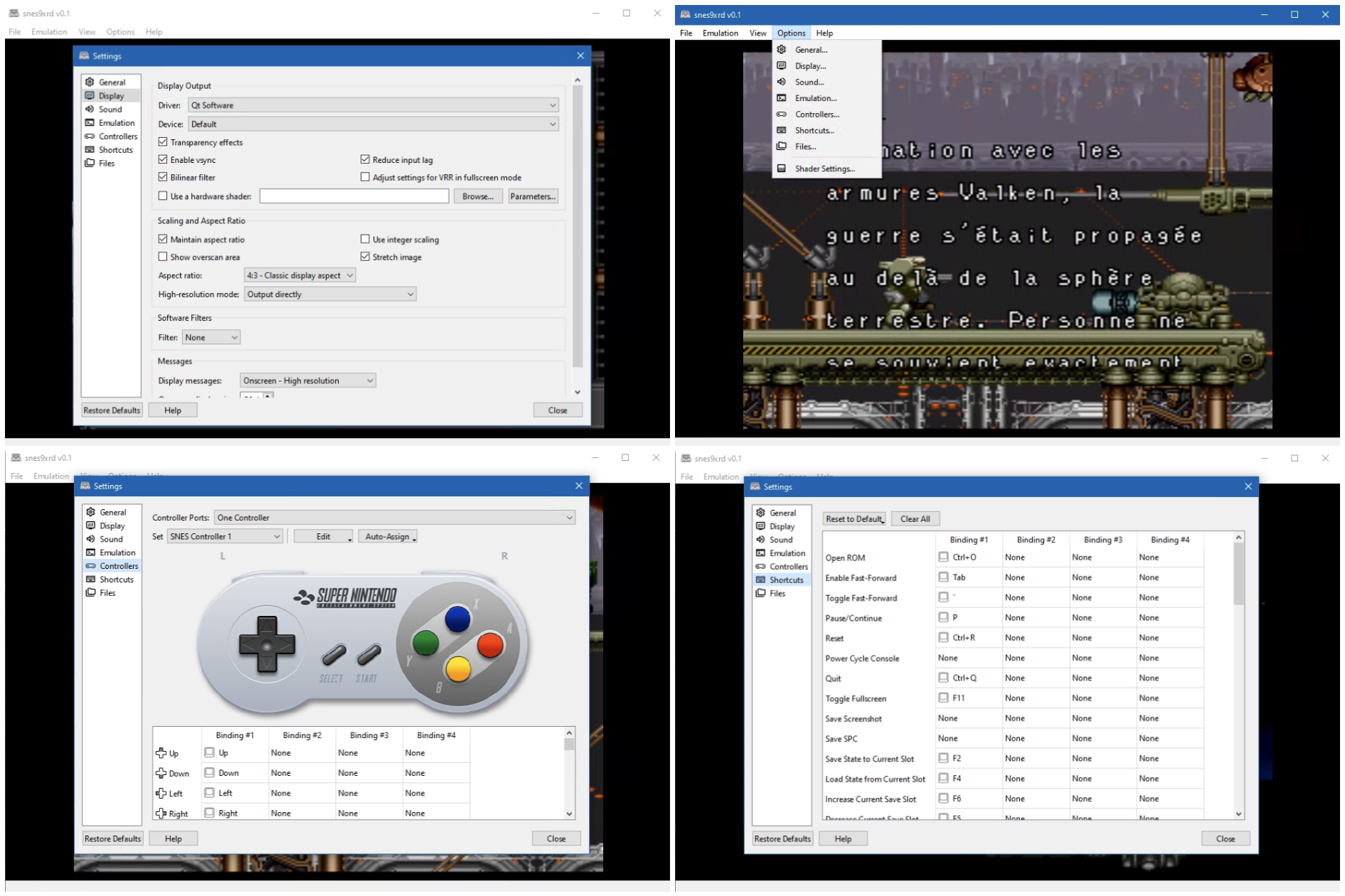
Snes9xrd est un fork personnel de l’émulateur Super Nintendo Snes9x. Il conserve intégralement le cœur d’émulation officiel ainsi que les front-ends GTK, Win32, macOS et libretro, tout en proposant une refonte importante du front-end Qt afin de le rendre plus complet, plus cohérent et plus agréable à utiliser.


L’un des principaux objectifs de ce fork est de rendre l’interface Qt aussi complète que l’interface Win32 en y réintroduisant les fonctionnalités qui lui faisaient défaut. Les paramètres d’affichage, les options de transparence, les shaders, les filtres logiciels, le frame skipping ainsi que les réglages audio avancés sont désormais entièrement accessibles depuis Qt. Les menus d’émulation et de configuration ont également été réorganisés afin d’offrir une présentation plus claire, plus intuitive et plus homogène.
 
Snes9xrd apporte également plusieurs améliorations à la gestion des contrôleurs. Le widget représentant la manette SNES indique désormais avec précision le bouton pressé, sans erreurs de surbrillance, tout en s’intégrant visuellement au thème général de l’interface. La configuration des manettes a été rendue plus fiable: les différents types d’entrées (boutons, axes analogiques et directions) sont correctement distingués, les associations de touches peuvent être sauvegardées et restaurées sans perte d’informations, et les boutons affichés correspondent fidèlement aux entrées réellement détectées.
 
L’interface générale a également été simplifiée. La sidebar expérimentale a été supprimée au profit d’une fenêtre principale plus traditionnelle, organisée autour d’une barre de menus classique. Le menu « Help → About » a été réintroduit et inclut désormais les crédits spécifiques au fork, renforçant ainsi la cohérence de l’ensemble.
 
En résumé, Snes9xrd ne modifie pas l’émulation SNES elle-même, mais vise avant tout à moderniser et à stabiliser l’expérience utilisateur en améliorant l’interface Qt, en fiabilisant la gestion des contrôleurs et en proposant un environnement plus propre, plus complet et plus agréable à utiliser.


Les changements sont les suivants:
 
RetroAchievements:
– Added RetroAchievements integration: login, achievement/leaderboard tracking, and notifications (dialogs + panel).
– Achievement unlock sound, embedded and played on unlock.
– RA login now persists across restarts (encrypted session token, auto re-login, auto re-attach to an already loaded ROM).
– Added Hardcore Mode enforcement: blocks rewind/cheats/load-state/movie playback/frame-advance, forces itself off for Netplay with a confirmation prompt, and re-baselines tracking on reset. – The Hardcore checkbox stays disabled in the UI pending RA’s compliance review.
– Fixed the achievement-unlock toast using the wrong (short) notification duration instead of the configured one.
 
Netplay:
– Fixed Netplay input silently not applying locally when this machine’s Controller Ports were still set to « One Controller »: Port 2 is CTL_NONE in that mode, so a second player’s input synced correctly to every other peer but was dropped on this machine’s own core.
– Connecting to or hosting a Netplay session now automatically switches Controller Ports to « Two – Controllers » when needed, instead of just warning about it.
– Added a « Show Netplay ping » option (Settings > General > Overlays), showing the connection’s round-trip time next to the frame rate overlay.
 
Qt/UI:
– On-screen messages now stack in a queue instead of overwriting each other.
– OSD toasts get a bigger title line; « Show ROM info on load » is now an opt-out checkbox in Options > General.
– Library: Enter/Return now launches the selected game, same as double-click.
 
Stability:
– Fixed a race at the start of a session’s first ROM load that could fast-forward video and audio for a moment (the emu thread ran unthrottled before the display callback and sound device were fully wired up).


Télécharger Snes9xRD v0.6 (12.8 Mo)

Site Officiel

En savoir plus…

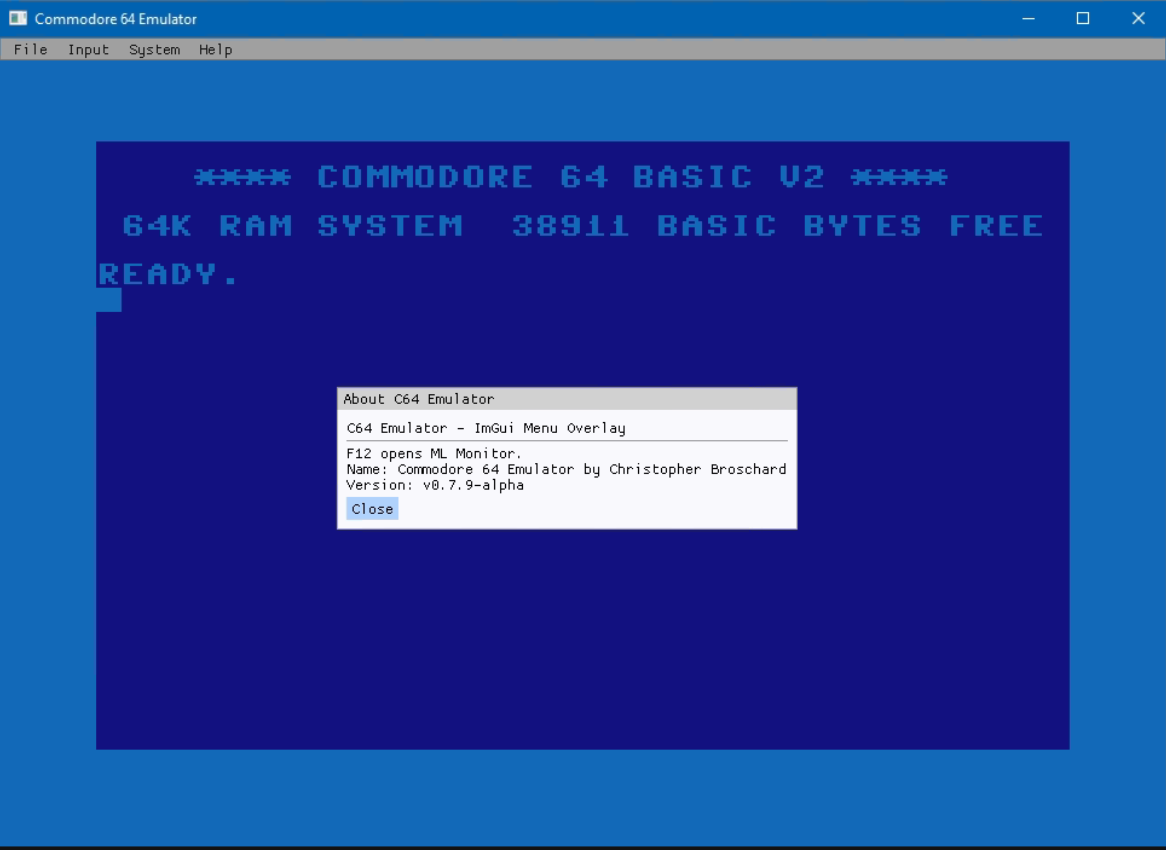
Il s’agit d’un émulateur de Commodore 64 écrit en C++ moderne et basé sur SDL2, conçu pour offrir une reproduction la plus fidèle possible du matériel d’origine. Le projet met l’accent sur une émulation précise, privilégiant le comportement réel du C64 plutôt que des approximations rapides. Il intègre également une infrastructure de débogage avancée, avec un moniteur interne, des breakpoints, des watchpoints et une visibilité détaillée sur l’état de la machine pendant l’exécution. L’ensemble est encore en développement actif, ce qui signifie que certaines fonctionnalités restent incomplètes ou expérimentales.


Télécharger Commodore-64-Emulator v0.8.6.0 alpha (5.6 Mo)

Site Officiel

En savoir plus…

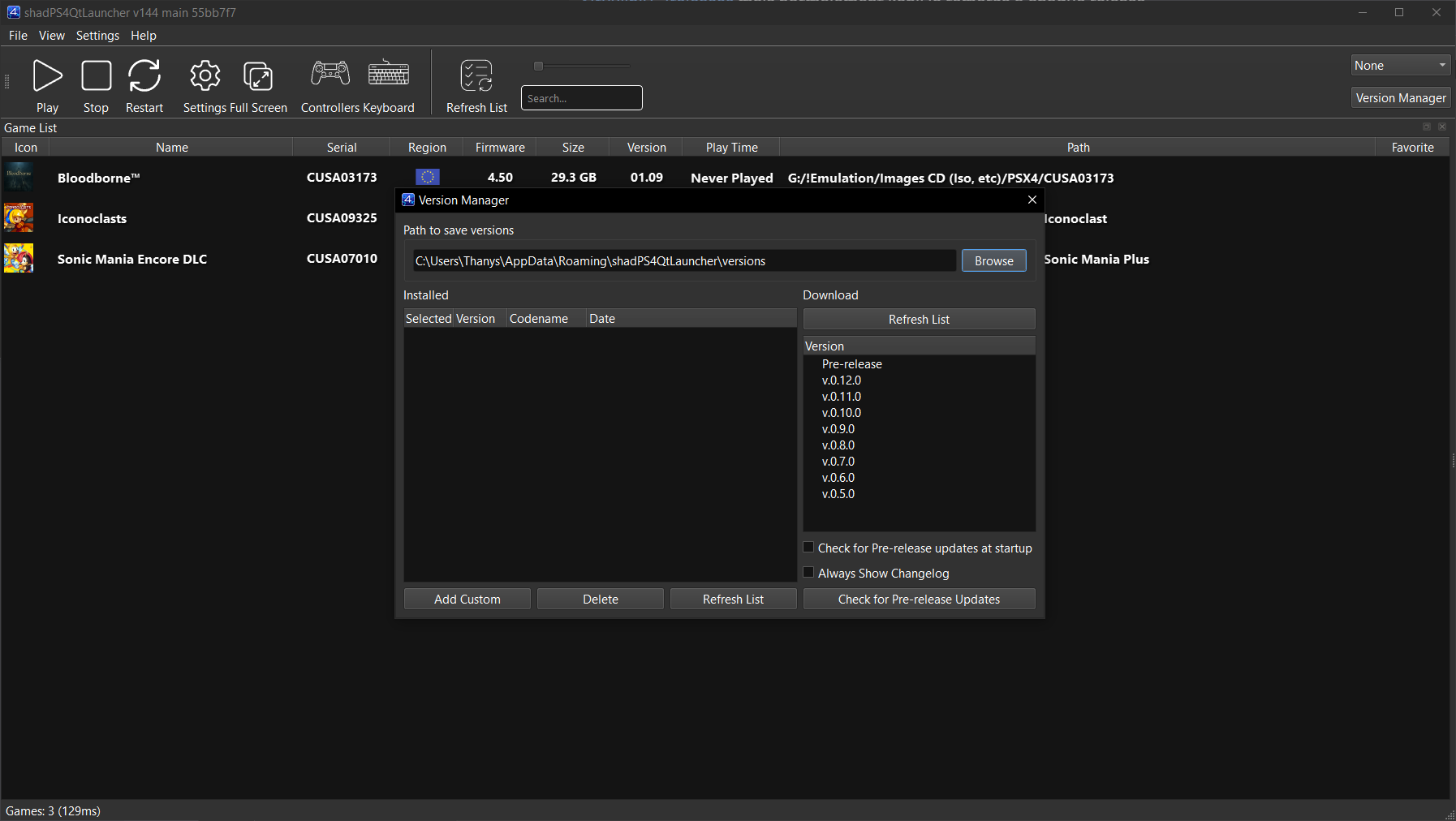
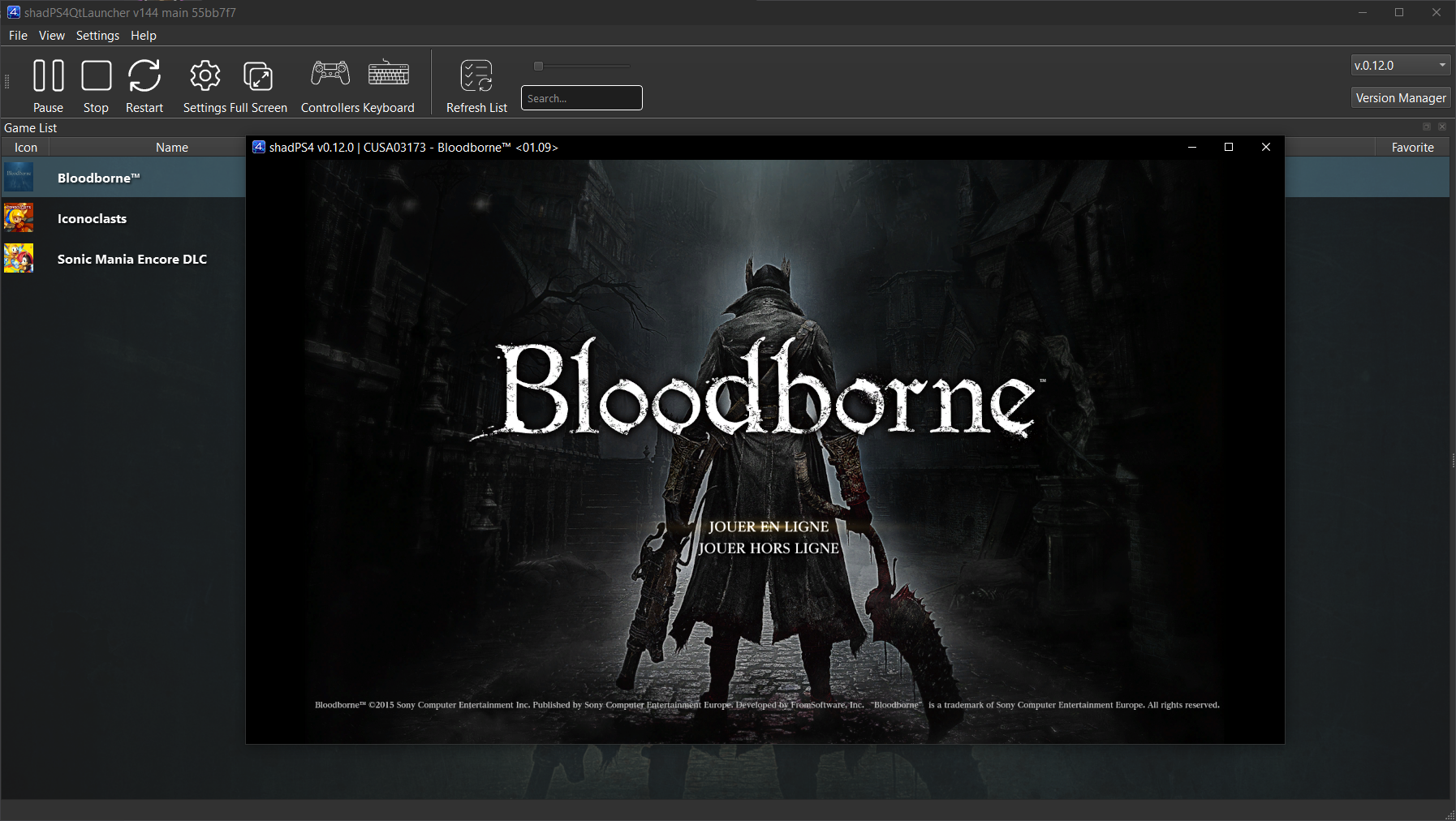
shadPS4 est un émulateur PlayStation 4 open-source. Depuis la version 0.12.1, il abandonne son interface graphique intégrée pour fonctionner uniquement en ligne de commande.
 
Pour faciliter son usage, une interface externe est disponible. Elle permet de lancer des jeux, configurer les options, et suivre les performances via une interface visuelle simple et intuitive.
 

Cette interface est développée séparément et reste compatible avec les futures versions de shadPS4.


Les changements:
– Improve game search performance in table and grid views (#430)
– Allow to Select and Remove Multiple Versions at Once (#435)
– Change color codes for compatibility statuses (#439)
– New Crowdin updates
– Misc fixes


Télécharger ShadPS4 (GUI) v357 (26.3 Mo)

Site Officiel

En savoir plus…

PlayNite est un gestionnaire open source de bibliothèque de jeux vidéo et un launcher avec prise en charge des bibliothèques tierces telles que Steam, GOG, Origin, Battle.net et Uplay. Incluant le support d’émulation de jeu et fournissant une interface unifiée pour vos jeux.
 
Les changements sont visibles ici (non compatible windows 8 et inférieur).


Télécharger PlayNite v10.60 (144 Mo)

Site Officiel

En savoir plus…

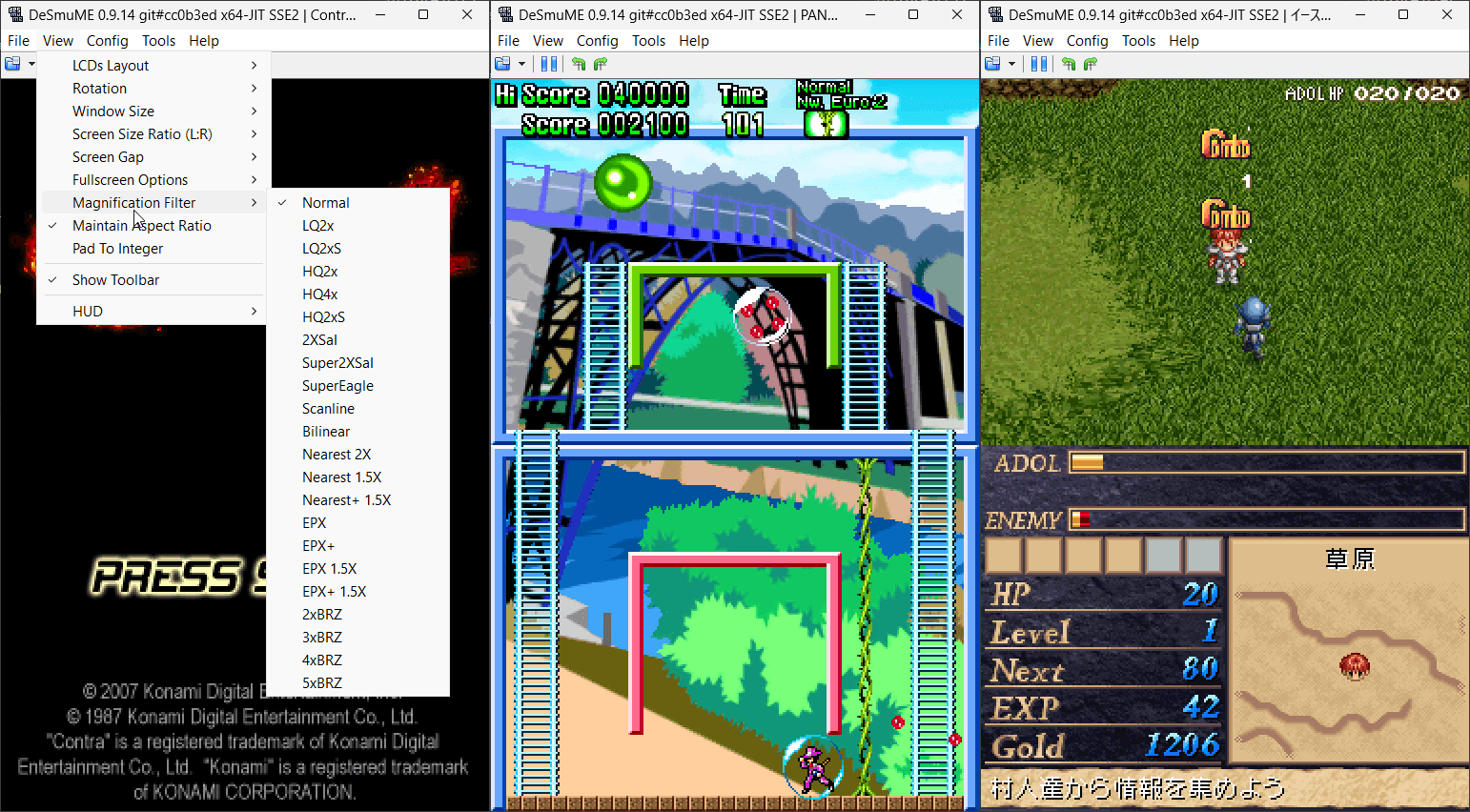
Il s’agit de l’émulateur de Nintendo DS mais dans une version en cours de développement.


(Builds automatiques ou là)
 
Les principaux changements depuis ma news précédente sont:
– fix senseless Null3DColorOut::SetSize no-op check and add missing base renderer SetSize() call in _ApplyFramebufferSettings(). This was leaving a buffer too small, or something, I don’t know, but it was stomping memory it shouldn’t. fixes #985
 
Notez que les fichiers sont mis à jour régulièrement sur notre site mais ne sont newsés que de temps en temps.


Télécharger DeSmuME (Dev) v0.9.14.1725 (2.6 Mo)

Télécharger DeSmuME (Français) v0.9.14 (14/02/2024) (2.1 Mo)

Site Officiel

En savoir plus…

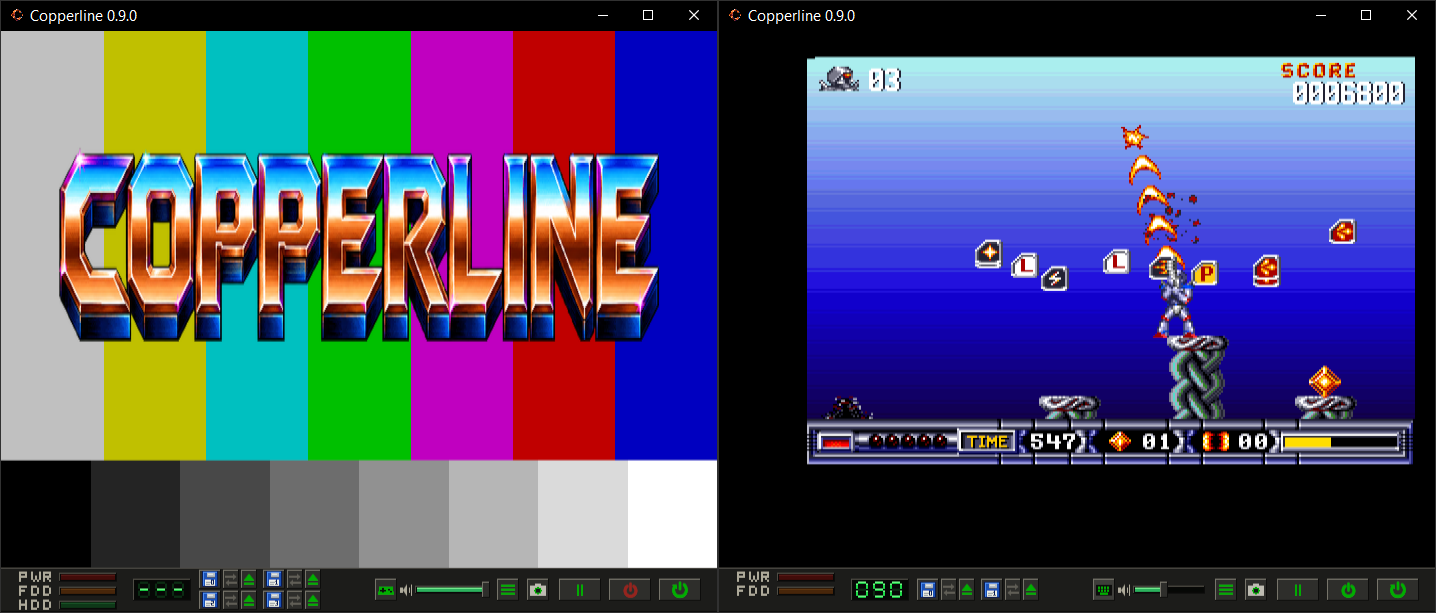
Copperline est un émulateur Amiga écrit entièrement en Rust. Il vise à reproduire fidèlement le fonctionnement du matériel d’origine, avec une émulation précise jusqu’au niveau des cycles d’horloge (cycle-accurate). Son architecture modulaire facilite le développement et permet d’émuler les principaux composants de la machine, comme le CPU, le Copper, le Blitter, Paula et les CIA.


Télécharger Copperline v0.20.0 (92.2 Mo)

Site Officiel

En savoir plus…

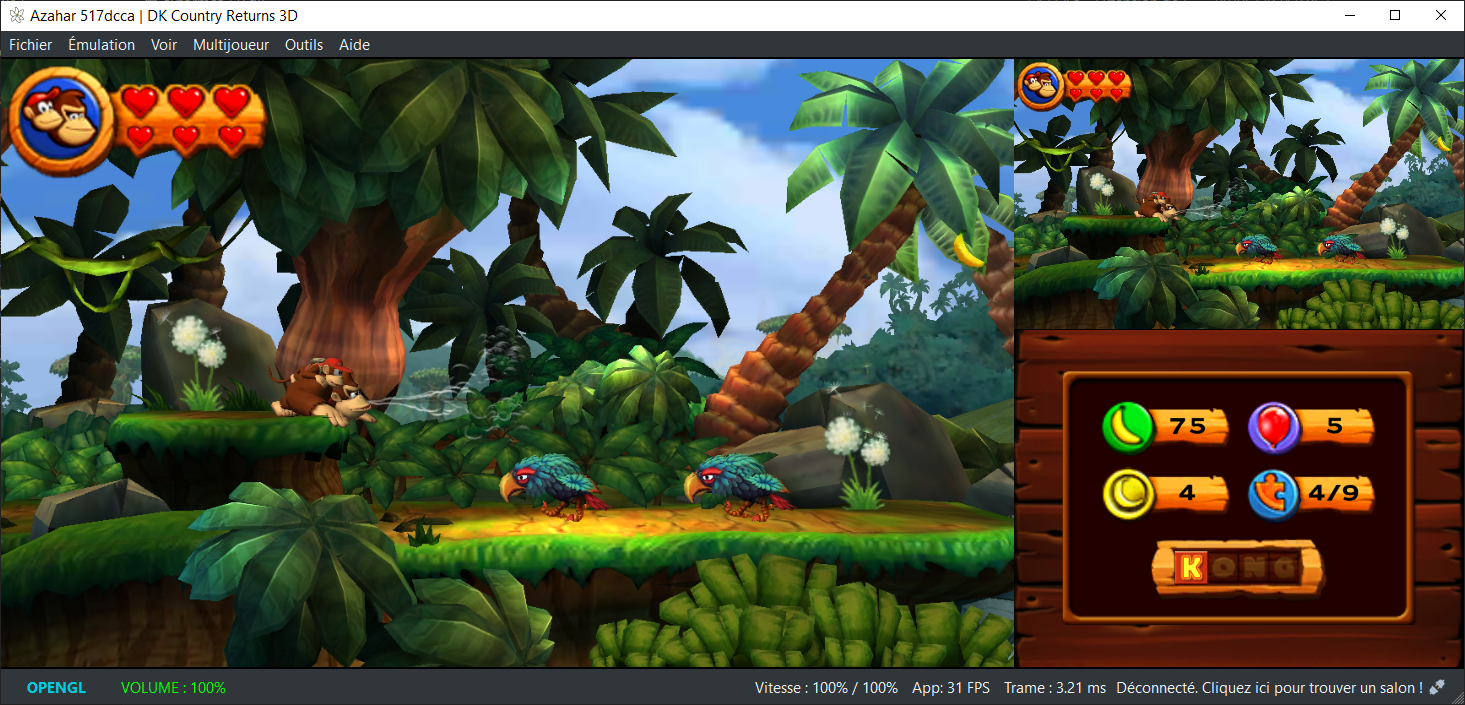
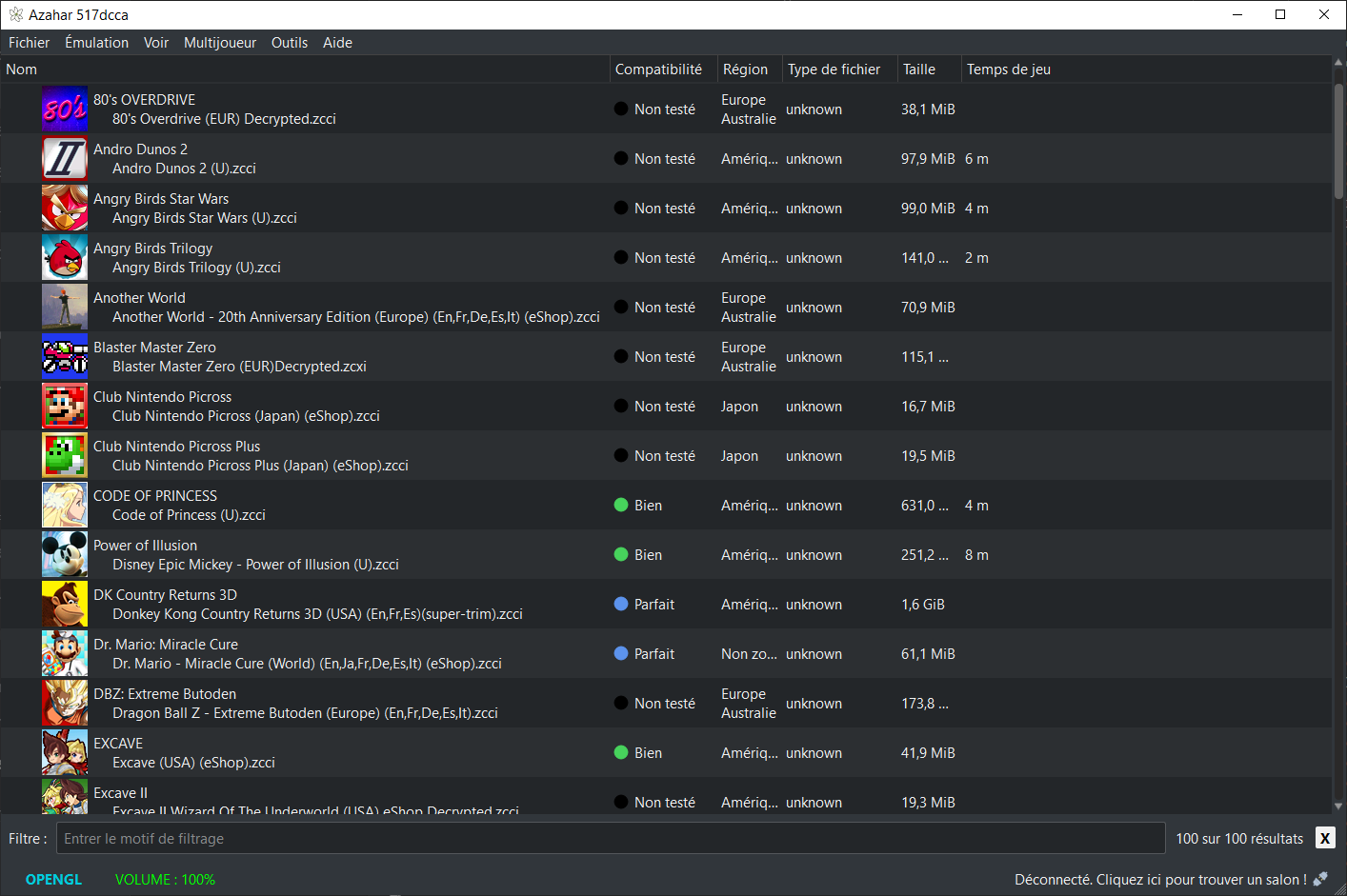
Azahar est une fusion entre Lime3DS et le fork Citra de PabloMK7.


Soyez informé que la prise en charge des jeux cryptés n’est pas disponible…
 
Pour éviter toute confusion concernant les objectifs d’Azahar, la décision a été prise de limiter autant que possible le contournement du TPM (Trusted Platform Module). Le contournement ne sera effectué que lorsque l’interopérabilité du code de Nintendo est nécessaire avec Azahar ou d’autres codes de Nintendo. En conséquence, Azahar n’autorisera pas le lancement ou l’installation de jeux cryptés à moins qu’ils n’aient été obtenus par le biais des applications officielles de Nintendo, telles que l’eShop ou les paramètres système.
 

Note: Les fichiers .3ds non cryptés sont désormais pris en charge nativement.

 
Les changements:
 
All
All
– Fixed an issue where Azahar could instantly crash when opened on certain systems with poor Vulkan support. | @Wunkolo #2528
– The « Skip Presenting Duplicate Frames » setting has now been disabled by default due to minor observed regressions compared to the old behaviour. | @PabloMK7 #2530, @OpenSauce04 #2536
– Fixed an issue which could cause Azahar’s Vulkan renderer to crash when handling certain shadow textures. | @Wunkolo #2533
– Fixes a crash in Monster Hunter 4 Ultimate after opening the equipment menu.
 
Windows
– The About menu and Azahar’s log file now indicate which build variant is currently being used (MXE, MSVC or MSYS2). | @OpenSauce04 #2538


NB: L’outil Azahar Artic Setup est une application homebrew pour la Nintendo 3DS qui permet d’installer des fichiers système et des données uniques de la console sur l’émulateur Azahar en utilisant votre console. Il diffuse l’application « Paramètres Système » ainsi que le module système NIM pour effectuer une mise à jour système, et copie vos données uniques de la console pour activer les fonctionnalités en ligne.
 

Télécharger Azahar v2126.1.1 (41.9 Mo)

Site Officiel

En savoir plus…

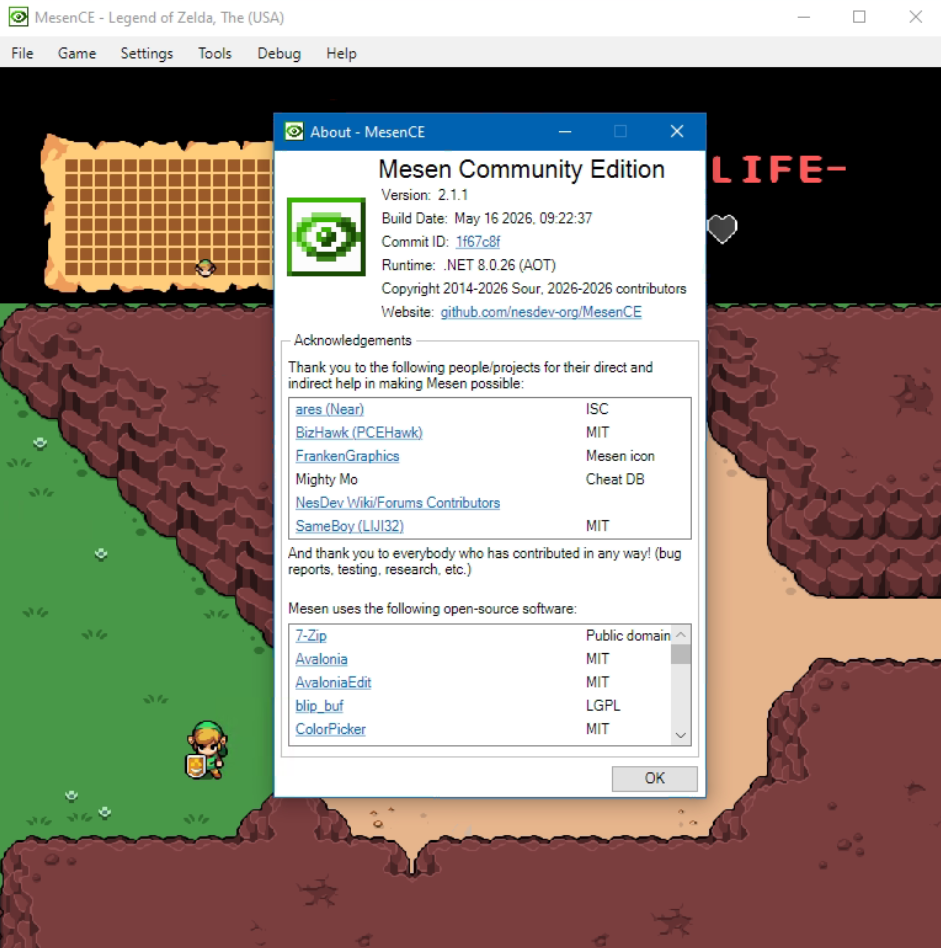
Mesen Community Edition est un émulateur multi‑systèmes open‑source pour Windows, Linux et macOS, développé par la communauté à partir du projet Mesen2. Il vise une haute précision, une excellente compatibilité, et propose une interface moderne accompagnée d’outils avancés pour les joueurs comme pour les développeurs.


Né initialement comme un fork pour pallier la mise en pause du développement de Mesen2 par son créateur original (Sour), MesenCE est désormais devenu la continuation officielle et exclusive du projet. Face à la dynamique communautaire, Sour a choisi de rejoindre activement l’équipe de MesenCE afin d’y centraliser tout le développement futur. Cette transition sous un modèle entièrement géré par la communauté permet d’intégrer plus rapidement les correctifs, d’améliorer la compatibilité multiplateforme et d’ajouter de nouvelles fonctionnalités, tout en préservant l’esprit d’excellence du projet d’origine.
 
Les changements:
 
Mesen is becoming MesenCE, a Community Edition maintained by Sour and various community members. All development will occur in this new fork going forward so it can continue whenever Sour is away from the project.
 
– SMS: Fixed scanline counter stopping on scanline 191 in 224/240-line modes (#272)
– Audio: Fixed « Reduce volume during fast forward » option behavior when fast forwarding while the window is not focused (#271)


Télécharger MesenCE v2.2.1 r20260911 (79.7 Mo)

Site Officiel

En savoir plus…

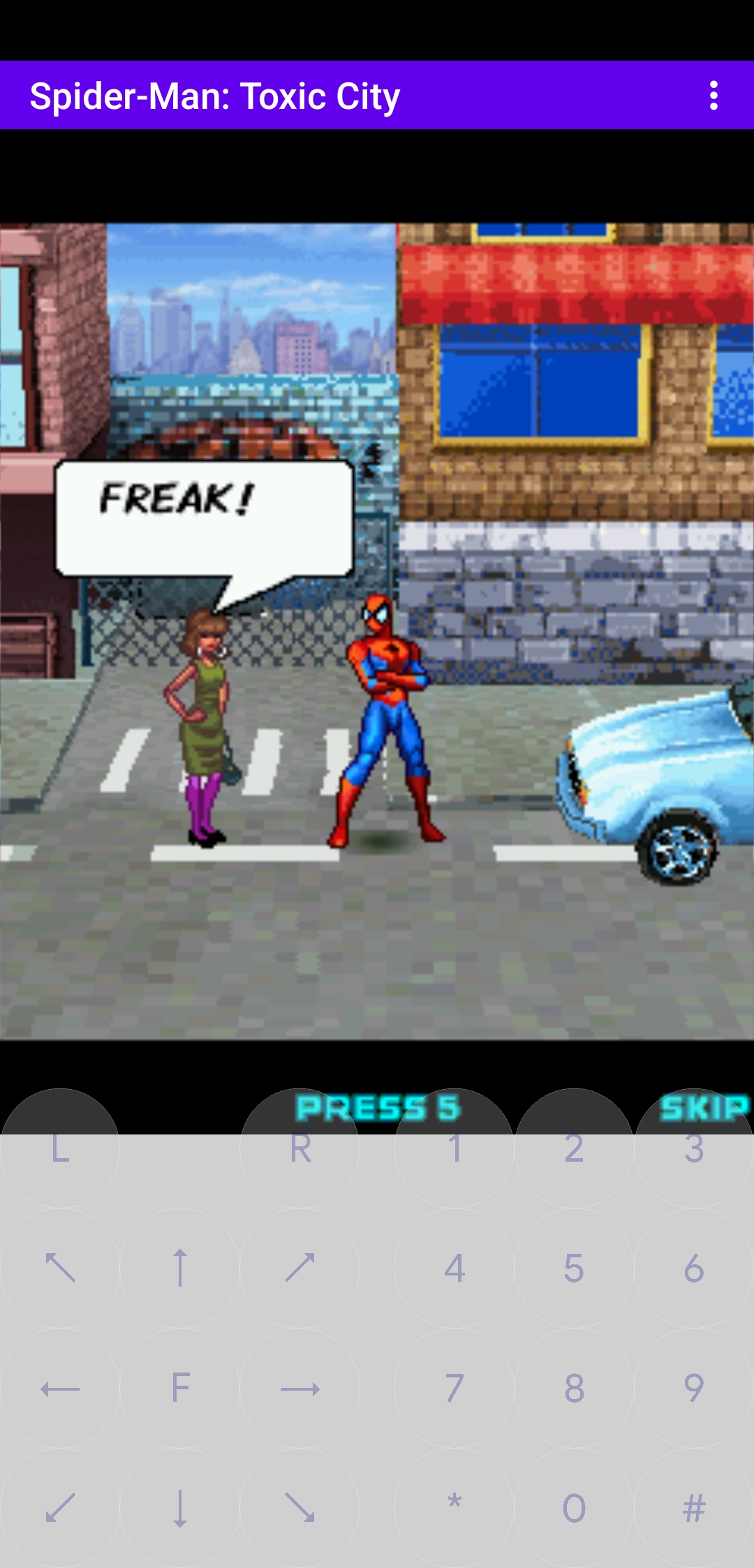
Un émulateur du système Symbian OS. (Builds automatiques)


Les changements sont les suivants:
– Merge pull request #703 from yeatse/upstream-pr/aif-list-icons
– applist: select legacy launcher icons by list size
– Merge pull request #702 from yeatse/upstream-pr/ios-memory-cards
– ios: mount memory cards and retain them across guest relaunches
– system: recognize wrapped memory card archives
– Merge pull request #701 from yeatse/upstream-pr/android-restored-app-list
– android: preserve restored main activity fragments
– Merge pull request #700 from yeatse/upstream-pr/sis-install-target-case
– package: resolve an SIS install target when the file is written


Télécharger EKA2L1 v0.0.9 r260912 (70.7 Mo)

Site Officiel

En savoir plus…


https://getourbonus.com/fr/accueil

https://www.romspedia.com/