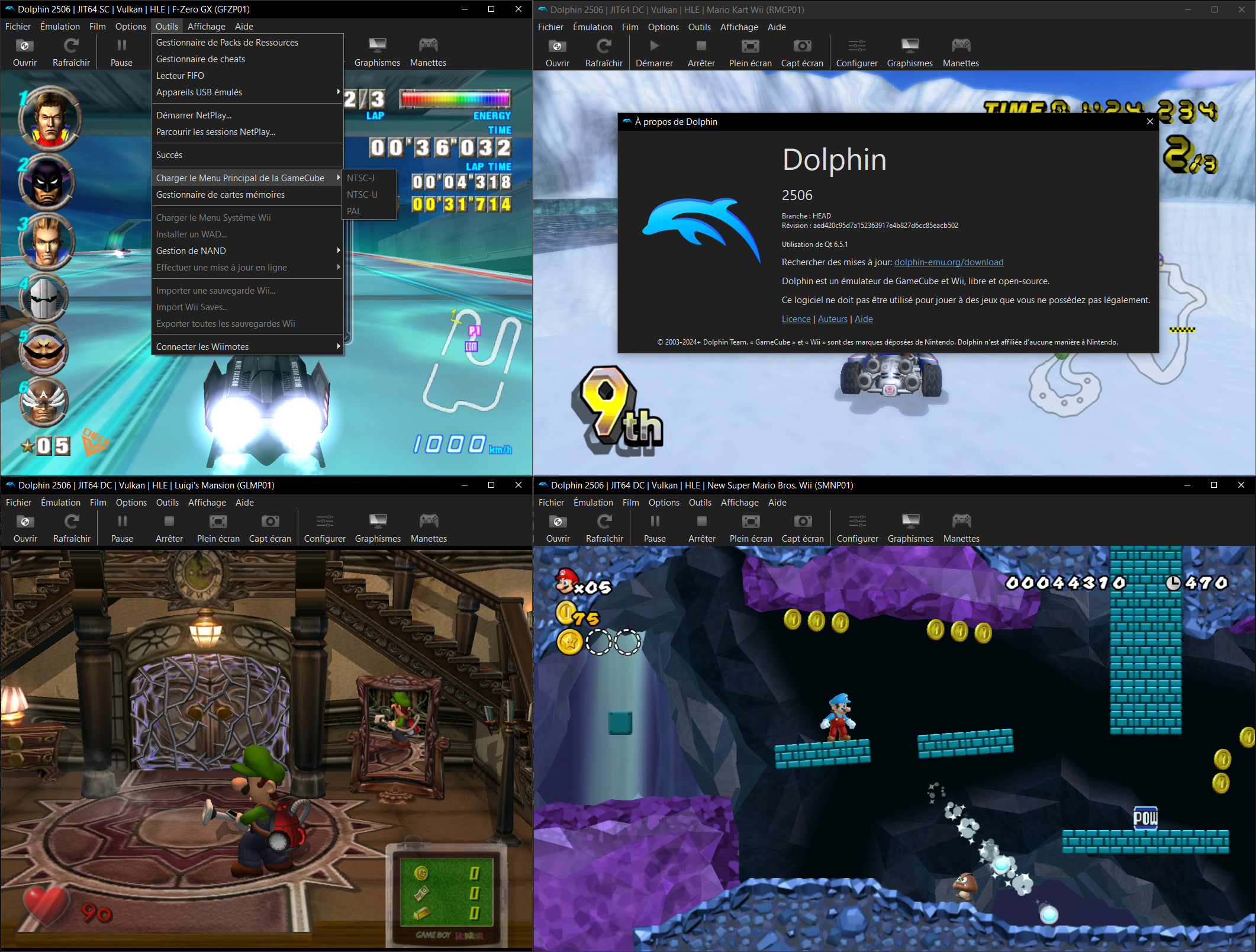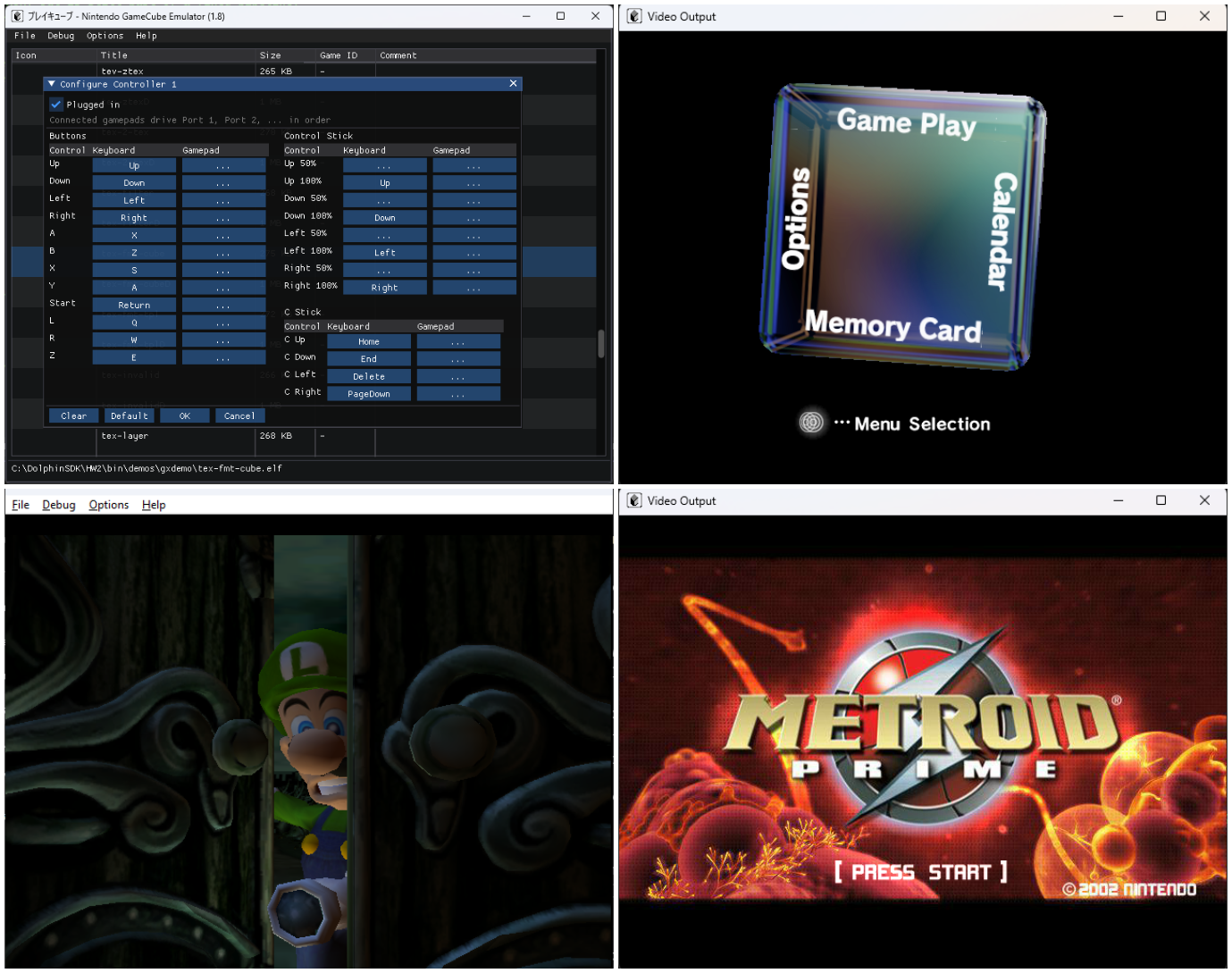


Créé par Ector et F|res, voici la dernière version de Dolphin, un émulateur GameCube/Wii et également Tri-Force (système d’arcade élaboré par Nintendo-Sega-Namco dont le hardware est basé sur celui de la GameCube).
Lire l’article concernant les changements apportés par cette version ici.
Le changelog en résumé:
– Android NetPlay support added: NetPlay GUI implemented on Android using Jetpack Compose, enabling lockstep multiplayer, controller port configuration, and cross-platform play with desktop builds.
– Cross-Platform NetPlay details: Support for playing across Android and desktop platforms, with caveats regarding CPU architecture JIT differences and GPU driver frame-buffer desync risks.
– Added XFB Resolution OSD Display: Added an option under Config > On Screen Display (« Show XFB Resolution ») to show real-time native rendering/output resolution on screen.
– Wii Balance Board routed for Android DolphinBar: Fixed missing check on Android allowing the Mayflash DolphinBar to route Wii Balance Board input directly to the Balance Board slot.
– CMake build system migration: Replaced custom Visual Studio project files with CMake across all platforms, reducing over 12,000 lines of platform-specific code and upgrading to Visual Studio 2026 / latest VC++ Redistributable.
– DSPTool removal: DSPTool is no longer shipped with Windows pre-compiled builds and must be compiled manually if needed.
– Global Settings Search on Android: Added a search bar to the Android settings UI to easily locate submenus and settings.
– Android Rumble improvements:
– Fixed an issue where wrong vibrator IDs were passed, enabling rumble on devices with non-zero IDs (e.g., Retroid devices).
– Set vibration attribute to USAGE_MEDIA so Android system touch feedback settings no longer disable in-game rumble.
– Implemented timed rumble cancellation, allowing games to control rumble duration accurately instead of capping at 100ms.
– Security & AI Vulnerability Reports management: Adopted GitHub’s vulnerability reporting flow to handle the surge in AI-generated security bug submissions; addressed several buffer overflow fixes and file validation checks.
– Infrastructure updates: Secured macOS build bot infrastructure following a zero-day macOS Screen Sharing exploit (macOS Tahoe 26.6.1) incident; verified all distributed macOS builds (including 2606a and 2606-294 through 2606-302) were uncompromised.