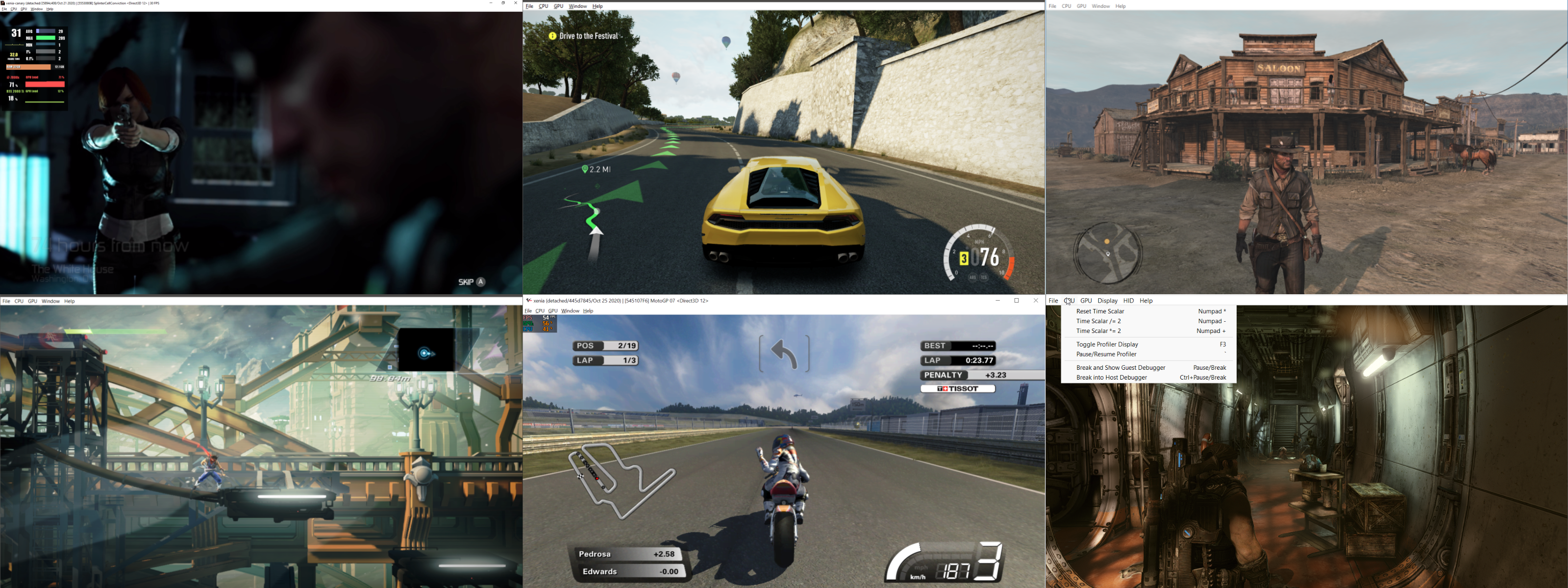
Créé par Ben Vanik alias Noxa (PSP Player), il s’agit d’un projet de recherche pour développer un émulateur Xbox 360. Notez qu’il vous faudra une machine très performante pour lancer des jeux commerciaux de façon fluide. Plus d’informations ici sans oublier le site de développement là. Un manager permettant de gérer l’émulateur Xenia est disponible ici.
Nplayers : Exclusivement pour les frontends comme EmuLoader, MaLa etc.. ce fichier vous servira à classer les jeux par nombre de joueurs possibles : 1p, 2p, 1p+2p, 1p+2p alt, etc…
Multiplayer (ex Nplayers32) : Exclusivement pour MAME/MAMEUI ou clone de celui-ci… ce fichier vous servira à classer les jeux par nombre de joueurs possibles : 1p, 2p, 1p+2p, 1p+2p alt, etc…
Azahar est une fusion entre Lime3DS et le fork Citra de PabloMK7, l’émulateur de Nintendo 3DS sera prochainement disponible mais en attendant vous avez l’info!
Gopher2600 est un émulateur d’Atari 2600. Bien que les performances ne soient pas aussi efficaces que certains autres émulateurs, il convient néanmoins pour jouer à des jeux sur un ordinateur raisonnablement moderne.
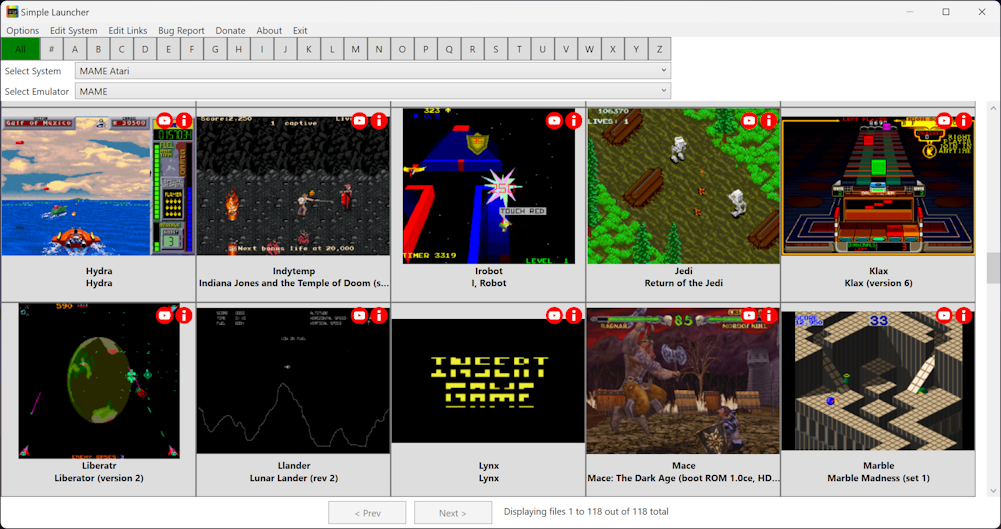
Simple Launcher est une interface pour émulateur qui facilite la lecture de jeux rétro.
Les changements sont les suivants:
– I performed a major refactoring of the EditSystem class to implement better validation in the input fields of the EditSystem window. This was necessary to prevent users from entering incorrect values.
– I improved the system validation mechanism of the system.xml file when ‘Simple Launcher’ loads. Instead of warning the user about a corrupted file and shutting down the application, it will now remove any corrupted systems, alert the user, and preserve the well-formatted systems. This is useful in case of a corrupted system.xml file.
– I implemented in-memory download and extraction of files as a backup method in case the regular extraction method fails. This was done because some users were encountering extraction errors of newly downloaded files, due to file locks.
– Added different versions of the 7z executable for x86 and x64. The extraction method will automatically detect the user environment and use the appropriate executable.
– Added code to automatically convert [url formatted text] into real links in the RomHistory window.
– Improved the log class to send more debug information to the developer.
– Added functionality to delete a game file from within the UI, available in the right-click context menu.
– Added functionality to auto-generate image previews for the loaded games. The image file is saved inside the corresponding System Image folder with the correct name, available in the right-click context menu.
– Added an image pack for Atari 8-Bit.
– Update the emulator links to the latest version.
– Bug fixes.
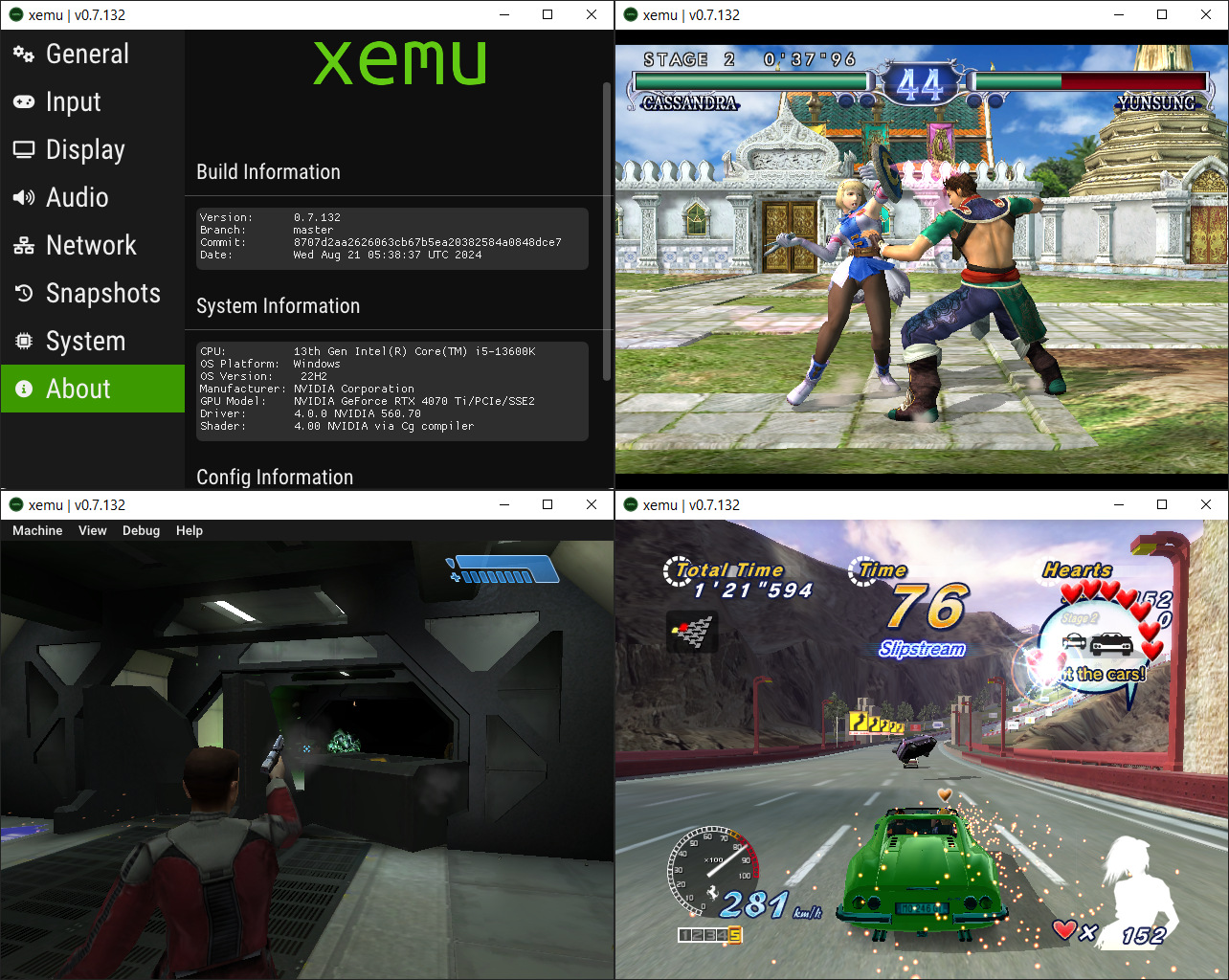
Xemu est une application multiplateforme et open source qui émule le matériel de la console de jeu Xbox d’origine, permettant aux utilisateurs de jouer à leurs jeux Xbox sur les systèmes Windows, macOS et Linux.
Ce projet est une branche active du projet XQEMU, qui est lui même basé sur le projet QEMU qui est populaire et très activement maintenu.
A noter que la version 32 bits n’est pas officielle (réalisée par Lo v2).
Quelques informations d’ordres générales concernant les modifications:
– nv2a: Check supported line width
– Added logic to check for the supported line width range before setting the line width to avoid errors.
– I also moved the glLineWidth call so that it could be after the call to get the supported line width range for the desired line type.
– Moved the glLineWidth call outside the if/else
– Moved the code to query line GL_SMOOTH_LINE_WIDTH_RANGE and GL_ALIASED_LINE_WIDTH_RANGE to nv2a_gl_context_init(void) so that it’s just called while OpenGL is being initialized.
– Removed the lineWidth local variable. It’s simpler to just call glLineWidth in the if and else blocks
– Misc fixes
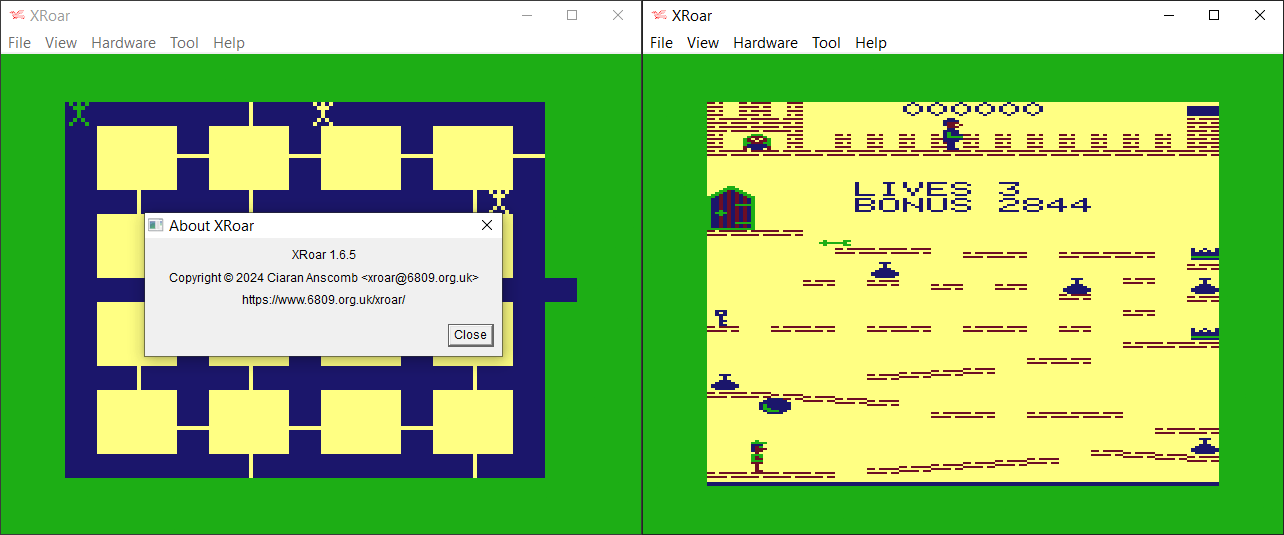
XRoar est un émulateur Dragon32/64 mais aussi Tandy CoCo.
– New -joy-db-file option specifies SDL-compatible gamepad DB file
– New Linux evdev joystick module
– Large changes to underlying UI mechanisms
– New features backported to GTK+ 2 UI
– Fix: Reduce memory use when reading gamepad mappings file
– Fix: Include missing files in tarball distribution [Rui Chen]
Une version de GameEX qui à l’origine était un projet distinct mais qui utilise maintenant la même base de code que les autres versions.
Les avantages de la version multiplateforme :
– Peu ou pas de dépendances externes. Juste Unity/Mono.
– Eventuellement des versions pour d’autres plateformes telles que Linux et Android.
– L’installation sera basée sur le web en s’appuyant sur GameEx online.
– Tout utilise la même base de code. Toutes les versions sont mises à jour.
Inconvénients :
– Il y a un support vidéo mais pas encore de support MKV.
– Il manquera certaines fonctionnalités, mais Arcade et GameEx normal seront pris en charge.
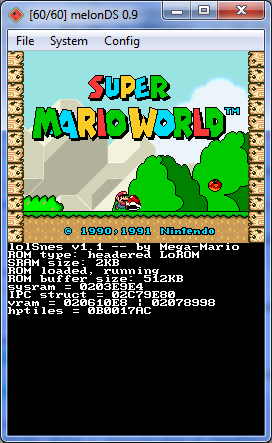
Ecrit par StapleButter (auteur des émulateurs de SuperNES lolSNES/blargSNES pour DS et 3DS et ayant contribué pour DeSmuME), il s’agit d’un émulateur de Nintendo DS/DSi pour Windows et Linux dont l’objectif est de faire les choses bien et rapidement, semblable à blargSNES mais en mieux (dixit l’auteur).
Les changements:
– add splashscreen (Arisotura)
– add About dialog (Nadia)
– emulation fixes for calico (fincs)
– make the frontend mostly thread-safe
– refactor core to support multiple instances in one process
– OpenGL renderer: avoid undefined Z when using W-buffering (Generic)
– improve microphone input (Arisotura)
– add support for multiple windows (Arisotura)
– new configuration system (Arisotura)
– add OpenGL compute shader renderer (Generic)
– implement framerate target presets (Jakly)
– fix microphone blow noise input (Generic)
– add LAN support (Arisotura)
– add Nix flake (Nadia)
– attempts at improving local multiplayer connections (Arisotura)
– many accuracy improvements to the software 3D renderer (Jakly)
– fix inaccuracy with NO$GBA debug registers (pants64DS)
– OpenGL renderer: add support for changing BG0HOFS midframe (Arisotura)
– fix zstd ROM loading issues (Nadia)
– audio: add Gaussian (SNES) interpolation (Nadia)
– fix DSiWare detection (JesseTG)
– add support for R4 Revolution/M3 Simply carts (asiekierka)
– fix DS/GBA comm not working when using FreeBIOS (Nadia)
– probably more
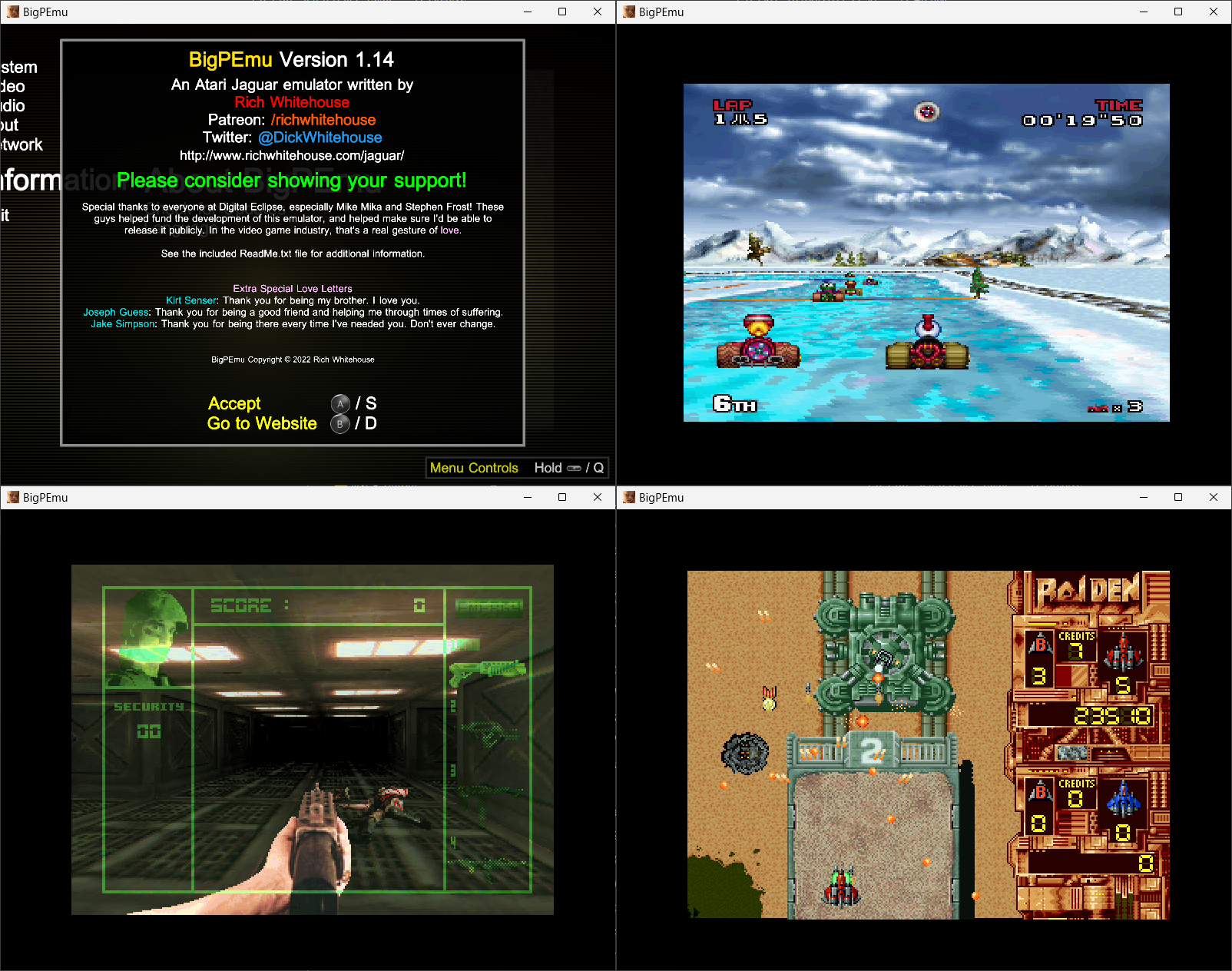
Créé par Rich Whitehouse, BigPEmu est le premier émulateur Atari Jaguar et Jaguar CD à offrir une compatibilité avec l’ensemble de la bibliothèque de cartouches vendues dans le commerce et offre d’excellentes performances et une grande variété de fonctionnalités uniques.
A noter qu’à la base il s’agissait d’un emu closed source qui était intégré dans la compilation Atari50. Il s’agit sans l’ombre d’un doute du meilleur émulateur de Jaguar devant Phoenix (qui reste le meilleur émulateur de 3DO), les VirtualJaguar, Mame et tout le reste.
Les changements sont les suivants:
– The iOS port is done, get it on the App Store here: https://apps.apple.com/us/app/bigpemu/id6737359949 Special thanks to neurocrash for putting so much time into testing the iOS build for me.
– Lots of new interface functionality (including a touch-based interface option), courtesy of the mobile port work. All of this functionality can be accessed through the menu on non-mobile platforms.
– Multi-touch device support has been added for the Windows (x64 and ARM64) platforms, in order to take advantage of the touch interface work done for the mobile ports.
– Added a « Pad Wheel » feature, which can be activated through the input binding system.
– Support for a new BigPImage disc format. BigPImage files can be created from existing images or physical discs through the developer menu. Before anyone asks, CHD support looked problematic for quite a few reasons (mostly pertaining to the likelihood of image-based performance problems and implementation bloat inherent to the format), making this new format a much more optimal choice for the particular needs of this emulator.
– Added stereoscopic rendering support to the AvP script.
– Added a new DOOM script with throttling and music options.
– Added a new turbo/rapid fire script.
– Added a « Factory Reset » option, as a convenient means of resetting the configuration across all categories.
– Added an option to auto-assign new input devices. Devices will not be auto-assigned if they have any existing associations with any Jaguar inputs.
– Fixed an incredible number of bugs, pertaining to both interface and emulation. Because so many fixes have been made to the emulator core in this release, I’m especially interested in finding regression bugs. Please let me know if you experience any issues which don’t occur in 1.15.
PS : Pour choisir la langue, quand vous lancez l’émulateur, allez sur information / language / strings_fr.txt
Pack de préréglages glsl précompilés pour l’émulateur BigPEmu disponible ici.