Nestopia a été abandonné depuis des années. C’est un excellent émulateur, et le perdre serait une honte. Le but de ce projet est de garder en vie Nestopia aussi longtemps que possible et de s’assurer qu’il continue à fonctionner sur des distributions Linux ou Windows.
 
nestopia
 

Des améliorations sont régulièrement apportées afin d’être le meilleur notamment sur Linux. Sur Windows c’est déjà le cas et le but sera donc de poursuivre les efforts.

Cette version, basée sur la version officielle 1.40 finale, apporte son lot de correction et inclus toutes les corrections et améliorations de la version 1.40 A-H (en provenance de R. Belmont) et de la version 1.41.1 de Geestarraw (elle même incluant les corrections et ajouts de la version non officielle 1.41 de Keith Kelly) sans oublier les ajouts de la version 1.41.3 (et 1.41.2 de notBald). Ainsi Dan brook, l’auteur, a pu logiquement continuer le développement de cet émulateur en le passant à la version 1.42 et supérieur, faisant de cette version la plus aboutie de toutes.


Les grandes lignes:

 
32 bits:
 
Shell:
Additions:
– win32: Expose DMC pop reducer and high/lowpass filter options
 
Core:
Additions:
– Backport all changes from Nestopia JG 2.0.0
 
32/64 bits:
– Passed 144/144 AccuracyCoin tests
– Passed 156/156 TASVideos Test Suite
– Fixed MMC5 CHR bank update behaviour (Castlevania III flickering scanline)
– Add support for Mapper 413 (BATMAP-SRR-X)
– Add support for Mapper 372 (SFC-12)
– Add support for Mapper 535 (UNL-LH53)
– Add support for Mapper 512 (SACHEN-DAHENG)
– Fix up Mappers 176, 215, 529
– Database fixes for some obscure games
 
Version 1.54.0
————–
– More accurate PPU Open Bus decay time
– More accurate fast 0x2007 reads of palette RAM
– Implement support for NES 2.0 exponent-multiplier notation for ROM sizes
– Use file contents rather than extension to determine FDS games
– Prevent segfault on macOS with recent versions of Apple clang
– Add aspect ratio setting
– Support for The Jolly Good API 2.0.0


Site des sources GIT.

Télécharger Nestopia Undead Edition v2.0 (37.7 Mo)

Télécharger Nestopia Undead Edition v1.53 FR (1.1 Mo)

Site Officiel

En savoir plus…

KytyPlus est un fork de KytyPS5, lui-même dérivé du projet original Kyty. Il reprend son émulation de la PlayStation 5 tout en ajoutant plusieurs améliorations, notamment le support expérimental des jeux PS4 via shadPS4, le FSR 1.0, un cache Vulkan permettant de conserver les pipelines compilés et différentes optimisations destinées aux GPU intégrés (iGPU). Il permet également l’installation des fichiers PKG depuis son interface et propose une gestion unifiée des jeux PS4 et PS5. Le projet est encore en développement et de nombreux jeux peuvent rencontrer des plantages, des écrans noirs ou des problèmes graphiques.


Les changements:
 
v3.4 fixes a critical packaging bug where the shadPS4 backend wasn’t bundled into the release, and hardens the game-loading path so real commercial content can actually boot. This release includes the first verified licensed-content boot on the shadPS4 delegation path.
 
Changes
🐛 Critical fix — shadPS4 backend bundled
Fixed: shadPS4 backend was not included in the release, breaking the PS4 delegation path entirely. The shadPS4 runtime is now correctly bundled so PS4 titles can be dispatched and executed.
Result: the PS4 delegation path is fully operational again and verified against real content..


Télécharger KytyPlus v3.4 (51.9 Mo)

Site Officiel

En savoir plus…

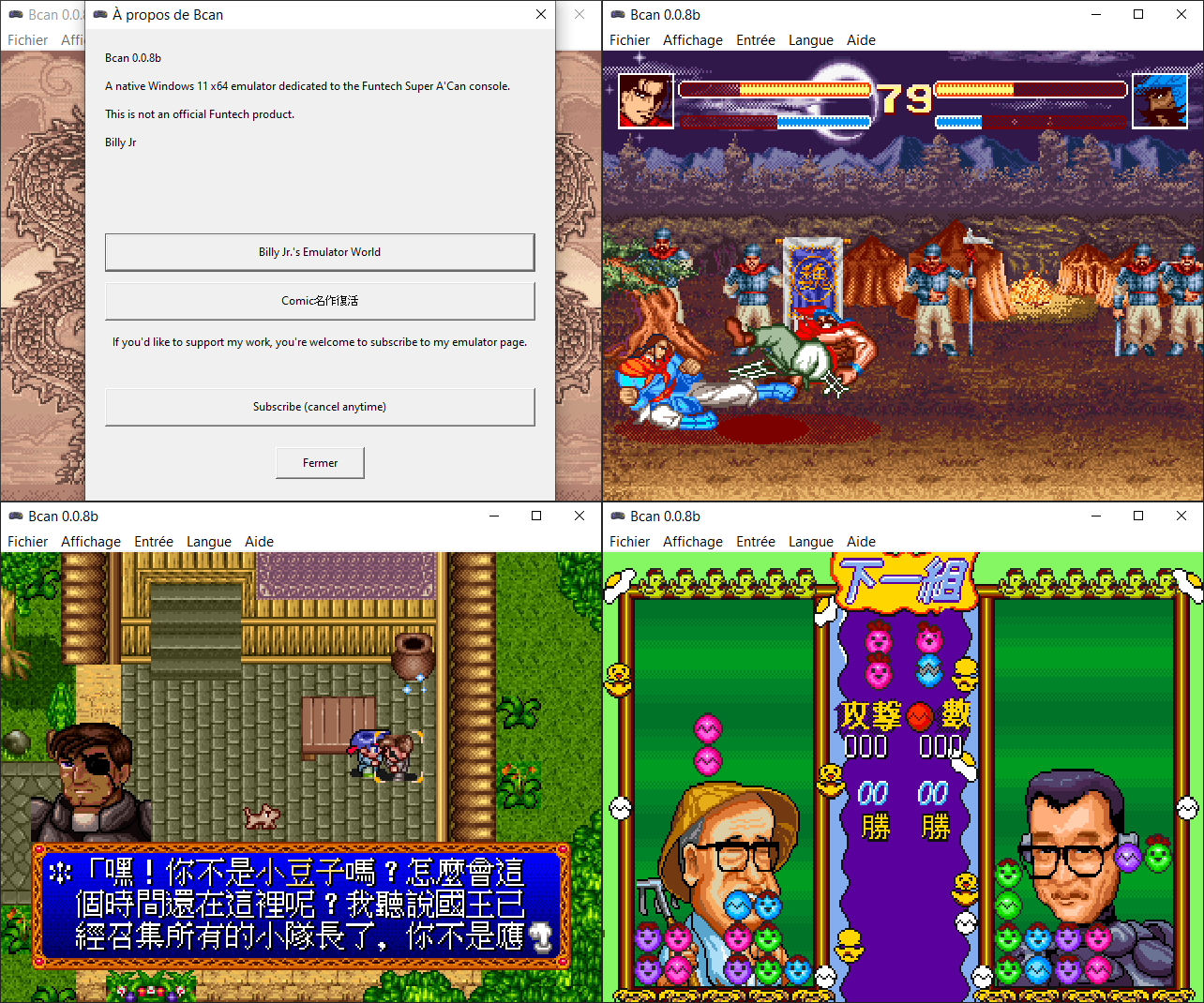
B’can est un émulateur de la console taïwanaise Super A’Can, développé par BillyJr et basé sur MAME 0.287.
 
Le projet reprend l’émulation existante de la Super A’Can et vise à corriger les problèmes encore présents, notamment au niveau de l’affichage et du son. BillyJr indique avoir repris et corrigé le code à de nombreuses reprises avec l’aide de l’IA et affirme que tous les problèmes actuellement connus ont été corrigés.
 
Un autre projet (non lié à BillyJr) d’émulation online est disponible ici.


Les changements:
 
First, some rather unfortunate news:
 
– It looks like it currently won’t be possible to get Bcan into MAME.
– The main issue is that MAME requires verification of the actual behavior of each piece of hardware, and that’s something I simply can’t do on my end.
– We haven’t actually taken apart a real machine and measured the pins, so even though the emulation can look very good, from MAME’s point of view there is still no evidence to back it up.
– However, there is some good news as well.
Thanks to this experience, I’ve managed to fix the issue that made the emulator run about 3% slower than the original hardware. In the 31-second demo, the difference is now down to just 1–2 FPS.
– Being able to get it synchronized with the real hardware is pretty impressive in itself, I think.
– As for MAME, I think we’ll have to put that on hold for now and come back to it later.


1. Fixed the issue where the screen at the bottom of Moon Lake in « Evil Son » would become corrupted.
– The problem was that a tiled ROZ size code of 0 on the UM6618 was incorrectly interpreted as 32×32.
– The correct behavior is 8×8, with a total of 64 map entries. The old version would read past the end of the map and incorrectly interpret the following graphics data as map data.
– The correct fixed 32×32 special case used by the BIOS one-bit startup screen is still preserved.
2. Fixed the palette page calculation for non-8bpp ROZ in « The Gambling King ».
– The ROZ color field always selects a 16-color palette page.
– After the fix, a lower graphics bit depth will no longer cause the wrong color page to be selected.
3. The fixes are implemented as global hardware behavior.
– There are no special cases based on game name, ROM hash, or game content.
– No game data has been modified or included.
4. Game speed is now almost exactly the same as on the original hardware.
– If no further issues are found, this should be the final A’can-related fix.
– Later today, friends in the subscriber area will first help test Chinese language support for Hero Chronicle and Dragon Quest V.
– The initial work like this always takes more time and progresses more slowly.
After that, things will move much faster.
– Once everything is confirmed to be working correctly, it will be made publicly available to everyone.


Télécharger Bcan v0.08e (1.3 Mo)

Site Officiel

En savoir plus…

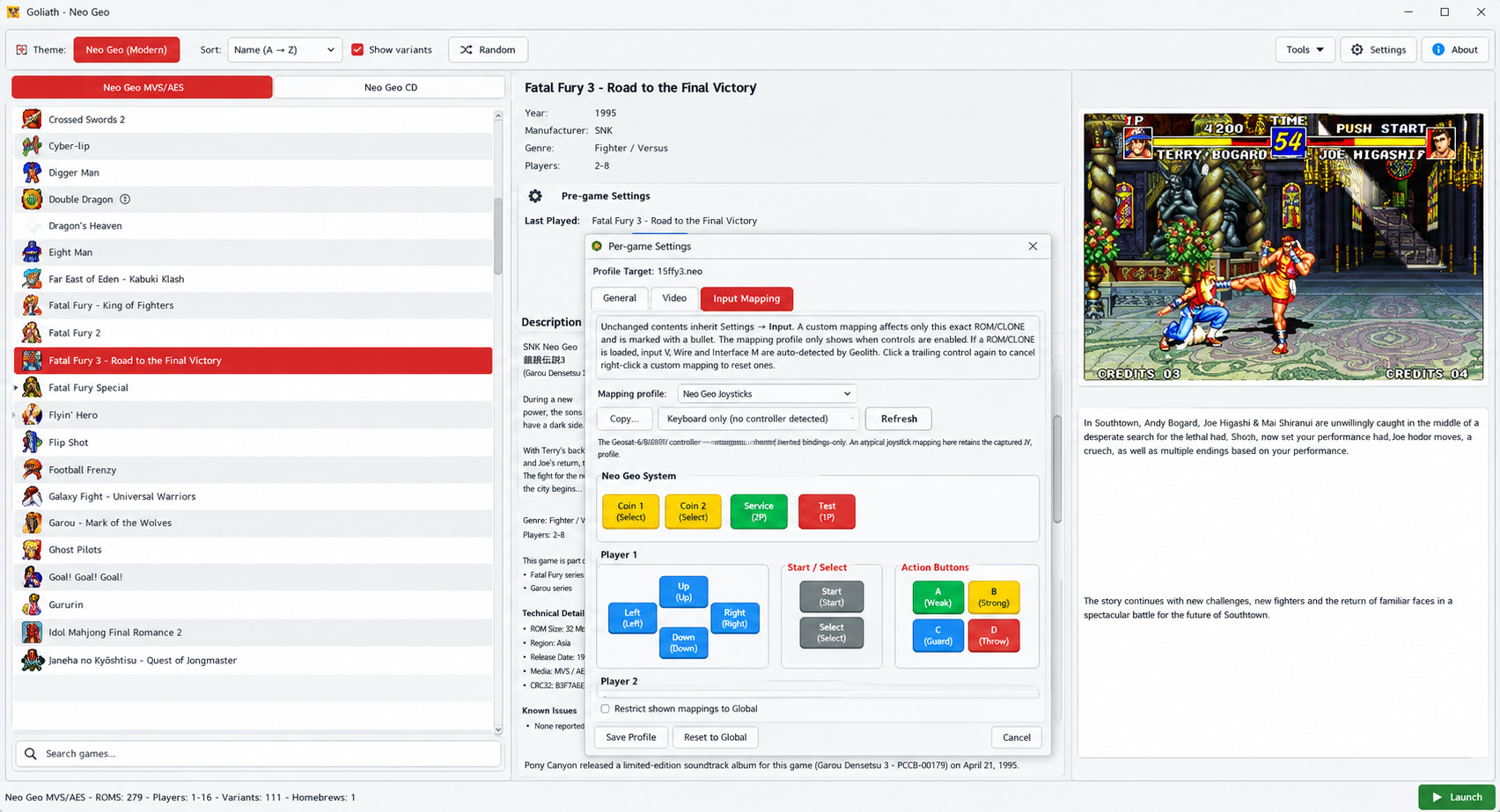
Il s’agit d’un frontend dédié à la Neo Geo, fonctionnant sur le principe d’un RetroArch spécialisé autour d’un seul système. Goliath assure la gestion de la ludothèque, des réglages, des sauvegardes et du lancement des jeux, tandis que l’émulation est assurée par le core Geolith via JGRF/JG.


Il prend en charge les jeux Neo Geo MVS/AES ainsi que la Neo Geo CD, avec notamment la gestion des variantes, la recherche et le tri des jeux, l’historique des sessions, les captures d’écran, le suivi du temps de jeu et différents outils de diagnostic.
 
Goliath permet également de personnaliser les paramètres d’émulation et les contrôles, de gérer les sauvegardes, de vérifier les BIOS et les fichiers de jeux, ainsi que d’effectuer des benchmarks et des exports audio. L’interface est basée sur Qt 6 et propose plusieurs thèmes clairs et sombres.


Télécharger Goliath v0.30.2 preview (37.7 Mo)

Site Officiel

En savoir plus…

OpenROM est une suite logicielle universelle, gratuite et open-source dédiée à la conversion de ROMs rétro. Conçue pour remplacer les outils propriétaires et fragmentés, elle fonctionne entièrement en local (100 % hors ligne) sans aucune collecte de données.


Interface et Ergonomie
– Esthétique Gaming : Propose une interface sombre moderne développée sous Flutter, inspirée des menus PS5 et Xbox, intégrant un tableau de bord, des cartes pour chaque ROM et des badges de plateforme.
– Personnalisable : Propose plusieurs thèmes intégrés (Cyberpunk, Terminal, Minimal, Gaming) et la possibilité d’en créer via des fichiers JSON.
– Prise en main fluide : Prise en charge native du glisser-déposer pour les fichiers et dossiers isolés ou groupés (traitement par lot).
 
Performances et Fonctionnalités Techniques
– Matrice de conversion complète : Prend en charge plus de 20 parcours de conversion parmi les formats majeurs (ISO, BIN, CUE, GDI, IMG, ECM, CHD, CSO, ZSO, XISO, RVZ, WIA, WBFS, GCZ).
– Détection intelligente : Identifie avec précision les consoles (PS1, PS2, PSP, Xbox, GameCube, Wii, Dreamcast) grâce aux signatures numériques (magic bytes) et analyse les en-têtes CHD (v4/v5) pour différencier CD et DVD.
– Génération et Vérification : Crée automatiquement les fichiers CUE manquants pour les fichiers BIN et vérifie l’intégrité des fichiers CHD générés via chdman.
 
Fonctionnalités Avancées
– Terminal et Automatisation : Intègre un journal de bord en temps réel pendant la conversion et propose un outil en ligne de commande complet (openrom-core) pour l’automatisation et les scripts.
 
Les changements sont:
 
New Platform Detection
OpenROM now automatically identifies 4 additional platforms via magic byte detection:
 
– Sega Saturn
– Sega CD / Mega-CD
– PC-Engine CD / TurboGrafx-CD
– Neo Geo CD
 
These join the existing detection for PS1, PS2, PSP, Xbox, GameCube, Wii, and Dreamcast — all based on actual header bytes, not file size guessing.
 
Bug Fixes
Critical — ISO → CHD Wrong Command
– PS1 and Dreamcast ISOs were incorrectly converted using chdman createdvd instead of chdman createcd. This produced corrupt or unplayable CHD files. Now fixed — the correct command is selected automatically based on platform detection.
 
Xbox ISO Detection
– Xbox ISOs with magic bytes at offset 0x2090000 (alternate layout) were previously misidentified as PS2 or Unknown. Now fixed — both offsets are checked via a fast in-memory path and a slow file seek fallback.


Télécharger OpenROM v2.7.0 (26.3 Mo)

Site Officiel

En savoir plus…

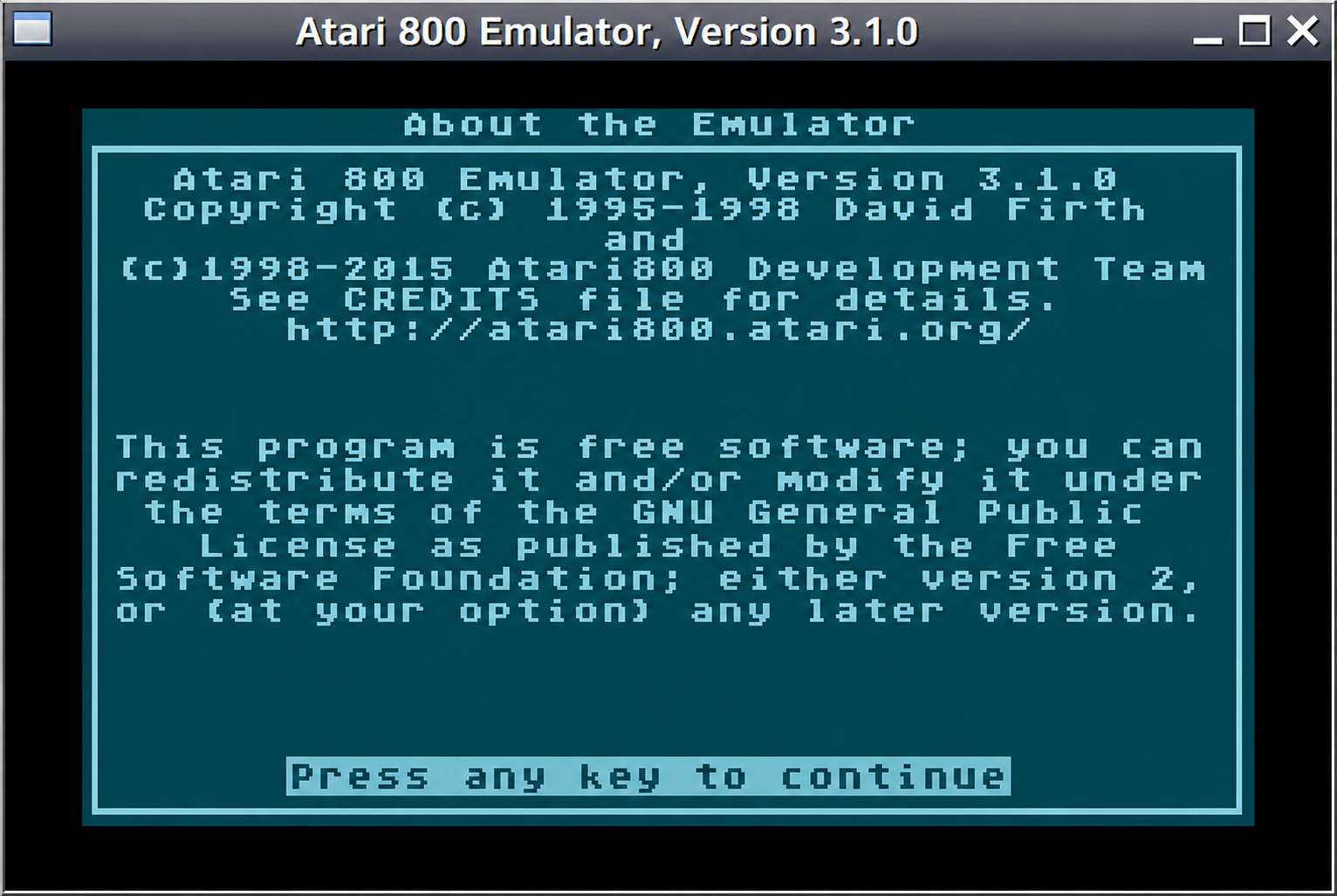
Atari800 est un émulateur Atari 800 (hum, c’était dur) mais aussi Atari XL/XE/5200. Passer en open source, il est maintenant développé par pas mal de personnes en provenance du net.


Télécharger Atari800 (Java) v4.0.0 (1.2 Mo)

Télécharger Atari800 (Dos) v4.0.0 (905 Ko)

Télécharger Atari800 (32 bits) v7.2.1 (2.8 Mo)

Télécharger Atari800 (64 bits) v7.2.1 (5.8 Mo)

Site Officiel

En savoir plus…

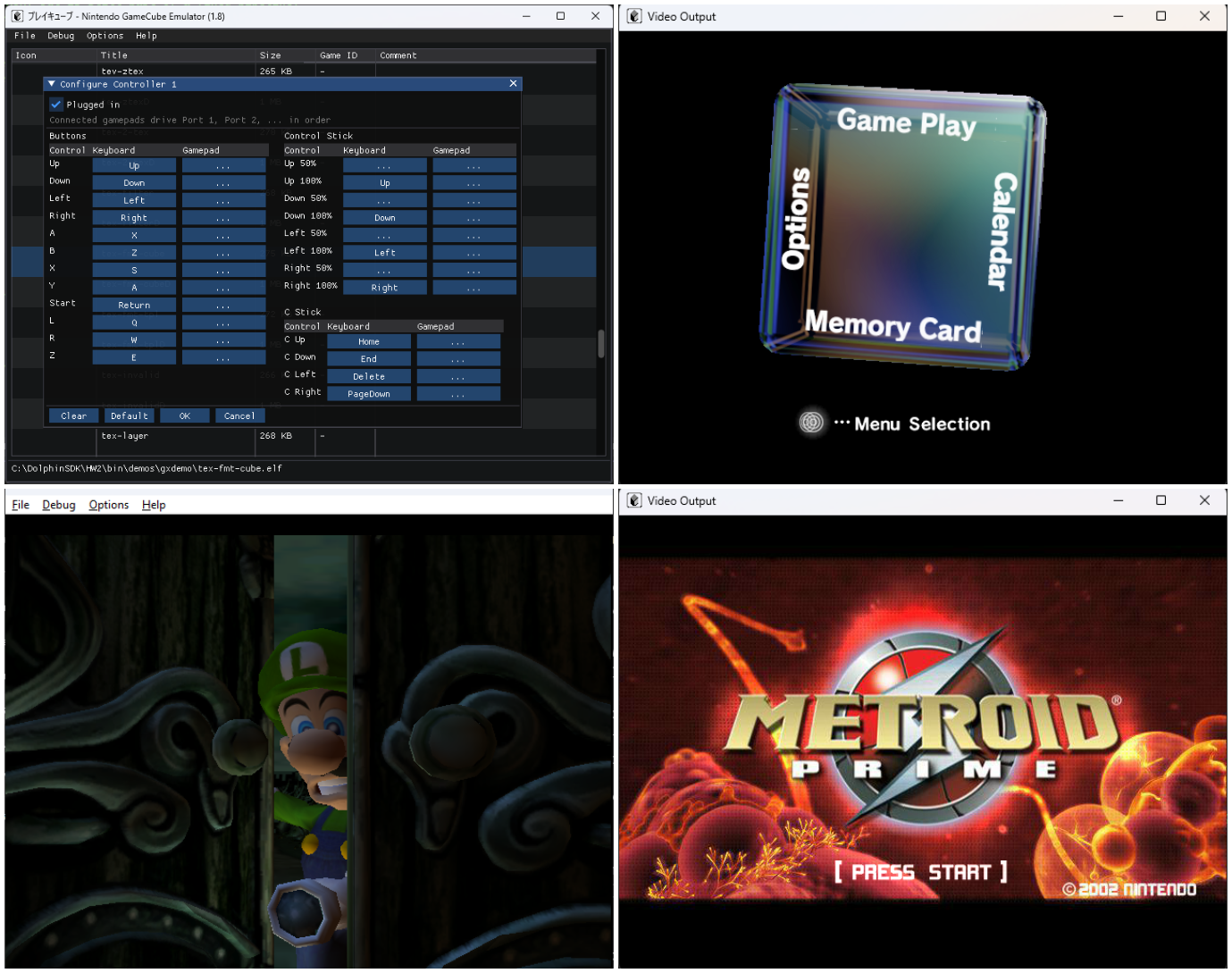
Pureikyubu est un émulateur de Nintendo GameCube en cours d’élaboration basé sur Dolwin.
 

Le but de l’émulateur est de rechercher les caractéristiques matérielles de la GameCube et de faire de la rétro-ingénierie sur les technologies utilisées pour développer des jeux pour cette plateforme.


Les améliorations sont les suivantes:
 
Highlights
– Gekko recompiler: A new x86-64 basic-block compiler keeps guest GPRs in host registers and shares the interpreter’s decode cache.
– Paired-Single in SSE: Every arithmetic PS instruction and both quantised loads/stores (psq_l / psq_st) are translated to SSE/SSE2.
– No more busy-waiting: VI scan-out and serial poll run on the CPU thread, while CP, AI DMA, and DSP threads block on events instead of spinning.
– Aggregate interrupt lines: DSP and disk-interface PI lines follow the OR of latched unmasked causes, removing interrupt storms on SI polls.
– Games: Zelda: The Wind Waker and Metroid Prime boot to title screen; Animal Crossing passes audio ARQ handshake and displays Nintendo logo.
– RVZ disc images: Read-only support for Dolphin’s compressed RVZ container (Zstandard).
– SDL controller settings: Added pad backend and complete « Configure Controller N » dialog supporting keyboard and gamepad bindings simultaneously.
– New icon: Cube icon recoloured with blue logo palette and regenerated (pureikyubu.ico, 16–256 px).
 
Added
– Gekko: x86-64 recompiler for Gekko basic blocks with translation state generation counter for O(1) block drops on MMU/cache register writes.
– Gekko: 8192-entry decode cache keyed on PC/instruction word, and 2048-page direct-mapped TLB replacing unordered_map.
– Gekko: SSE Paired-Single translation for add, sub, mul, div, res, rsqrte, madd, msub, nmadd, nmsub, muls0/1, madds0/1, sum0/1, sel, mr, neg, abs, nabs, merge00/01/10/11, and _d recording forms.
– Gekko: Quantised paired loads and stores (psq_l / psq_st) for all indexed/non-indexed, update/non-update, and W = 0/1 forms.
– Gekko: Debugger command jit 0 / jit 1 for live engine switching.
– Disc images: Read-only support for Dolphin’s RVZ container (Zstandard compression, data-entry/group tables, pseudo-random disc junk regeneration).
– Disc images: .rvz extension accepted across command line, game selector, and file dialogs.
– Input and user interface: SDL pad backend driving keyboard and gamepad simultaneously per port, summing and clamping inputs instead of overflowing int8_t.
– Input and user interface: « Configure Controller N » dialog in SDL UI (Options → Controllers → Port 1..4) supporting bindings, axis deflections, and instant config application.
– Input and user interface: Recoloured pureikyubu_icon.svg embedded via pureikyubu_icon.h for SDL_SetWindowIcon.
– Command line and tooling: Instant boot via pureikyubu / –image , and console/log –help support.
– Command line and tooling: –bench [seconds] mode reporting throughput, Gekko::CpuStats, host cycle breakdown (BENCH_PROFILE=1), and instruction histogram (BENCH_STATS=1).
– Command line and tooling: Gekko differential harness expanded with BENCH_SPIN*, BENCH_PS_TEST, BENCH_FUZZ_PS, psq workload mix, and MSVC build_win.bat support.
– Testing: 17 new Serial Interface spec tests covering SIPOLL, buffers, COMCSR, TSTART, intervals, enables, and read-status interrupts.
– Testing: 19 Command Processor spec tests covering VCD/VAT field positions, component/colour byte counts, vertex attribute order, and gx_vtxsize.
– Testing: 5 DSP interrupt aggregation tests covering masked/unmasked cause lines, ARAM DMA completion, mailbox interrupts, and CPU→DSP request tests.
 
Changed
Performance and threading
– The VI scan-out and the serial poll are executed by the CPU thread from the tick it already advances (GekkoCore::Tick / TickN call Flipper::Update), so VI timing is exact instead of sampled by a thread.
– The Command Processor thread blocks on a new portable Event (utils.h) that the CPU thread signals when a batch of FIFO entries is due (CommandProcessor::TickSync); the drain stays at the emulated tickPerFifo rate.
– The AI DMA thread is woken by DSP::AITickSync (about every 6750 ticks at 48 kHz) and parks itself with Suspend() when no DMA is armed. The DSP thread is woken by DspCore::TickSync once per DspWakeTicks and drains a batch, so the emulated DSP no longer self-throttles by re-anchoring its deadline on every poll; the mailbox hold-off is now a tick deadline (DspCore::MailboxHoldTicks).
– mtmsr and rfi drop the compiled blocks only when MSR[IR]/[DR] actually change; the OS toggles MSR[EE] around every critical section and dropping the whole cache for it cost ~85,000 needless re-translations per second.
– Address translation, the tick and the branch-condition helpers are really inlined now (GEKKO_INLINE).
 
Behaviour and configuration
– The Windows and SDL builds keep separate settings: DefaultSettingsWin.json / SettingsWin.json and DefaultSettingsSdl.json / SettingsSdl.json. The two ports run from the same directory and used to overwrite each other’s configuration; each executable now embeds its own file names.
– The serial interface follows the documented register layout: SICnOUTBUF is the CPU-visible register with the shadow read by the transfer engine, SICOMCSR latches CHANNEL and INLNGTH on an ordinary write and TSTART reads back as a pending bit, and the poll register drives SIPoll(line) directly.
– The Flipper device threads and the emulator use the same Event abstraction, so the timing code is portable between Win32 and SDL.
 
Fixed
Interrupts and timers
– DSP/DI aggregate interrupt lines: Every cause in CDCR and DI_SR has its own mask bit, and the pairs are not adjacent; both re-evaluation helpers ANDed the group of causes with the group of masks, so the lines were never asserted at all. Animal Crossing hung in its ARQ wait because the ARAM DMA completion never reached the CPU. Both lines now follow the OR of (cause && its own mask) and are re-evaluated from DSPUpdateInt() / DIUpdateInt() whenever a cause or a mask changes.
– A cleared cause can drop the line: The lines were only ever dropped inside one write_cdcr / write_sr branch; clearing one cause while another was still latched left the line high with nothing left to clear it, so the CPU re-entered the external-interrupt handler on every rfi. Animal Crossing was executing ~11,500 exceptions a second.
– Serial-interface poll storm: The emulator polled on a fixed 0x10000-tick interval (about ten times the hardware frame rate) instead of the SIPOLL video-line schedule, so RDSTINT was re-raised continuously. On Animal Crossing the emulated time for a fixed wall clock went from 3.8 s to 74 s, exception entries from 165,000 to 2,213 and VI interrupts from 0 to 2,178; Zelda’s exception count dropped from 49,635 to 2,157.
– DSP microcode vectors: The interrupt vector base was taken from the live CDCR use-rom bit instead of the program that is running; Zelda’s microcode installs a CPU→DSP vector at 0x000E in IRAM and the loader’s vectors made it bounce the command. CDCR bit 1 is now latched as a request and re-tried until the core accepts it through the TE3/ET gate, so a request that arrives while te3 is closed is no longer lost.
– DSP/AI threads: DspAIOpen cleared its state with memset, which also wiped the Event the AI thread waits on (a wait on a zeroed handle returns immediately, so the thread silently went back to spinning); the clear is now an explicit DspAIControl::Reset.
 
Graphics
– Presentation (issue #361): pe.cpp switched the VI output off after the first GXDrawDone/PE token, which stopped scan-out for the rest of the run in titles that keep presenting; the gate had no hardware meaning and is gone. In the SDL build the VI picture was written into the same window that carries the OpenGL context, so the two presenters alternated; the GL backend owns the window while it runs and the VI still decodes the XFB and counts frames.
– Command Processor: CP_FIFO_COUNT was a stale software register and is now the live FIFO occupancy (« the distance between the write and the read pointer »). The break-point status bit was gated on CP_ENABLE[FIFOBRKINT] instead of [FIFOBRK], so a title that armed the break point without the interrupt never saw the flag. CommandProcessor::ResetFifoProcessor() drops the CP-side command buffer so a new stream starts clean.
– VI: VI_DTV_STATUS (0xCC00206E) is implemented instead of falling through to the default case, where it returned 0 and made the SDK’s VIGetTvFormat() always report NTSC.
– Texture decoder (issue #359): IA4 walked the tiles column first while the tiles of an image are stored row by row, so a map wider than one tile came out transposed (and the report encoder mirrored the same walk, which is why the gallery never showed it); the debugger’s gxtexdump read the colour fields after the decoder had serialised the texels into the R,G,B,A byte order GL wants, which rotated the channels of every non-grey format; C14X2 masked its palette index with 0x3ff instead of 0x3fff; and the transparent fourth colour of the CMPR three-colour mode lost the RGB of the endpoint average.
– Texture uploads: DecodeTexture compares the description and an FNV-1a hash of the raw texture bytes (plus a TLUT generation for the palette) and keeps the GL image when nothing changed; the upload reuses the image storage with glTexSubImage2D, the sampler parameters and the mip chain are only re-applied when TX_SETMODE0/1 really change, and TX_INVTAGS (GXInvalidateTexAll) marks every map for a decode again.
 
Interface and platform
– File → Reopen, a dead menu entry, is wired to the last loaded image (the LASTFILE setting the selector already maintains) with F3 as its accelerator.
– Writes to the SI input buffer registers no longer halt the emulation.
– The Gekko sources are valid UTF-8 (two CP1252 comment bytes in gekko.cpp / gekkoc.cpp were normalised).
– The DSP unit tests link a counter double (testing/dsp_test_support.cpp) now that the DSP sources are built without gekko.cpp, and the mailbox hold-off tolerates the null Core the tests use.


Télécharger Pureikyubu (32 bits) v1.4 (1.2 Mo)

Télécharger Pureikyubu (64 bits) v1.8 (2026/09/13) (1.2 Mo)

Site Officiel

En savoir plus…

Hades est un émulateur de Nintendo GameBoy Advance en cours de développement, il vise à atteindre un équilibre satisfaisant entre convivialité, vitesse et précision.


Actuellement, Hades présente les caractéristiques suivantes:
 

– Une précision décente
– Correction des couleurs
– Sauvegarde rapide (également connue sous le nom de Save State)
– Support de l’horloge en temps réel (RTC)
– Support des contrôleurs de jeu
 

C’est le troisième émulateur à passer les benchs de la cartouche AGS Aging Cartridge utilisée pour tester les systèmes Game Boy Advance.
 

Les nouveautés:
 
– Prefix internal pseudo-keyword macros with `hs_`.
– Remove forgotten test log.
– Simplify affine background tile wrapping and tidy up parameter names.
– Optimize the memory fetches by hand-picking which functions are inlined and which aren’t.
– Enable LTO and use the compiler’s popcount builtin where relevant.
– Misc fixes


Télécharger Hades v1.1.1 Build 260913 (4.9 Mo)

Site Officiel

En savoir plus…

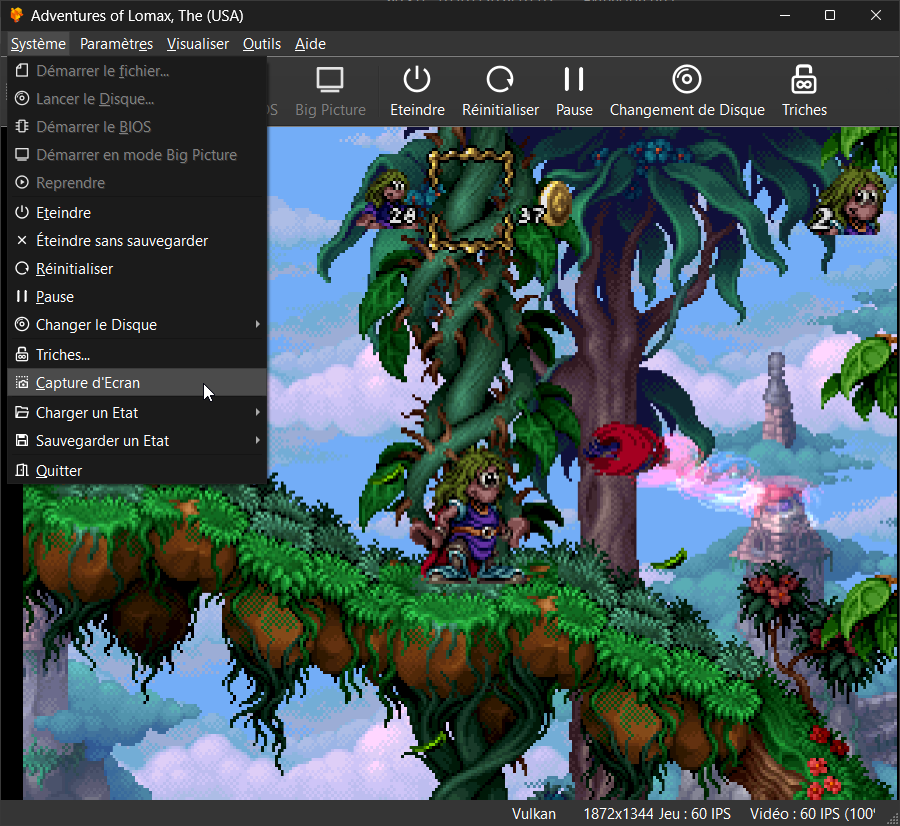
Il s’agit du meilleur émulateur de PlayStation One, devant ePSXe et pSX.


Caractéristiques:
– Recompilateur/JIT CPU (x86-64, armv7/AArch32, AArch64, RISC-V/RV64).
– Rendu matériel compatible avec les API D3D11, D3D12, OpenGL, Vulkan et Metal.
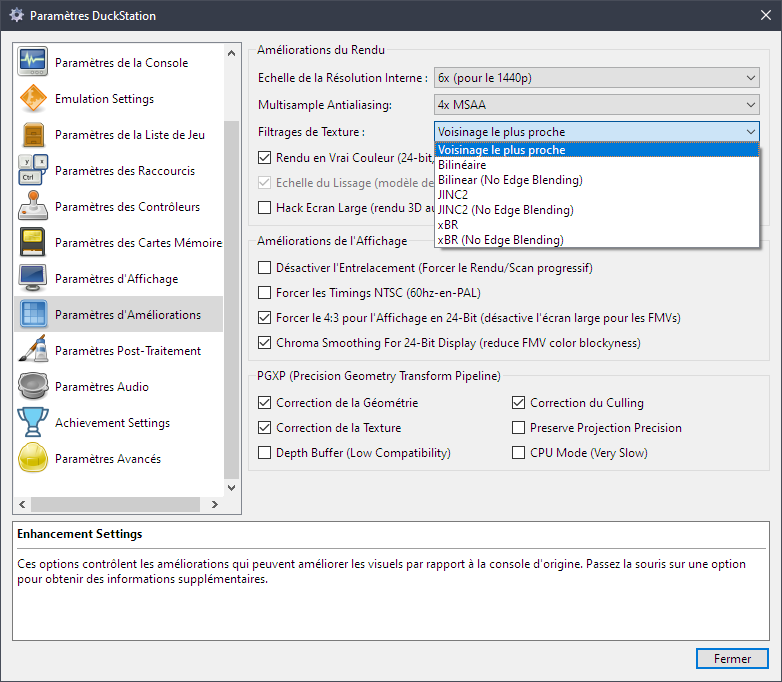
– Mise à l’échelle, filtrage des textures et couleurs vraies (24 bits) dans les moteurs de rendu matériels.
– PGXP pour la précision géométrique, la correction des textures et l’émulation du tampon de profondeur.
– Mélange précis via Rasterizer Order Views / Fragment Shader Interlock.
– Système de remplacement de textures dans les moteurs de rendu matériels.
– Rendu logiciel vectorisé et multi-threadé.
– Désentrelacement adaptatif au mouvement.
– Filtre de sous-échantillonnage adaptatif.
– Rotation d’écran pour les jeux de tir verticaux ou en mode « TATE ».
– Chaînes de shaders de post-traitement (GLSL, Reshade FX et préréglages Slang).
– Bordures décoratives affichées autour du contenu du jeu.
– « Démarrage rapide » pour ignorer l’intro du BIOS.
– Prise en charge des sauvegardes d’état, avec exécution anticipée et rembobinage.
– Compatible avec Windows, Linux et macOS.
– Lecture directe depuis CD, images bin/cue, fichiers bin/img bruts, MAME CHD, ECM à piste unique, MDS/MDF, CCD et formats PBP non chiffrés.
– Préchargement des images disque en RAM pour éviter les interruptions dues à la mise en veille du disque.
– Fusion des jeux multi-disques dans la liste/grille avec cartes mémoire partagées.
– Chargement/application automatique des patchs PPF.
– Démarrage direct des exécutables homebrew.
– Chargement direct des fichiers Portable Sound Format (psf).
– Audio étiré dans le temps lors de l’exécution hors de la vitesse 100 %.
– Prise en charge des manettes numériques et analogiques (le retour de force est transmis à l’hôte).
– Support des pistolets GunCon et Justifier (simulés à la souris).
– Support de la manette NeGcon.
– Préréglages de manette et configuration par jeu.
– Interface utilisateur Qt et mode « Big Picture ».
– Mises à jour automatiques avec canaux preview et stable.
– Analyse automatique du contenu — titres/hachages fournis par redump.org.
– Commutation automatique optionnelle des cartes mémoire par jeu.
– Prise en charge des cheats à partir de listes existantes.
– Éditeur de carte mémoire et importateur de sauvegardes.
– Overclocking CPU émulé.
– Débogage intégré et à distance.
– Support des manettes multitap (jusqu’à 8 appareils).
– Intégration RetroAchievements.
– Présence enrichie Discord.
– Capture vidéo via Media Foundation (Windows) et FFmpeg (toutes plateformes).
– Fonction de caméra libre.
– Émulation de cartouches via port parallèle.

 
Configuration requise:
– Windows 10/11 (7/8/8.1 ici), Linux (AppImage/Flatpak), macOS.
– Un CPU plus rapide qu’une patate. Mais il doit être x86_64, AArch32/armv7, AArch64/ARMv8 ou RISC-V/RV64.
– Un GPU capable de OpenGL 3.1 / OpenGL ES 3.1 / Direct3D 11 niveau de fonctionnalité 10.0 / Vulkan 1.0. Donc, en gros, n’importe quoi fabriqué au cours des 10 dernières années.
– Une manette compatible SDL, XInput ou DInput (par exemple XB360/XBOne/XBSeries). Les utilisateurs de DualShock 3 sous Windows devront installer les pilotes officiels DualShock 3 inclus dans PlayStation Now.


Les améliorations sont:
 
Preview Build:
– Fix libwebp loading on Windows (Stenzek)
– Streamline per-voice flag processing (Stenzek)
– Vectorize Gaussian interpolation (Stenzek)
– Consolidate capture buffer writes (Stenzek)
– Decode ADPCM nibbles in pairs (Stenzek)
– Use timeline semaphores when available (Stenzek)
– Fix core-tests building on Windows (Stenzek)


Stable Build (or rolling release):
– VideoPresenter: Fix prerotation handling with blur/transitions
– Update duckstation-qt_es.ts (#3792)
– MSBuild: Explicitly list plugins to copy
– MSBuild: Track Qt translation outputs
– MSBuild: Track Qt resource outputs
– MSBuild: Fix Qt MOC dependency tracking
– MSBuild: Generate Qt MOC files in parallel
– MSBuild: Track QRC asset dependencies
– MSBuild: Generate Qt translations in parallel
– MSBuild: Generate Qt UI headers in parallel
– Achievements: Add category badge to popup
– Qt: Fix trailing slash being added to game directories
– Settings: Disable gpu_force_video_timing in hardcore mode
– CI: Update deps to 20260905
– Common: Remove unused include
– Build: Use C++23 across the board
– System: Allow live-changing console region
– Misc: Use static operator()
– Achievements: Fix padding in notifications/lists
– Qt: Slight improvement to track summary list
– Qt: Add RA Game ID to game properties
– Qt: Add styling to select disc dialog
– System: Don’t copy non-sensitive user preferences to game settings
– System: Disable post-processing when resetting settings
– dep/rcheevos: Bump to e871ef5
– Qt: Add threads view to debugger
– Qt: Add call stack to debugger
– Qt: Link stack view to memory view
– Qt: Use QPointer in DebuggerWindow
– SettingsInterface: Create type aliases for string lists
– INISettingsInterface: Don’t set dirty if unchanged in SetKeyValueList()
– Qt: Save debugger breakpoints to inis
– System: Fix unused function warning
– VideoThread: Fix rare crash if device initialization fails
– Settings: Ensure pcdrv_root is a native path
– Deps: Bump to 20260906
– Image: Load libpng/libjpeg/libwebp dynamically
– CMake: Don’t unnecessarily bundle
– DynamicLibrary: Log loaded library paths on Linux
– SDLInputSource: Remove unused variable
– SQLiteHelpers: Format file
– SDLInputSource: Load SDL dynamically
– Qt: Warn when LD_LIBRARY_PATH is overridden on Linux
– Qt: Create desktop file before setup wizard on Linux
– ImGuiManager: Load FreeType/plutosvg dynamically
– Util: Centralize dynlib loading
– ZipHelpers: Load libzip on-demand
– CMake: Make bundle building on MacOS optional
– CocoaTools: Return nullopt if not running from bundle
– DynamicLibrary: Drop MacOS Frameworks hack
– Misc: Remove atexit() usage
– SDLInputSource: Centralize SDL subsystem loading
– README: Update feature list
– FullscreenUI: Fix ‘Use Global Setting’ showing in global postfx settings
– FullscreenUI: Use expand icon for dropdowns
– GPUDevice: Add SingleTextureAndUBOAndPushConstants layout
– FullscreenUI: Use SingleTextureAndUBOAndPushConstants for blur apply
– GameList: Add AudioCD type
– Qt: Make game properties inaccessible for PSF/Audio CDs
– GameList: Reorder list entry types
– Update duckstation-qt_es.ts (#3794)
– DynLibs: Fix libjpeg load regression on Windows
– Atualização Português do Brasil (#3793)
– Qt: Merge import buttons in the memory card editor (#3795)
– CPU/CodeCache: Remove thread_local recursive guard
– GPUDevice: Drop SingleTextureAndUBOAndPushConstants
– l10n: update Swedish Qt translation (#3796)
– DynLibs: Fix libwebp loading on Windows


Télécharger DuckStation v0.1 build 11XXX (69.3 Mo)

Site Officiel

En savoir plus…

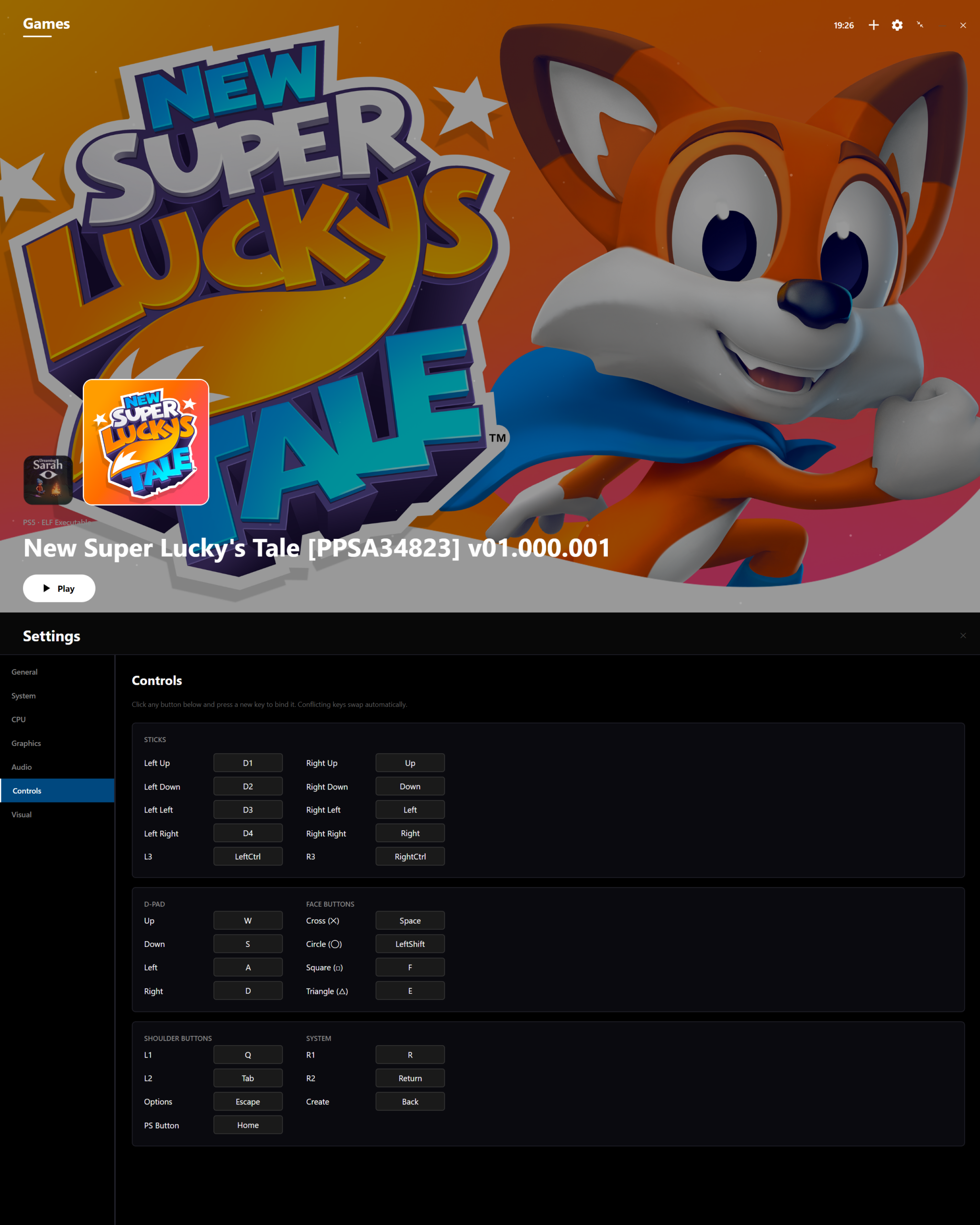
CraziiEmu est un projet expérimental visant à exécuter des logiciels PlayStation 5 sous Windows, en combinant émulation et couche de compatibilité. Il est développé en C# avec .NET 10 et est destiné aux systèmes Windows 64 bits. Basé sur le projet open-source SharpEmu, il intègre un moteur d’exécution CPU à double mode (exécution native x86-64 à pleine vitesse ou interprétation précise pour le débogage), le rendu graphique sous Vulkan, la prise en charge des formats ELF et SELF de la console, ainsi qu’une gestion de la mémoire virtuelle allant jusqu’à 64 Go. Le tout est enveloppé dans une interface fluide au style console conçue avec Avalonia UI, qui propose un carrousel de jeux, une gestion dynamique des jaquettes et un mappage complet des manettes et du clavier.


Les nouveautés sont:
 
– Resolved a bug that broke certain titles from booting.
 

Télécharger CraziiEmu v0.33 alpha (50.5 Mo)

Site Officiel

En savoir plus…

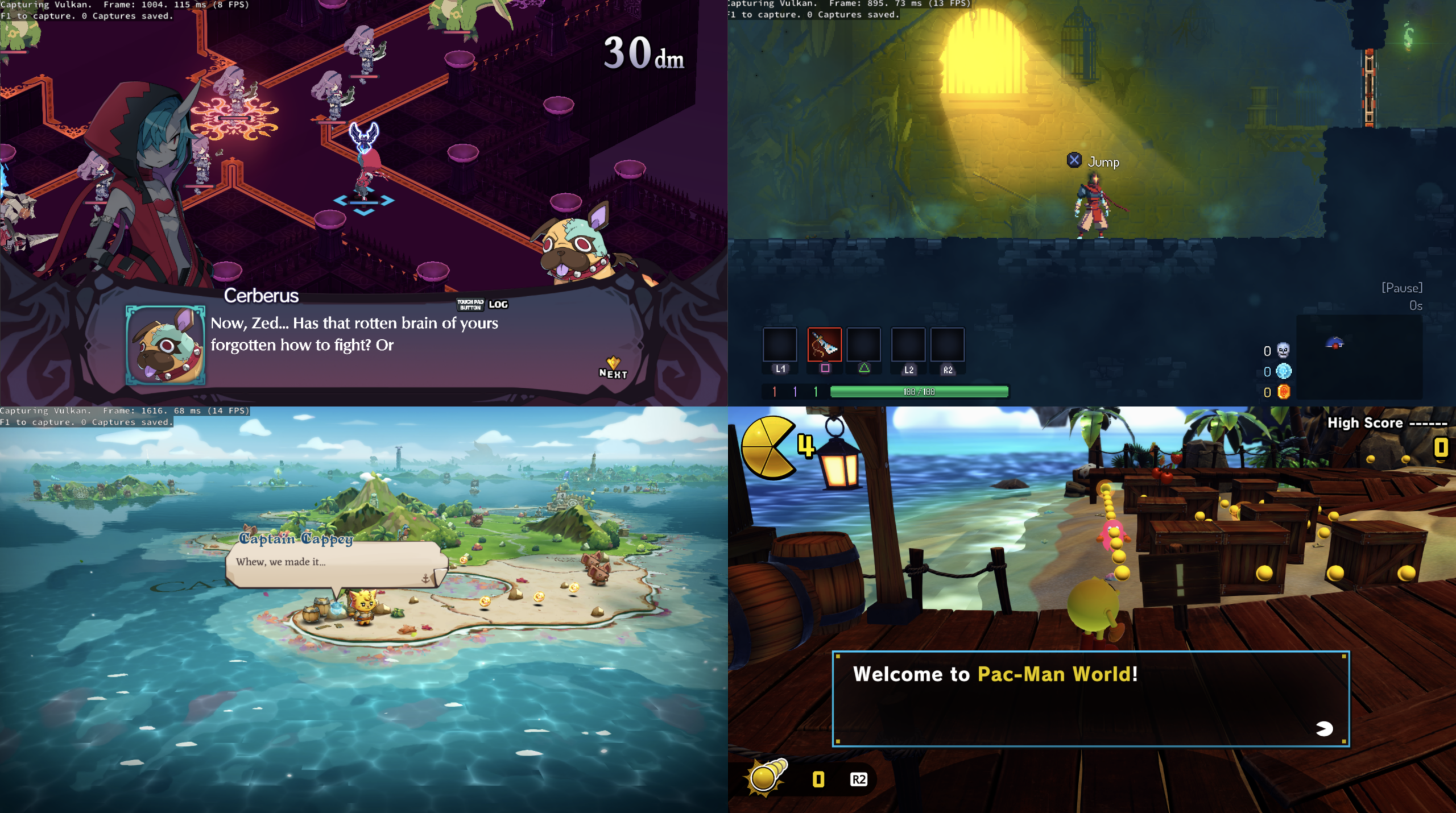
Le projet KytyPS5 est un émulateur PlayStation 5 pour Windows, développé par Nmzik, qui s’appuie sur une version profondément modifiée du Kyty original créé par InoriRus. Il vise à offrir une compatibilité PS5 nettement supérieure à celle du projet initial, en se concentrant sur le démarrage des jeux, la stabilité et la prise en charge progressive des titres commerciaux. L’émulateur est conçu pour fonctionner sans modules LLE externes, ce qui simplifie son utilisation et réduit les dépendances techniques. Le développeur indique que le projet est encore en phase expérimentale, mais déjà capable de lancer certains jeux 2D et plusieurs jeux 3D, avec un objectif clair: améliorer la compatibilité avant de se concentrer sur les performances ou la précision graphique.
 
KytyPS5 fonctionne exclusivement sous Windows et semble optimisé en priorité pour les cartes graphiques NVIDIA, même si d’autres GPU peuvent fonctionner avec des résultats variables. Le projet adopte une approche pragmatique: il cherche d’abord à faire démarrer les jeux, quitte à sacrifier la fidélité visuelle ou la vitesse d’exécution dans les premières versions. Le code est activement développé, avec des mises à jour fréquentes, ce qui en fait l’un des projets PS5 les plus dynamiques actuellement disponibles. Le développeur met en avant une volonté de transparence, en remerciant explicitement InoriRus pour le projet original, tout en assumant une réécriture et une refonte majeure du code.
 
En résumé, KytyPS5 est une continuation non officielle mais assumée du premier Kyty, transformée en un émulateur PS5 moderne, plus ambitieux et plus fonctionnel, qui cherche à devenir une référence dans l’émulation de la console de Sony.


Les changements:
– launcher: Add game size column
– net: return copied bytes for truncated datagram receives (#510)
– kernel: release descriptors when rejecting read-only truncation (#504)
– shader: decode and translate V_FRACT_F16 (VOP1 0x5f) and V_CMPX_LT_U16 (VOPC 0xb9) (#582)
– Fix Windows Clang SPIR-V serialization with typed operands
– build: fix SPIR-V enum word conversions
– json2: export Value::clear (#584)
– docs: fix pre-commit setup instructions (#556)
– shader: support S_MUL_HI_I32 (SOP2 0x36) (#576)
– config: simplify logging and profiler options. Change to Mailbox
– Simplify and batch buffer cache downloads
– shader: construct SPIR-V module variables in one place
– shader: let structurization own rollback on failure
– shader: keep derived frontend metadata with its owner
– shader: reuse native emitters and simplify memory dispatch
– shader: generate SPIR-V dispatch and marshal handler arguments
– shader: use Khronos definitions and simplify compiler ownership
– pthread: fix per-thread wakeups
– kernel: index pthread key values per thread
– memory: remove per-page host protection bookkeeping
– Rename texture transfer types and download APIs

 
(Temporary build compiled from this fork pending official releases.)


Télécharger KytyPS5 r260912 (19.8 Mo)

Site Officiel

En savoir plus…

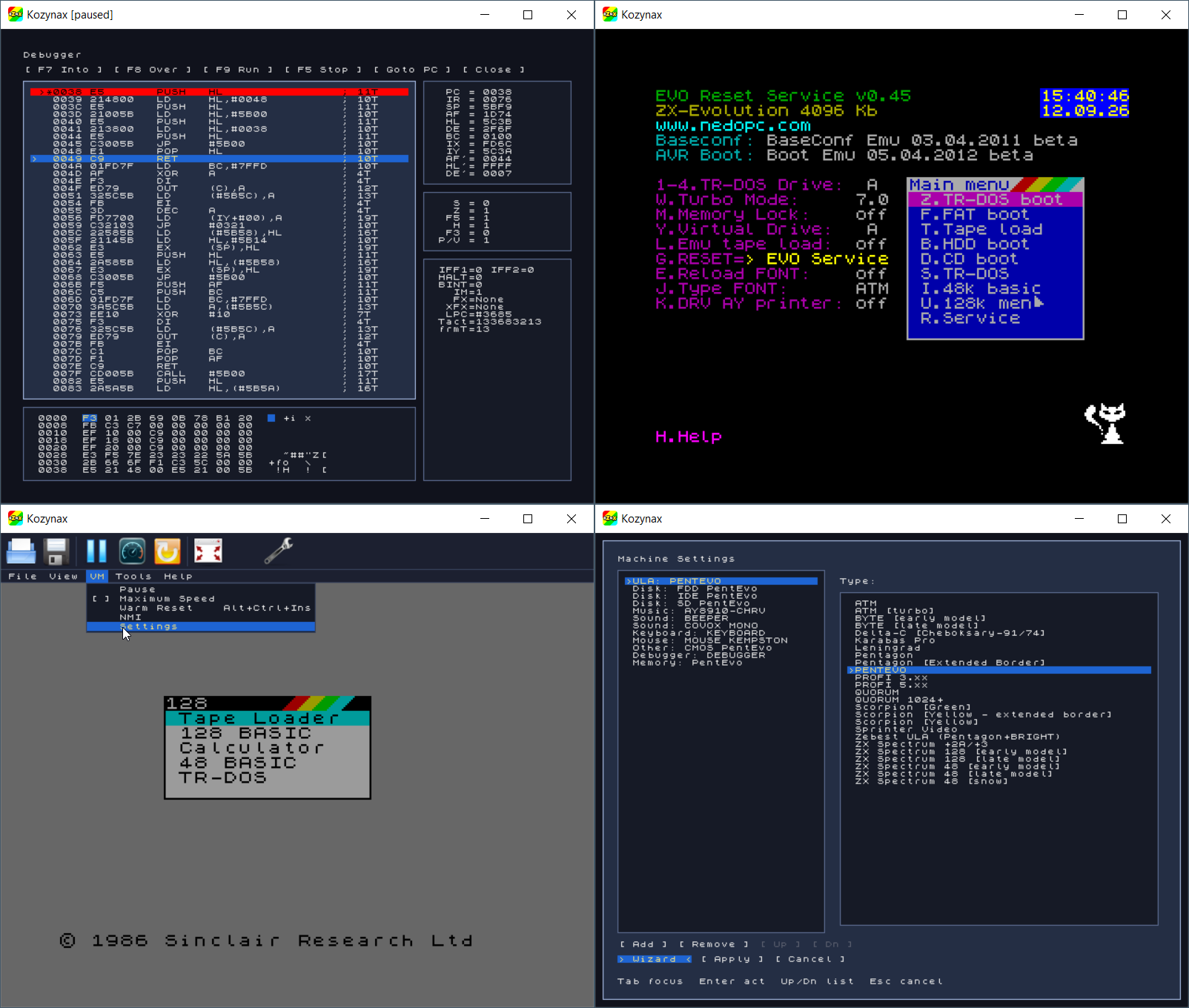
Kozynax est un émulateur ZX Spectrum multiplateforme développé en .NET pour Windows, Linux et macOS. Basé sur le moteur d’émulation de ZXMAK2, ce projet expérimental issu des travaux de la communauté Speccy combine une précision d’affichage au pixel près avec une excellente portabilité. Il permet de faire tourner les logiciels et jeux originaux de la machine sur les systèmes modernes tout en servant de banc d’essai pour le développement d’architectures d’émulation.


Télécharger Kozynax v0.95 (35.6 Mo)

Site Officiel

En savoir plus…


https://getourbonus.com/fr/accueil

https://www.romspedia.com/