Byuu est un émulateur multi-consoles (provenant de l’ancien pseudo de l’auteur qui s’appelle Near dorénavant) qui se concentre sur la précision et la facilité d’utilisation et vise à fournir la précision de higan avec la facilité d’utilisation de bsnes. L’objectif est de s’appuyer sur le succès de bsnes et d’offrir une interface facile à utiliser pour tous les cœurs d’émulation et pas seulement celui de la SNES.
 
Comme Higan, Byuu se concentre avant tout sur la précision. Contrairement à Higan, Byuu vise à être beaucoup plus convivial. Pensez à byuu comme mode « facile » et à higan comme mode « avancé », mais ils ont fondamentalement le même émulateur sous le capot. L’un n’est pas un sur-ensemble de l’autre; ce sont des projets « frères ».


v1: support for gamepad mapping and the save state manager
v2: support for other controller types (mice, light guns) and multiple-players
v3: support for Famicom Disk System, Super Game Boy, and Sega CD emulation
v?: support for per-system input mapping, cheat codes, movie recording, and run-ahead functionality
v?+X: optional scanline renderers for each core to boost performance substantially
v?+Y: additional emulation cores from outside of higan (PS1, Saturn, N64 would be most promising!)

 
v0.9:
– update driver settings when changing audio and input drivers
– correct sound output when not outputting at 48KHz
– correct sound output when changing frequency after game is loaded
– show program icon when game is not loaded
– move from native status bar to higan/bsnes-style status bar
– fix a bug with WonderSwan internal EEPROM data
– fix hotkey polling in fullscreen mode
– added joypad support
 
v0.10:
– fixed initial bindings for gamepad axes and hats
– allow multi-selection clear on input mappings
– added path searching to higan::Node::find()
– added higan::Node::scan() to locate relative tree nodes
– exposed settings for color bleed/emulation, interframe blending, overscan
– default to Path::desktop() instead of Path::user() for loading games
 
Known issues with v0.10:
– region detection is not working (PAL games are running at NTSC speeds)

 
Plus d’infos sont disponibles sur la page officielle.


Télécharger Byuu (64 bits) v4 (5.1 Mo)

Site Officiel

En savoir plus…

MedGui Reborn est une interface (Frontend) pour Mednafen sur OS Windows. Cette archive inclut MetroMed.


– The Medclient service now send input configuration to prevent config mismatch
– Added another ddns for medclient and mednafen server
– Fixed any bad translated string
– Fixed a small bug with refresh of rom grid in text menu mode


Télécharger MedGui Reborn v0.127 (24.5 Mo)

Site Officiel

En savoir plus…

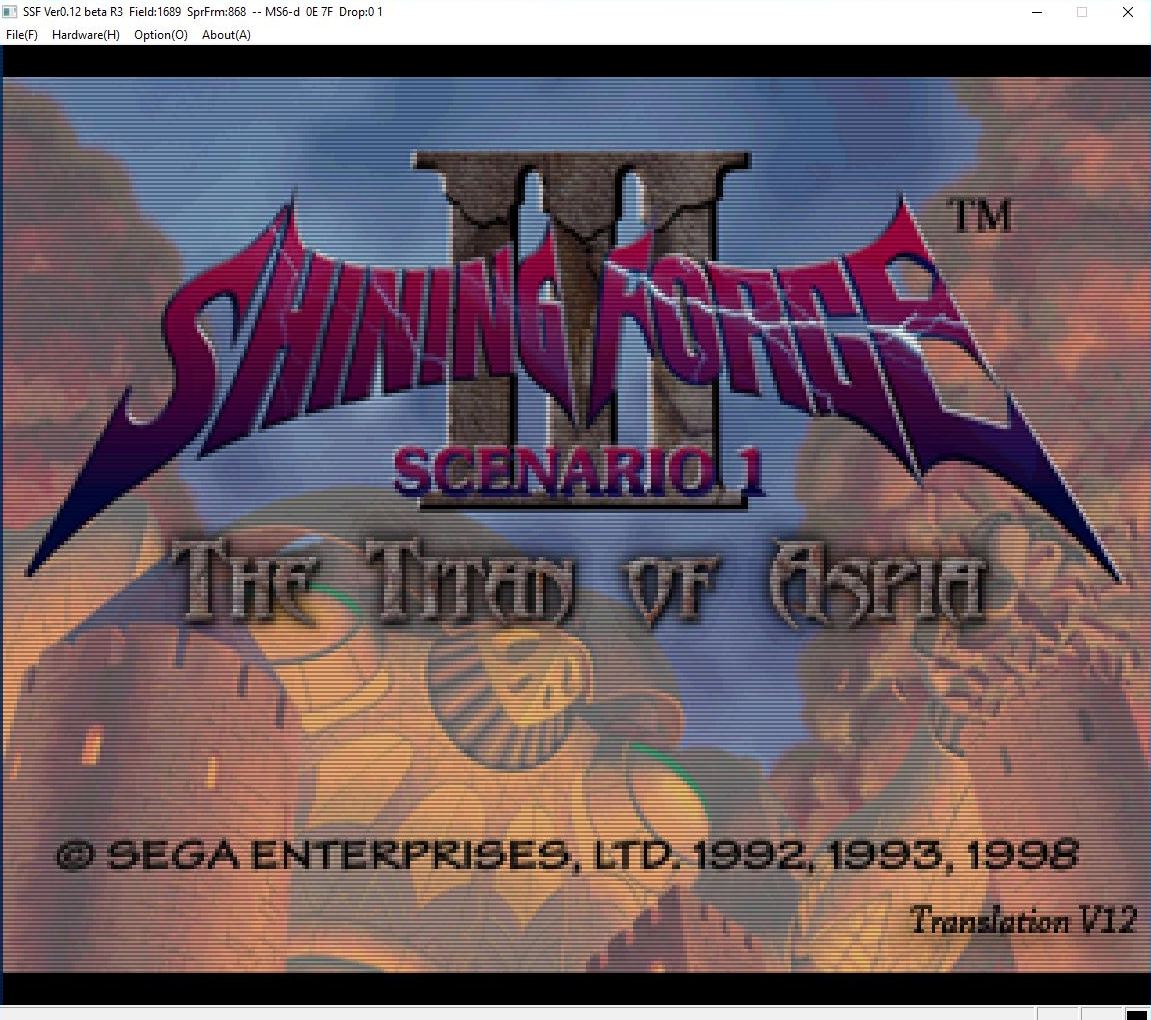
Créé par Shima, SSF est l’un des meilleurs émulateurs Saturn. Il fut le premier à émuler des jeux commerciaux.


– La palette après le lancement de l’écran en cours est reproduit quand il n’y a aucun bios.
– Correction d’un bug qui bloquait pendant la vérification de la piste CD / Index lors de l’utilisation d’une image CD.
– Correction du problème du changement de l’écran pendant le basculement du mode Fenêtré / Plein Ecran quand l’option écran large est coché.
– Somes fixes


Télécharger SSF v0.12 PreviewVer R38 (39.9 Mo)

Télécharger SSF (Français) v0.12 PreviewVer R34 (49.7 Mo)

Site Officiel

En savoir plus…

Nplayers : Exclusivement pour les frontends comme EmuLoader, MaLa etc.. ce fichier vous servira à classer les jeux par nombre de joueurs possibles : 1p, 2p, 1p+2p, 1p+2p alt, etc…


Multiplayer (ex Nplayers32) : Exclusivement pour MAME/MAMEUI ou clone de celui-ci… ce fichier vous servira à classer les jeux par nombre de joueurs possibles : 1p, 2p, 1p+2p, 1p+2p alt, etc…


Télécharger Nplayers v0.278 (303 Ko)

Site Officiel

En savoir plus…

DS4Windows est un programme portable qui vous permet d’obtenir la meilleure expérience lors de l’utilisation d’un DualShock 4 sur votre PC, en émulant un contrôleur Xbox 360, beaucoup de jeux deviennent alors accessibles.


– Fixed saving of « Repeat While Held » macro setting
– Updated midpoint for gyro to axis calculations
– Change default app text options in main XAML
– Increased stick mouse offset


Télécharger DS4Windows (original) (x86) v3.3.3 (2.6 Mo)

Télécharger DS4Windows (original) (x64) v3.3.3 (2.6 Mo)

Site Officiel

En savoir plus…

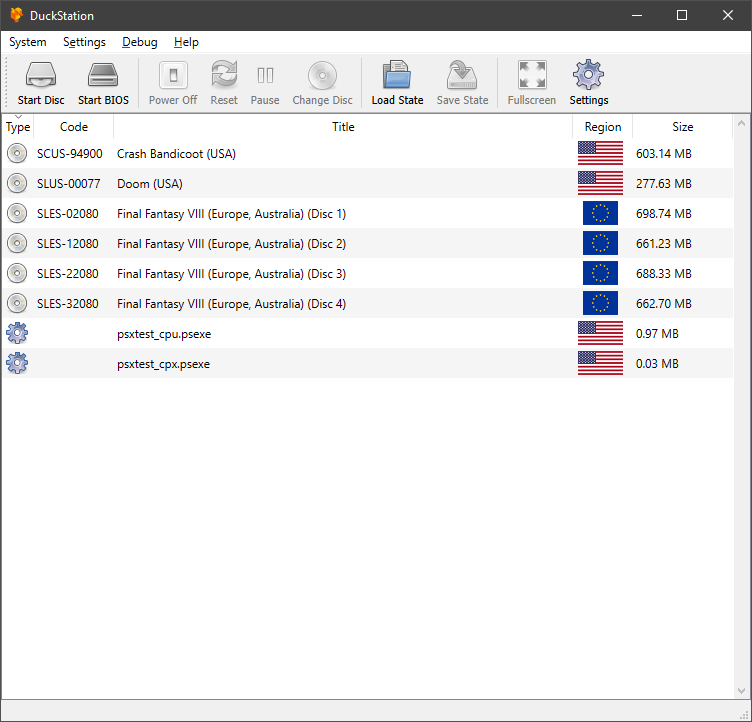
Il s’agit d’un émulateur de PlayStation One.


Caractéristiques:
– CPU Recompiler/JIT (x86-64 and AArch64)
– Hardware (D3D11 and OpenGL) and software rendering
– Upscaling and true colour (24-bit) in hardware renderers
– « Fast boot » for skipping BIOS splash/intro
– Save state support
– Windows and Linux support – macOS may work, but not actively maintained
– Supports bin/cue images, raw bin/img files, and MAME CMD formats.
– Direct booting of homebrew executables
– Digital and analog controllers for input (rumble is forwarded to host)
– Qt and SDL frontends for desktop
– Qt frontend has graphical configuration, and controller binding
– Automatic content scanning – game titles/regions are provided by redump.org

 
Configuration requise:
– A CPU faster than a potato.
– For the hardware renderers, a GPU capable of OpenGL 3.0/OpenGL ES 3.0/Direct3D 11 Feature Level 10.0 and above. So, basically anything made in the last 10 years or so.
– SDL-compatible game controller (e.g. XB360/XBOne)


Télécharger DuckStation v0.1 build 12XXX (71.6 Mo)

Site Officiel

En savoir plus…

Créé par l’auteur de CorgiDS, DobieStation est un émulateur PS2 en cours de développement avec pour objectif de proposer un port Android optimisé ainsi qu’un port PC rapide, précis et facile à utiliser.
 
Une grande partie de la bibliothèque de la PS2 peut démarrer ou accéder aux menus et certains titres peuvent même entrer dans le jeu y compris certains jeux spécifiques comme Final Fantasy X ou Shadow of the Colossus. Reste que pour l’instant l’émulateur est évidemment très préliminaire.


(Builds automatiques)
 

Télécharger DobieStation v0.0.1619 (15.9 Mo)

Site Officiel

En savoir plus…

A l’instar de MAMEinfo pour MAME(Arcade), le fichier MESSinfo vous permet de suivre les changements entre les versions concernant les différents systèmes émulés par MAME (partie consoles et ordinateurs).


Télécharger MESSinfo.dat v0.289 (7.1 Mo)

Site Officiel

En savoir plus…

Créé par Exzap, il s’agit du second émulateur de Wii U à être disponible au public mais le premier à pousser jusqu’à l’émulation de jeux commerciaux. Il peut décrypter les images Wii U qui utilisent le format Wud mais également les fichiers RPS ou RPL. La résolution interne peu aller jusqu’à 1920×1080 selon les jeux. A noter que pour le moment, un seul contrôleur est accepté, il s’agit du DRC (GamePad) de la Nintendo Wii U. Cette version n’est compatible que pour les Windows x64 (à partir de Windows 7) avec une carte graphique gérant OpenGL 4.1 (ou supérieur) ou Vulkan et il faudra posséder 4 à 8 Go de mémoire vive (Ram) pour le faire fonctionner. (Correspondance ID-Titre).
 
Un tuto est disponible ici.
 
cemu
 
Les changements:
 

En résumé:
– Vulkan improvements
– Misc smaller new features and bug fixes

 
En détails:
general: Added stick visualization to input settings
general: Replaced vsync checkbox with a dropdown and added renderer-specific options

vulkan: Overhauled internal Vulkan object/resource management
– Fixes crashes due to erroneously releasing textures that were still in use
– Fixes some RAM/VRAM leaks
– Generally lower VRAM usage since textures are released as soon as possible (previous solution enforced a 3 frame delay)

vulkan: Reloading graphic pack shaders should no longer cause a crash
vulkan: Added debug stats as an additional overlay option

 
Note:
(#xx) refers to bug tracker issues resolved by this change. See http://bugs.cemu.info/projects/cemu/


A noter que des packs graphiques haute définition sont disponibles ici. Ils permettent, entre autre, d’augmenter la résolution native des jeux car contrairement à Dolphin et parce que la machine est techniquement différente il n’est pas possible à Cemu d’augmenter la définition autrement que par cette méthode.
A l’inverse, des packs SD (définitions standards et/ou basses) sont disponibles sur ce lien et permettent à certains PC manquant de performance de lancer des jeux en 60 FPS.

 
Une liste de compatibilité est disponible ici.

 
Site source.

Télécharger Cemu v2.6 (35.6 Mo)

Site Officiel

En savoir plus…

Ootake est un émulateur PC-Engine en provenance du Japon et basé sur PC2E, tournant sous Windows 2000, XP, Vista, 7, 8 et 10. Il nécessite Direct X v9.0c au minimum.


ootake
 
– « Windows Pad Order » has been added to the pad setting screen. When connecting two or more Windows Gamepads, you can set which pad is assigned with the highest priority. Use this when the second and subsequent pads are connected, and the priority of the pad that was originally changed is lowered and the setting is shifted.
– « Overscan TV Mode » has been added to the « Screen » menu. Since v2.92, the aspect ratio is displayed more accurately, but black belts are displayed on the left and right in the 256 dot horizontal mode. When this menu is selected, the black belt display part can be eliminated and the left and right full window display (similar to Ootake before v2.91) can be made. However, 6 dots at the bottom of the screen are hidden to maintain the aspect ratio. Originally, « 6 dots at the bottom of the PC Engine screen » is rarely used for important displays, and most games can be displayed without any problems. I think that many old CRT televisions for home use had a display in this range. Use it when you want to play in that atmosphere or when you want to capture with the left and right filled when capturing the screen. You can also switch this by pressing the [F11] key.
– « Adjust TV Top-Position » has been added to the « Screen » menu. In « Overscan TV Mode », you can adjust the vertical display start position. It can also be adjusted by pressing the [Ctrl]+[F11] keys multiple times.
– The shortcut key of the overscan area display was changed from [F11] key to [F12] key. [Ctrl]+[F12] key can also be used to display the overscan area of top only.
*[F11] key switches overscan TV mode.
*If you want to switch to full screen, press [Alt]+[Enter] key. Also, when displaying the overscan area, only the top and bottom areas are displayed by default.
– When pressing [F12] key while pressing [Ctrl] key, only the top part is displayed in the overscan area.
– « Start Overscan TV Mode » has been added to « Setting->Screen » menu. Use this mode when you want to switch to overscan TV mode (the viewing range is as narrow as an old home TV) from startup.
– Cleaned up the « Capture » menu. Also, screenshot size and drawing method are displayed in the menu.
– « Overscan display state » is not restored during normal state loading. It restores only when loading resume(Turn on the « File->Set Resume » menu).
– When switching overscan area display ([F11] key) in window mode, if the window is below the center of the desktop screen, the window position after switching is adjusted to the bottom side.
– In the audio graph display ([9],[0] keys), in some games, the yellow graph remained even when the DDA sampling sound was muted. This problem has been corrected.
– Fixed the problem that the pad was not reflected when changing the gamepad while Ootake was running when setting the gamepad.
– « 1366×768 » was added to the FullScreen resolution setting menu field.
– « FullScreen 640×480 60Hz » in the « Screen » menu (for switching to full screen mode with any PC environment) has been changed to « FullScreen 800×600 60Hz ». Also, at the time of execution, the drawing method is returned to the default(Direct3D).
– When switching to full screen ([Alt]+[Enter] key), the screen is switched stably even in a PC environment where the available memory is low.
– Fixed a bug (from v2.92) that it display was shifted in a game that can play with 4-split display.
– The speed and timing have been made closer to those of the real machine. In « Chibi Maruko Chan », solved the problem that the display of the raster interrupt part was distorted when clearing the stage.
– Fixed a bug that recording of the play record function (« Capture->Play Record » menu) was not performed correctly at some games.
– Other minor details have been fixed and improved.


Télécharger Ootake (2K/XP/Vista/7/8/10/11) v3.06 (1.4 Mo)

Site Officiel

En savoir plus…

Créé par Force67, PS4Delta est un émulateur très expérimental de PlayStation 4 écrit en c++ et utilisant le HLE. Binaire par Lo v2.


Télécharger PS4 Delta (2020/04/05) (2.1 Mo)

Site Officiel

En savoir plus…

Créé par Inori, GPCS4 est un émulateur très préliminaire de Playstation 4 qui, pour l’auteur, sert principalement de recherche ludique et technique pour l’apprentissage de la gestion de graphisme en 3D. Un premier jeu commence à ce lancer mais n’espérons rien de concret encore avant longtemps.


Télécharger GPCS4 v0.2.0 (src 0.2.1) R230627 (8.6 Mo)

Site Officiel

En savoir plus…


https://getourbonus.com/fr/accueil

https://www.romspedia.com/