Odin est un émulateur open source des cartes d’arcade Sega Hikaru et Gaelco ATV Track, développé par Réda Chérif-Touil (Tovarichtch), également impliqué dans le développement de PCSX2x6 et de Xbox-Chihiro, ainsi que développeur du build MAME (Konami M2 Edition). Il s’agit d’un fork conséquent de Valkyrie, l’émulateur Hikaru initialement développé par Stefano Teso entre 2011 et 2013.
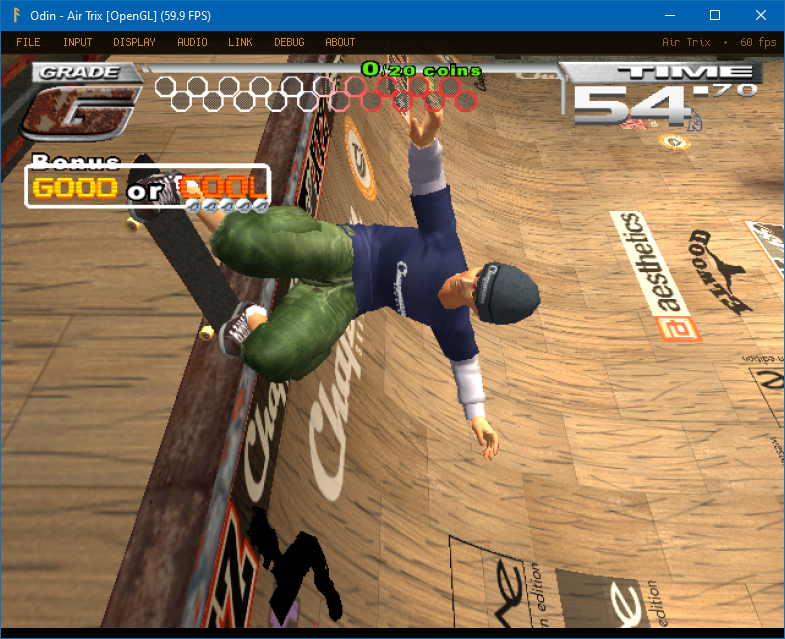
L’émulateur repose sur une approche d’émulation de bas niveau (LLE), qui consiste à reproduire le fonctionnement des composants matériels en exécutant les programmes des véritables puces lorsque leur fonctionnement est connu. Sur Gaelco ATV Track, cette approche concerne également le cœur microcodé du processeur Neon 250, qui exécute son propre code, tandis que le rendu 3D est généré à partir de la scène qu’il construit. Le rendu graphique est assuré par OpenGL ou Vulkan.
Odin prend actuellement en charge les six jeux de la plateforme Hikaru, avec deux titres disponibles dans leurs versions originales et révisées: Air Trix, Brave Firefighters, Planet Harriers, NASCAR Arcade, Star Wars Racer Arcade et Cyber Troopers Virtual-On Force. Il émule également plusieurs jeux du système Gaelco ATV Track: ATV Track, Gaelco Football et Smashing Drive, ce dernier étant disponible en plusieurs versions régionales.

L’émulateur propose notamment la gestion des manettes, la prise en charge des volants avec retour de force pour certains jeux, ainsi que des pistolets optiques pour Brave Firefighters. Il permet également la sauvegarde des données de Virtual-On Force sur carte virtuelle et la possibilité de relier plusieurs bornes via le réseau. Les sorties des bornes peuvent aussi être transmises, suivant un principe similaire à celui utilisé par MAME.
Une interface graphique basée sur Dear ImGui est intégrée au projet. Les illustrations des écrans-titres et les éléments graphiques des bornes sont proposés séparément dans une archive dédiée.



0 commentaire
Citron-Nextendo est un fork de l’émulateur Nintendo Switch Citron, lui-même dérivé de Yuzu. Il intègre le support du réseau Nextendo Network afin de permettre le jeu en ligne avec un système de comptes, de matchmaking et de connexion multijoueur. Il intègre également divers correctifs de compatibilité pour certains jeux.. Disponible sous Windows et Linux.

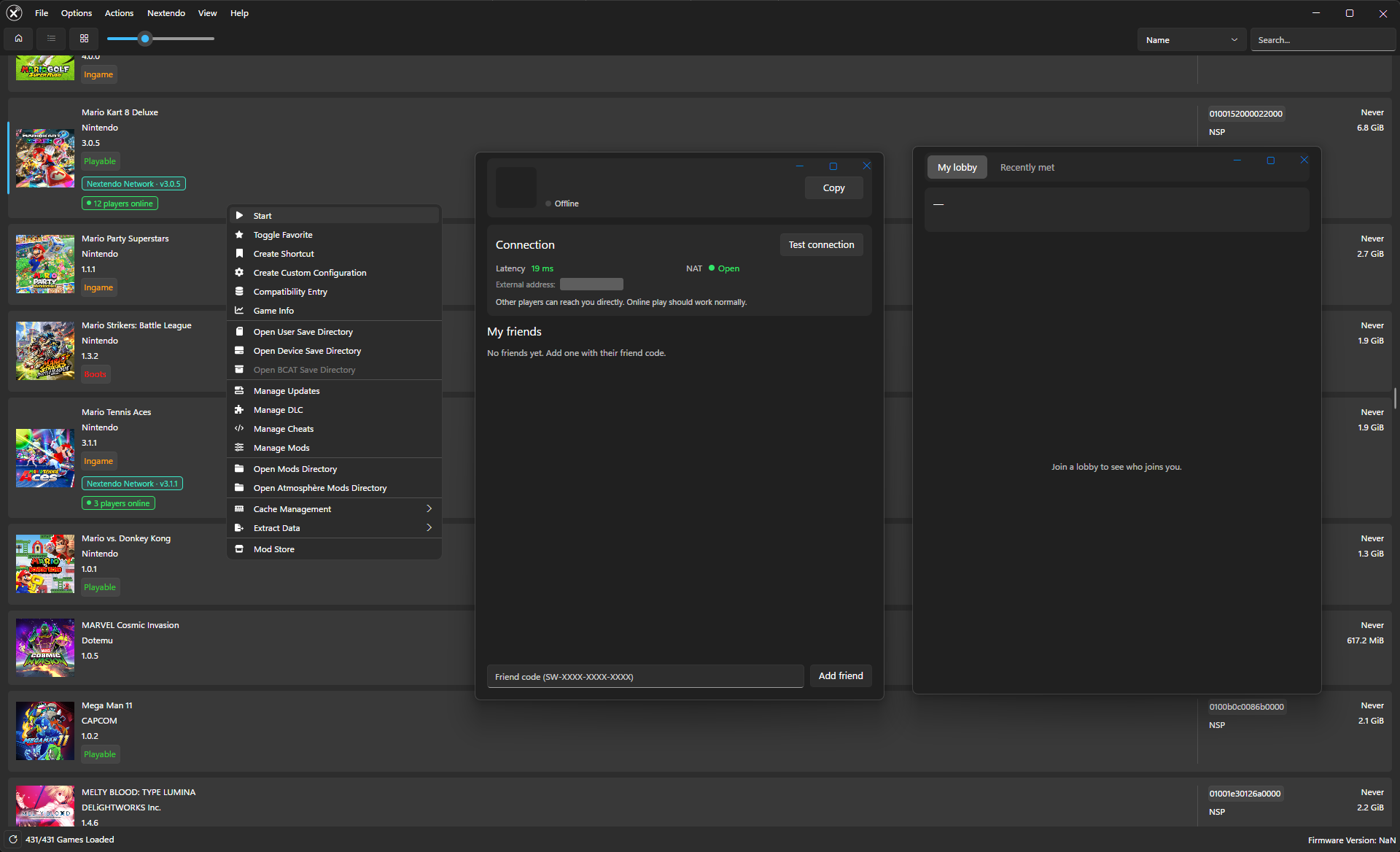
Ryujinx-Nextendo est un émulateur Nintendo Switch basé sur Ryujinx, auquel a été intégré nativement le support du Nextendo Network, un service en ligne privé et communautaire destiné à remplacer le service officiel de Nintendo.
Le projet reprend le cœur d’émulation de Ryujinx (Ryubing), notamment pour le processeur, le GPU, l’audio, les contrôles et le système de fichiers. Les modifications apportées par Nextendo concernent principalement la partie réseau et l’interface utilisateur.
L’objectif est notamment de permettre aux jeux compatibles de retrouver des fonctionnalités de jeu en ligne via le Nextendo Network, sans nécessiter de configuration manuelle particulière, de modification du fichier hosts ou de contournement SSL de la part de l’utilisateur.

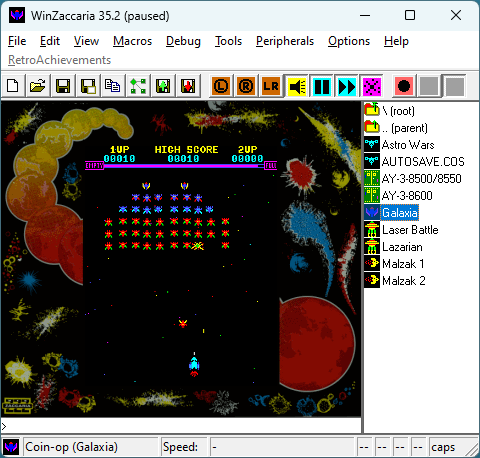
AmiArcadia est le port amélioré de Tunix2001 ex ‘Win Arcadia 2001’ (par Gavin Turner) pour Amiga. Ecrit par James Jacobs et Gavin Turner, cette version est en fait le port Windows du port Amiga (un backport) !
Systèmes émulés:
Consoles:
– Famille Emerson Arcadia 2001 : Bandai, Emerson, Grandstand, Hanimex, Intervision, Leisure-Vision, Leonardo, MPT-03, Ormatu, Palladium, Poppy, Robdajet, Rowtron, Tele-Fever, Tempest, Tryom, Tunix, etc.
– Interton VC 4000 et compatibles : Acetronic, Cabel, Fountain, Hanimex, Interton, Prinztronic, Radofin, Rowtron, Voltmace, Waddingtons…
– Elektor TV Games Computer (1979)
Machines PIPBUG/BINBUG:
– Electronics Australia 77up2/78up5, Signetics Adaptable Board Computer, Eurocard 2650…
– Signetics Instructor 50 (1978)
– Signetics TWIN (1976)
– Central Data 2650 (1977)
– PHUNSY microcomputer (c.1980)
– Ravensburger Selbstbaucomputer / 2650 Minimal Computer (1984)
– Hofacker MIKIT 2650 (1978)
Machines d’arcade:
– Coin-ops Zaccaria : Astro Wars, Galaxia, Laser Battle, Lazarian
– Coin-ops Kitronix : Malzak 1 & 2
Jeux électroniques:
– Consoles Pong AY-3-8500/8550/8600:
– Coleco Telstar Galaxy, Sheen TVG-201, et autres systèmes AY‑3‑85xx
Machine éducative électronique:
– VTech Type-Right (1985)
Il nécessite Windows 9x/ME/NT/2000/XP et fonctionne également sous Vista/8/10/11.
RomSieve est un outil open source permettant d’auditer, trier et organiser des collections de ROM et d’images disque à partir de bases de données DAT (TOSEC, No-Intro, Redump et MAME). Il propose notamment la création de collections 1G1R (One Game One ROM), la détection des doublons et des disques manquants, la gestion des jeux multidisques ainsi que la génération automatique de playlists M3U. Il dispose d’une interface graphique et d’une ligne de commande et fonctionne sous Windows et Linux.

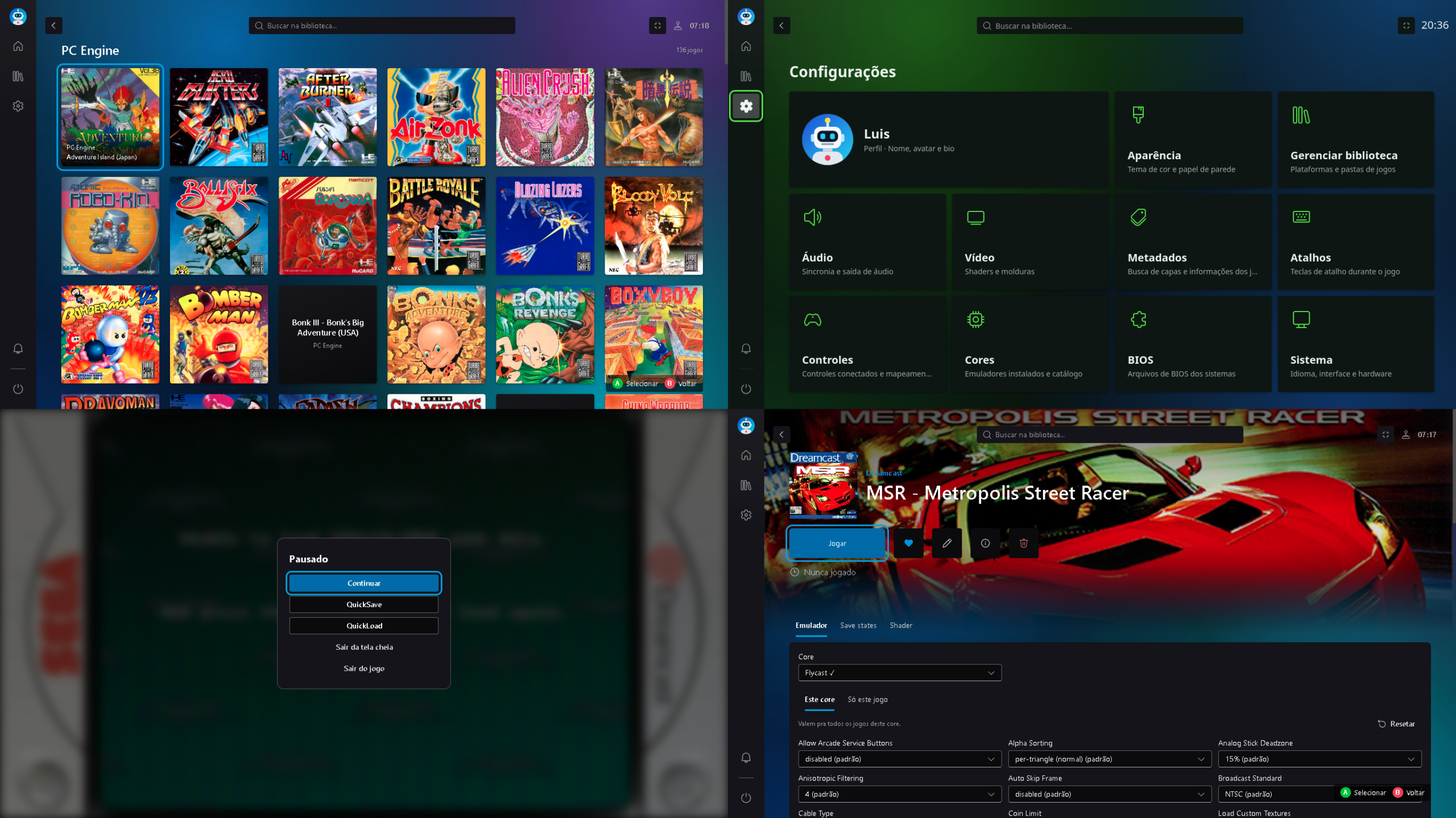
ReEmu est un frontend open source permettant de centraliser et d’organiser une bibliothèque de jeux rétro dans une interface graphique moderne, entièrement utilisable à la manette. Il s’appuie sur les cores Libretro pour assurer l’émulation de nombreux systèmes, sans être lui-même un émulateur.
Il propose notamment l’analyse automatique des collections de jeux, la récupération des jaquettes et des informations associées, la gestion des cores et des BIOS, ainsi que la configuration des shaders, des Bezels et des sauvegardes instantanées (Save States). Il intègre également un système de favoris, un historique et un suivi du temps de jeu.
De nombreuses plateformes sont prises en charge, notamment les consoles Nintendo, Sega, Sony et NEC, les systèmes d’arcade ainsi que plusieurs ordinateurs rétro.
OpenEmux est une interface graphique libre et open source inspirée d’OpenEmu, conçue pour simplifier l’utilisation de RetroArch. Développé en Python avec GTK4 et libadwaita, ce frontend permet de parcourir et d’organiser une bibliothèque de jeux rétro par système, avec affichage des jaquettes récupérées depuis les dépôts de miniatures de Libretro.
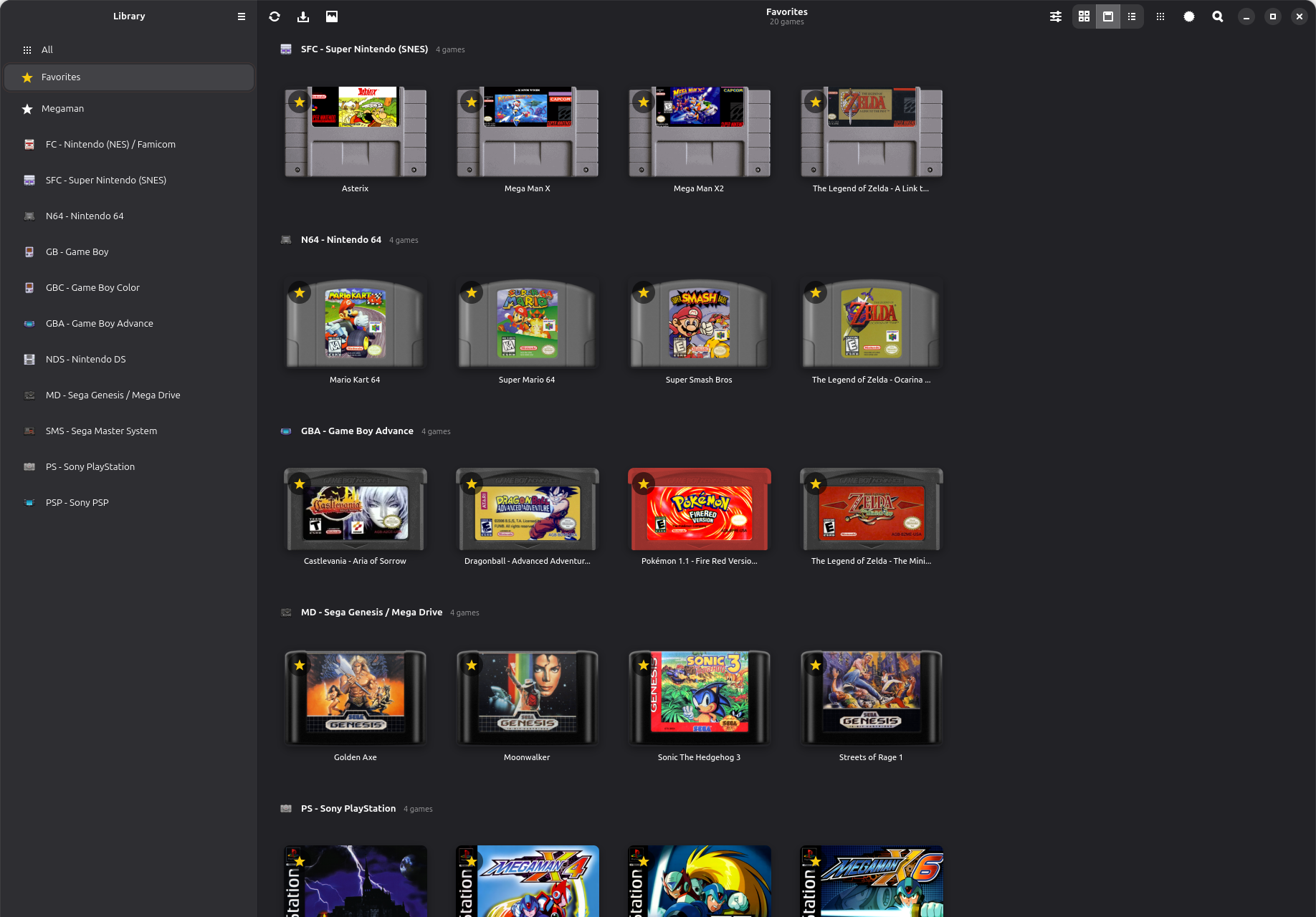
OpenEmux s’appuie sur RetroArch pour l’émulation et facilite sa configuration depuis une interface unifiée. Il permet notamment de définir les répertoires de jeux, de vérifier la présence des BIOS requis, de configurer les commandes clavier et manette pour chaque système et de gérer les shaders. Lors du premier lancement, l’application prépare son environnement et télécharge les cœurs Libretro nécessaires.
Initialement conçu pour Linux, le projet propose également une version pour Windows, distribuée sous forme d’archive portable et d’installateur, intégrant les dépendances nécessaires, ainsi qu’une version pour Android. Le portage Windows est développé et testé séparément de la plateforme Linux d’origine.
OpenEmux ne fournit aucun jeu ni BIOS. Le projet est distribué sous licence MIT, indépendamment des licences propres à RetroArch et aux composants tiers embarqués.
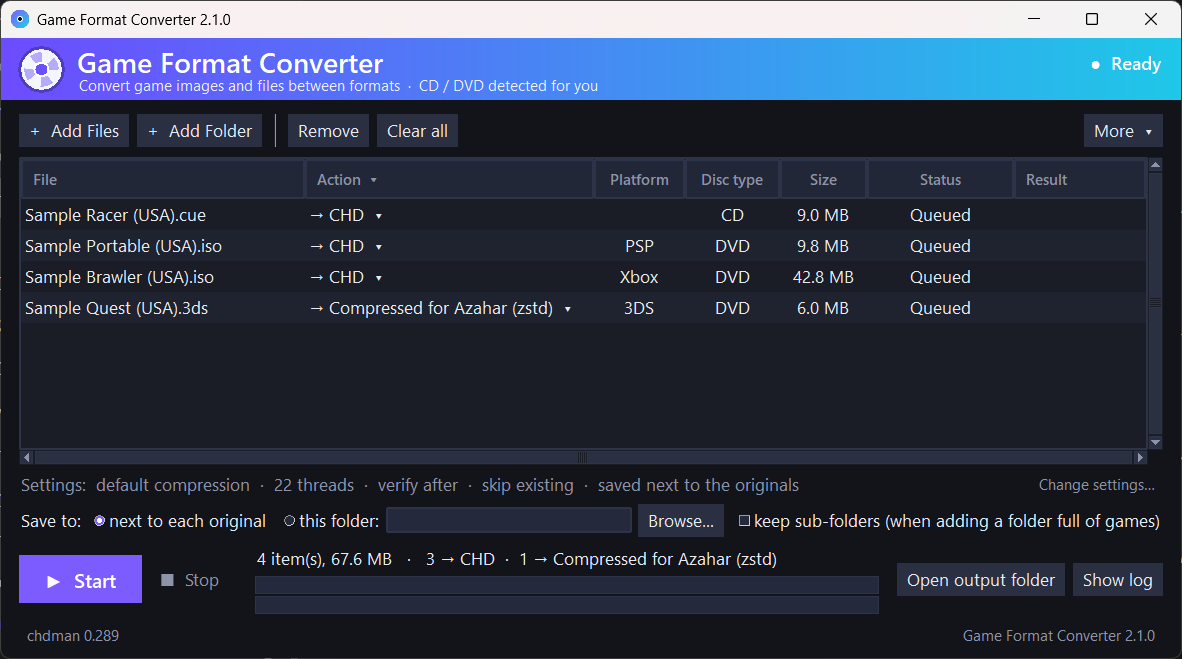
Game Format Converter (anciennement CHD Manager) est un utilitaire open source (disponible pour Windows et Linux) proposant une interface graphique conviviale pour chdman, l’outil de MAME dédié à la gestion des images disque.
Conçu pour convertir, compresser et décompresser des images de jeux en toute simplicité (glisser-déposer, menus contextuels Dolphin/GNOME Files, traitement par lots), le logiciel analyse automatiquement les fichiers et ne propose que les conversions viables. Il intègre de série des vérifications d’espace disque et une validation post-écriture.
Il prend en charge un très large éventail de formats et de consoles:
– CHD, PBP, CDI, VCD, CSO/ZSO, ECM, ISO, CUE/BIN, GDI (PlayStation, Dreamcast, Saturn, Sega CD, PSP)
– RVZ, WIA, WBFS, GCZ, CISO, WUX/WUD (GameCube, Wii, Wii U)
– ZAR, ISO et dossiers de jeux (Xbox 360) ainsi que la compression des dumps Xbox d’origine en .xiso.iso
– ISO, dossiers de jeux et paquets .pkg (PlayStation 3)
– NSP, XCI et NUP (Nintendo Switch et Switch 2, avec gestion des mises à jour et des DLC)
– .zcci, .cia et .3ds (Nintendo 3DS, avec compression pour l’émulateur Azahar)
Entièrement portable, le logiciel intègre une fonction de mise à jour facultative, un journal d’activité (log) et gère l’appel à des clés ou fichiers BIOS externes si requis par certains formats spécifiques, sans distribuer le moindre contenu protégé.
Voici les derniers émulateurs en développement, ainsi que ceux bénéficiant des mises à jour les plus fréquentes.

Télécharger DuckStation v0.1 build 12XXX (71.5 Mo)
Télécharger RPCS3 (WIP) v0.0.43 Alpha (2026/11/07) (35.5 Mo)
Télécharger ScarletNX (2026/11/07) (86.3 Mo)
Télécharger KytyPS5 r261107 (25.6 Mo)
Télécharger Citron Neo (2026/11/07) (62.1 Mo)
Télécharger Xenia v1.0.2844 (2026/11/07) (3.5 Mo)
Télécharger Xenia Edge (2026/11/07) (13.1 Mo)
Télécharger Vita3K v0.2.1 (2026/11/07) (36.1 Mo)
Télécharger EKA2L1 v0.0.9 r261107 (70.4 Mo)
Télécharger PCSX Redux (64 bits) (2026/11/07) (47.9 Mo)
Télécharger Pureikyubu (64 bits) v2.0 (2026/10/23) (2.4 Mo)
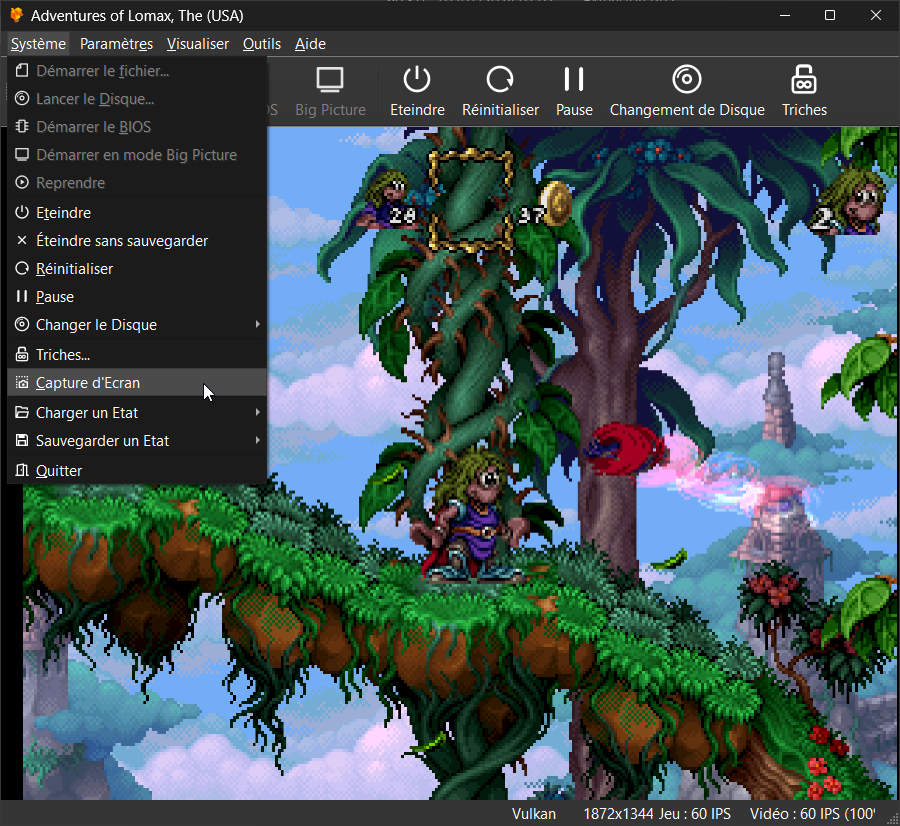
Il s’agit du meilleur émulateur de PlayStation One, devant ePSXe et pSX.
Caractéristiques:
– Recompilateur/JIT CPU (x86-64, armv7/AArch32, AArch64, RISC-V/RV64).
– Rendu matériel compatible avec les API D3D11, D3D12, OpenGL, Vulkan et Metal.
– Mise à l’échelle, filtrage des textures et couleurs vraies (24 bits) dans les moteurs de rendu matériels.
– PGXP pour la précision géométrique, la correction des textures et l’émulation du tampon de profondeur.
– Mélange précis via Rasterizer Order Views / Fragment Shader Interlock.
– Système de remplacement de textures dans les moteurs de rendu matériels.
– Rendu logiciel vectorisé et multi-threadé.
– Désentrelacement adaptatif au mouvement.
– Filtre de sous-échantillonnage adaptatif.
– Rotation d’écran pour les jeux de tir verticaux ou en mode « TATE ».
– Chaînes de shaders de post-traitement (GLSL, Reshade FX et préréglages Slang).
– Bordures décoratives affichées autour du contenu du jeu.
– « Démarrage rapide » pour ignorer l’intro du BIOS.
– Prise en charge des sauvegardes d’état, avec exécution anticipée et rembobinage.
– Compatible avec Windows, Linux et macOS.
– Lecture directe depuis CD, images bin/cue, fichiers bin/img bruts, MAME CHD, ECM à piste unique, MDS/MDF, CCD et formats PBP non chiffrés.
– Préchargement des images disque en RAM pour éviter les interruptions dues à la mise en veille du disque.
– Fusion des jeux multi-disques dans la liste/grille avec cartes mémoire partagées.
– Chargement/application automatique des patchs PPF.
– Démarrage direct des exécutables homebrew.
– Chargement direct des fichiers Portable Sound Format (psf).
– Audio étiré dans le temps lors de l’exécution hors de la vitesse 100 %.
– Prise en charge des manettes numériques et analogiques (le retour de force est transmis à l’hôte).
– Support des pistolets GunCon et Justifier (simulés à la souris).
– Support de la manette NeGcon.
– Préréglages de manette et configuration par jeu.
– Interface utilisateur Qt et mode « Big Picture ».
– Mises à jour automatiques avec canaux preview et stable.
– Analyse automatique du contenu — titres/hachages fournis par redump.org.
– Commutation automatique optionnelle des cartes mémoire par jeu.
– Prise en charge des cheats à partir de listes existantes.
– Éditeur de carte mémoire et importateur de sauvegardes.
– Overclocking CPU émulé.
– Base de données de codes de triche (cheats) avec prise en charge de plus de 4 000 jeux.
– Base de données de correctifs (patchs) avec améliorations visuelles, du taux de rafraîchissement et du format d’image.
– Analyse et modification de la mémoire en direct.
– Exploration d’images ISO et extraction de fichiers.
– Débogage intégré et à distance.
– Support des manettes multitap (jusqu’à 8 appareils).
– Intégration RetroAchievements.
– Présence enrichie Discord.
– Capture vidéo via Media Foundation (Windows) et FFmpeg (toutes plateformes).
– Fonction de caméra libre.
– Émulation de cartouches via port parallèle.
Configuration requise:
– Windows 10/11 (7/8/8.1 ici), Linux (AppImage/Flatpak), macOS.
– Un CPU plus rapide qu’une patate. Mais il doit être x86_64, AArch32/armv7, AArch64/ARMv8 ou RISC-V/RV64.
– Un GPU capable de OpenGL 3.1 / OpenGL ES 3.1 / Direct3D 11 niveau de fonctionnalité 10.0 / Vulkan 1.0. Donc, en gros, n’importe quoi fabriqué au cours des 10 dernières années.
– Une manette compatible SDL, XInput ou DInput (par exemple XB360/XBOne/XBSeries). Les utilisateurs de DualShock 3 sous Windows devront installer les pilotes officiels DualShock 3 inclus dans PlayStation Now.
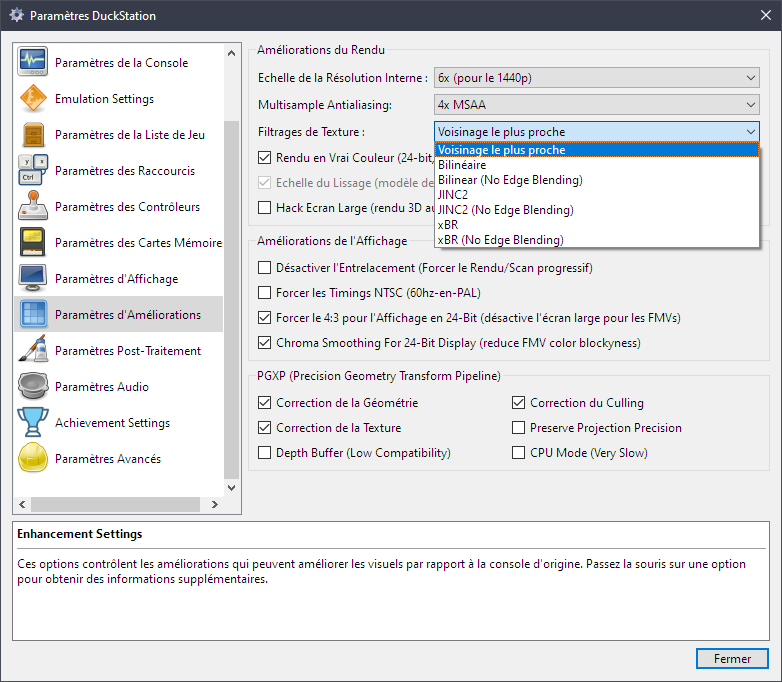
Les améliorations sont:
Preview Build:
– Hold DMA request through polygon setup and quad first triangle (Stenzek)
– Request next GP0 DMA block while at most one word is queued (Stenzek)
– Remove DMA timing overrides from Chrono Cross (Stenzek)
– Hold DMA request until a poly-line’s last segment starts (Stenzek)
– Report FIFO mode request from FIFO occupancy (Stenzek)
– Remove FIFO size hack, use the hardware 16-word FIFO (Stenzek)
– Look up GP0 command word counts in the command table (Stenzek)
– Use measured FIFO slots held by quads in FIFO mode (Stenzek)
– Don’t postpone command completion when rescheduling (Stenzek)
– Fix frame number not toggling with OSD toggle (Stenzek)
– Reduce default DMA max slice ticks to 200 (Stenzek)
– Remove DMA slice overrides matching the new default (Stenzek)
– Count command ticks in system clock cycles (Stenzek)
– Release held DMA requests at the release point (Stenzek)
– Use measured v2 polygon costs (Stenzek)
– Use measured v2 rectangle and line costs (Stenzek)
– Use measured v2 fill and VRAM copy costs (Stenzek)
– Drop unused bool return from GP0 command handlers (Stenzek)
– Don’t save DMA and GPU timing tweaks (Stenzek)
– Rename DMA slice and GPU run-ahead keys (Stenzek)
– Remove more hacks (Stenzek)
Stable Build (or rolling release):
– GPU/HW: Add missing logging of depth clears
– FullscreenUI: Activate toggle buttons on release instead of press
– FullscreenUI: Support drag/swipe scrolling with inertia
– dep/imgui: Don’t smooth scroll requests made while window is appearing
– FullscreenUI: Fix ForceKeyNavEnabled() clobbering gamepad nav source
– FullscreenUI: Include directory selector in open dialog checks
– FullscreenUI: Clear all dialogs on shutdown
– FullscreenUI: Fix indeterminate progress bar sweep range
– FullscreenUI: Avoid inverted std::clamp() bounds in dropdown width
– FullscreenUI: Pass button flags through in MenuButtonFrame() overload
– FullscreenUI: Pass p_open through in BeginBlurWindow()
– FullscreenUI: Keep horizontal menu/sidebar state balanced when hidden
– FullscreenUI: Copy/move checkable choice dialog callback before invoking
– CDImageCHD: Use generated subchannel Q for virtual pregaps
– CDImageCCD: Fix LBA count including pregaps twice
– CDImageCueSheet: Fix single-file pregap and LBA count
– Common: Add PackedOptionalArray
– ImGuiManager: Ensure DeltaTime can never be negative
– FullscreenUI: Improve drag scrolling
– ImGuiManager: Don’t hover pointer for touchscreens
– System: Sync to host refresh rates that are a multiple of the console’s
– SDLInputSource: Fix sensor enable early return
– FullscreenUI: Fix clear binding button clearing all
– Spanish (Spain) translation update 2026/10/25 (#3814)
– Settings: Fix VSync/frame pacing help text
– D3D12Device: Use frame latency waitable in exclusive fullscreen
– Qt: Use X11 server size for surface size
– Qt: Round Wayland surface size as per fractional-scale-v1
– OpenGLContextEGL: Don’t query surface size
– GPUDevice: Report swap chain resizes from present calls
– Qt: Accept wayland-egl/wayland-brcm platform names
– Qt: Remove sync()/processEvents() hack
– Qt: Pick up X11 window size changes from configure events
– Improve Swedish vertex terminology (#3815)
– Qt: Skip setting rounded corner state on Windows 10
– Qt: Recheck surface size when restoring from minimized
– VideoThread: Ignore zero-sized render window resizes
– CocoaTools: Use native display mode for real scaling factor
– System: Disable vsync while fast forwarding if it can be switched cheaply
– VulkanSwapChain: Switch between FIFO and immediate without recreating
– FullscreenUI: Fix 0 point display when achievements disabled
– Qt: Add descriptions to post-processing page
– Qt: Remove ‘Post Processing Chain’ groupbox
– XInputSource: Poll disconnected slots periodically
– InputManager: Device notification fixes
– Common: Fix heap overflow when shrinking DynamicHeapArray
– Clarify Swedish automatic setting descriptions (#3816)
– Improve Swedish translation quality (#3817)
– AudioStream: Make ApplyVolume() public
– SoundEffectManager: Add volume control
– Cheats: Add block write code types
– Scripts: Add psx-exe to elf converter
– Cheats: Merge runs of constant/match writes into vectorised block writes
– Qt: Update machine translations
– Qt: Fix reset audio settings clearing from base ini
– Qt: Rename PromptForAddress() to PromptForHexValue()
– Qt: Allow editing CPU registers in debugger
– CPU: Only intercept TTY syscalls in interpreter with BIOS TTY logging
– System: Don’t apply cheats or update achievements until the game starts
– Scripts: Regression test UI
– GPU: Fix initial display range values
– GPU: Restart the video timing on GP1(00h)
– GPU: Start and end vblank when the scan reaches Y2/Y1
– GPU: Schedule the CRTC for whichever of Y1/Y2 comes next
– GPU: Clear GPUSTAT.31 during vblank in 240-line modes
– GPU: Keep the latched 480i field when switching to 480i in vblank
– DMA: Don’t starve manual transfers when a channel re-halts on unhalt
– CDROM: Widen seek jitter to up to one sector
– GameDB: Disable auto analog for Silhouette Mirage
– GameDB: Remove hacks for The Next Tetris and Otona no Asobi
– GameDB: Disable widescreen in Marionette Company 2
– CI: Hopefully fix translation-lint failures
– Cheats: Fix compiler warning
– GPU: Avoid lambda capture
– GPU: Pack system config fields together
– Cheats: Add an activation mode for frame start (vblank end)
– MDEC: Only update status once per Execute()
– MDEC: Only request input DMA while a command needs parameters
– Qt: Update machine translations
– Regtest: Support queued controller input
– CPU/Recompiler: Improve x64 block protection check codegen
– CPU/Recompiler: Improve ARM64 block protection check codegen
– Tests: Split core tests into components
– InputManager: Unify binding callbacks
– GameList: Extract ExtractMemoryCardIcon() to function
– GameList: Allow choice of icon type
– Qt: Load game icons asynchronously
– System: Don’t hold game list lock while inserting media
– MemoryCard: Fix OSD icon on first save
– SDLInputSource: Use Z axis for sensor tilt
– InputManager: Use movement from rest for sensor binding capture
– Qt: Remove blocking RunOnUIThread() in Host::GetClipboardText()
– Qt: Remove block parameter from RunOnCoreThread()/RunOnUIThread()
– Qt: Use functor invokeMethod() overload
– Qt: Remove QtAsyncTask usage for cover loading
– Qt: Remove QtAsyncTask usage in settings widgets
– Qt: Remove QtAsyncTask
– Common: Polyfill move_only_function wrapper for Linux/Mac
– Misc: Use MoveOnlyFunction across the board
– Qt: Use custom QEvent for RunOnCoreThread()/RunOnUIThread()
– Qt: Show the binding as it’s built up in the binding dialogs
– Settings: Move folder config key to EmuFolders namespace
– FullscreenUI: Make popup close button optional, remove title from binding dialog
– FullscreenUI: Use plural formatting for binding timeout
– Qt: Fix game list icon cache lookup using game path instead of URL
– Qt: Replace AsyncPixmapLoader with an async task
– Image: Expose static methods for flip/svg
– System: Centralise disc change menu enumeration
– GameList: Fall back to first disc icon for multi-disc games
– Data: Include Folly in thirdparty.html
– Qt: Attach memory card editor import/extract icon menus to buttons
– Qt: Attach cheat import menu to button
– Qt: Attach log channels menu to button
– Qt: Remove redundant function
– System: Add option to reset SPU on game start
– GameDB: Reset SPU on game start for games that loop shell reverb
– Settings: Pack all bitfields together
– D3D12Device: Fix stream buffer allocation catching up to GPU position
– D3D12Device: Log debug layer messages
– System: Include EXE override in save state
– dep/imgui: Add ImGuiSliderFlags_NoFormat
– FullscreenUI: Add DrawIntRangeSetting() with formatter
– VideoPresenter: Only count a missed vblank once per on-time present
– VideoPresenter: Add subframe presentation
– Android: Update translation strings
– Qt: Save a few bytes for speedup values
– Qt: Remove a few duplicate strings
– System: Support 4-16MB expanded memory
– CPU: Raise bus error on cached fetch from unmapped memory
– CPU/CodeCache: Size LUTs to installed RAM and PIO device
– CPU: Report the virtual fetch address in EPC on bus errors
– Bus: Add option to force mapping of all installed RAM
– Update duckstation-qt_es.ts (#3819)
– Bus: Force full RAM mapping should not apply to default RAM size
– CPU/PGXP: Don’t call PGXP for instructions that write $zero
– CPU/PGXP: Move value flags to the header
– CPU/PGXP: Fix interpreter immediate moves in memory mode
– CPU/PGXP: Fix swr into the upper half invalidating the lower half
– CPU/PGXP: Treat $zero as precise
– CPU/PGXP: Fix recompiled mtc0 validating its source with a garbage value
– DMA: Drop redundant mask in linked list terminator check
– CPU/PGXP: Drop upper half fraction when SLL shifts out its bits
– Settings: Make depth normalisation option based on depth buffer
– CPU: Define memory handler lookups in private header
– Bus: Base forced full RAM mapping on installed RAM size
– Settings: Drop redundant string defaults when parsing enums
– SettingsInterface: Add GetStringListSize()
– FullscreenUI: Fix game list directories populating from wrong list
– CPU/PGXP: Only move native upper half bits into x for packed right shifts
– CPU/PGXP: Average depth in ADD when both sides have depth
– CPU/PGXP: Don’t take fraction from the field below when extracting bitfields
– MSBuild: Migrate to slnx
– Update duckstation-qt_es.ts (#3820)
– PIO: Fix Xplorer latch bit usage and banked code reads
– PIO: Improve Xplorer flash/latch accuracy
– CoreAudioStream: Wait for a full callback before ending underrun fill
– CoreAudioStream: Reallocate buffer when stretch mode changes
– CoreAudioStream: Fix races between the writer and audio thread
– CoreAudioStream: Improve stretch tempo control
– CoreAudioStream: Fade out/in around underruns
– CoreAudioStream: Don’t allocate stretch buffers for null output
– CoreAudioStream: Run stretching on the audio thread
– CoreAudioStream: Raise stretch target after repeated short underruns
– CoreAudioStream: Don’t reset stretch tempo on underruns
– CoreAudioStream: Buffer more when emulation can’t keep up
– DynLibs: Set error when a previous load attempt failed
– CMake: Use DT_RPATH instead of DT_RUNPATH on Linux
– CMake: Set minimum MacOS version on precompiled Metal shaders
– Qt: Simplify MacOS native theme path
– Qt: Work around checkbox showing in CollapsibleWidget
– Deps: Update to 20261103
– Qt: Update MacOS plist
– Tests: Add CoreAudioStream playback simulation
– CoreAudioStream: Write directly to the ring buffer
– CoreAudioStream: Fix data race on output volume
– CoreAudioStream: Recreate the stream instead of updating parameters
– SoundEffectManager: Don’t hold the state lock while stopping the stream
– InputManager: Only capture pointer input when mouse mapping is enabled
– FullscreenUI: Add Bind All Buttons
– Qt: Add Bind All dialog
– Qt: Update machine translations
– Deps: Update to 20261105
– Misc: Remove some redundant setting load parameters
– Updater/CocoaTools: Fix assorted correctness issues
– MetalDevice: Fix renderer correctness issues and enable compute
– Tests: Fix util-tests failing in debug builds
– CMake: Fix regtest build on MacOS
– Bus: Ensure RAM pointer is always initialized
– System: Report EXE override alongside running game
– CPU: Bound call stack function scan by the live call target
– Qt: Align debugger code view addresses to instructions
– Qt: Refresh debugger memory view region on system start
– Qt: Add symbol support to debugger
– Qt: Add debugger call stack context menu
– Qt: Allow debugger windows to be closed
– Qt: Round the bottom corners of south-facing tabs in themes
– Qt: Tab debugger call stack, breakpoints and threads by default
– Qt: Add copy/view in dump to debugger register and stack lists
Genesis Plus EX est un émulateur Windows développé par Hazem Abdelghani, basé sur le cœur open source de Genesis Plus GX. Ce fork propose un port natif pour Windows, sans SDL, avec plusieurs moteurs de rendu graphique et de nombreux filtres d’image. Il prend en charge la Mega Drive/Genesis, la Master System, la Game Gear, la SG-1000, le Mega CD/Sega CD, la 32X et la Pico.

Fonctionnalités:
– Émulation des consoles Mega Drive, Mega CD, 32X, Master System, Game Gear, SG-1000 et Sega Pico
– Émulation spécifique de la puce cartouche de Paprium et des pistes audio enrichies (MD+, 32X+ et MSU-MD)
– Plusieurs moteurs de rendu: GDI, Direct3D 9 et Direct3D 11
– Nombreux filtres graphiques: Scale2x, Scale3x, Eagle, xBRZ, MMPX, scanlines, masque CRT et filtres 4x
– Prise en charge des shaders au format .slangp via librashader (version 64 bits)
– Réglages vidéo: filtre NTSC, rémanence LCD, désentrelacement, mise à l’échelle (jusqu’à 10x), rotation de l’image, rapports d’image et overscan
– Émulation audio et processeurs fidèles: Motorola 68000, Z80, SH-2 (32X), puce FM Yamaha YM2612, PSG (SN76489) et puce vocale Pico
– Plusieurs cœurs audio FM, égaliseur et filtre passe-bas
– Configuration des commandes au clavier et manettes XInput/DirectInput (base SDL) avec gestion des axes analogiques
– Prise en charge des accessoires d’époque: Multitap, Mega Mouse, pistolets optiques (Menacer, Justifier), Activator et stylet Pico
– Module Storyware d’affichage interactif des livrets d’images pour Sega Pico
– Gestion des codes régionaux (USA, Japon, Europe), du format d’affichage (NTSC 60Hz / PAL 50Hz) et lancement direct des BIOS CD
– Sauvegardes d’état avec aperçus, gestionnaire visuel, vérification du checksum et annulation du dernier chargement
– Prise en charge des sauvegardes de type RAM (fichiers .srm et .sav) pour les jeux avec sauvegarde internal
– Fonction de retour en arrière (rewind pas à pas) et prise en charge des codes de triche Game Genie et Action Replay
– Debugger complet intégré: visionneurs mémoire (HEX), VDP, son et CPU avec outils RAM Search & Watch (.wch)
– Interface personnalisable avec 7 thèmes sombres et badges de console sur les jaquettes
– Navigateur de ROMs avec jaquettes, fichiers récents, filtre de recherche et lancement direct
– Lecture des archives ZIP, GZ et 7Z (y compris jeux multidisques et ROMs jusqu’à 96 Mo)
– Support multilingue par fichiers .po (Gettext) avec adaptation automatique des fenêtres
– Emplacements des dossiers de données (BIOS, Cheats, Saves, Images…) entièrement configurables
– Jeu en réseau local à deux joueurs
– Enregistrement vidéo avec audio au format MP4 et capture audio au format WAV
– Version portable: paramètres et données conservés à côté de l’exécutable ou dans %LOCALAPPDATA%
– Compatible avec les frontends LaunchBox, Pegasus, Playnite, ES-DE, EmulationStation et RetroBat
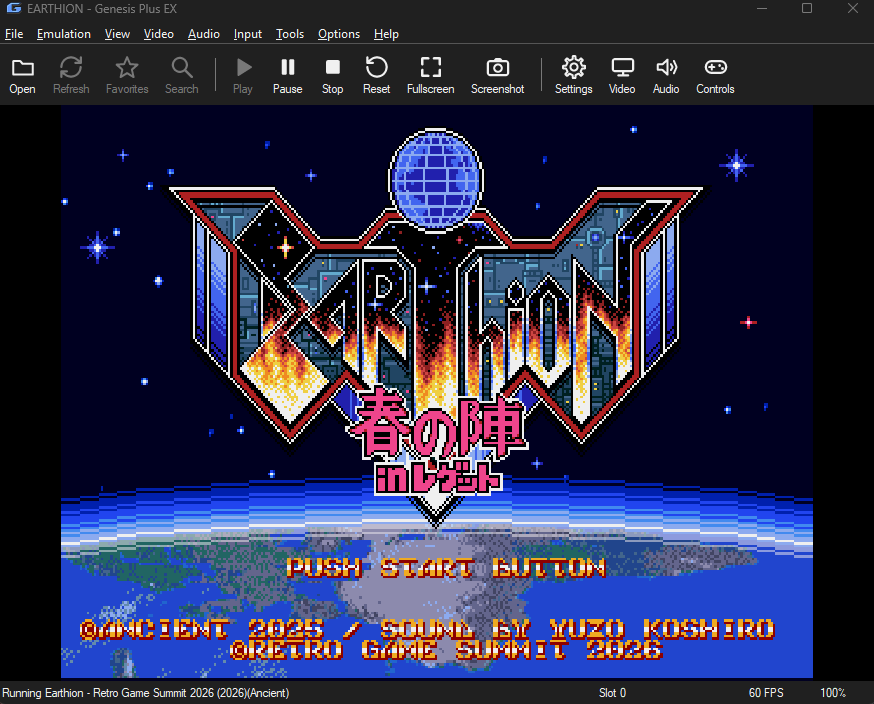
Les changements:
Games
– Paprium: the game’s cartridge chip is emulated in software, hooked in from outside the core. The Paprium support is by BillyTimeGames (Genesis-Plus-GX-Expanded-Rom-Size fork).
– MD+/32X+ games (for Mega Drive or 32X: a ROM with a .cue of the same name and WAV or OGG tracks) play their enhanced music. A Mega Drive game turns the MegaSD overlay on by itself; a 32X game is started from its sheet, as PicoDrive expects, and runs its sound at 44100 Hz whatever Settings > Audio > Sample Rate says (the other rates are grayed out while it runs): at 48000 Hz the music crackled. The ROM is listed, its .cue is not (this goes for MSU-MD games too).
– MSU-MD games (a ROM with a .cue and its audio .bin beside it, for Mega Drive or 32X) play their music. They need the Mega CD BIOS for the game’s region in BIOS. Open the ROM, not the .cue.
– Games in a .zip or .7z: a cartridge game that is not the first file of the archive (a ROM beside a soundtrack or a manual) now loads, and Paprium also reads its soundtrack from the archive. Mega CD discs (a .cue with its tracks, a .chd or an .iso) and MD+/32X+ games (the ROM, its .cue and the audio) load too: the archive is unpacked whole to a temporary folder while the game plays, and the folder is removed when it closes. The 7z reader now decodes the Delta and branch filters too. Note: a game kept in an archive like this takes much longer to start (the whole archive, audio and disc tracks included, is unpacked first), so it is better kept unpacked in a folder.
– A ROM with a .cue of the same name that lists audio tracks only (all the tracks in one .bin, as MSU-MD games have), in a .zip or .7z, is started as a game with music; before it was taken for a Mega CD disc and showed the Mega CD player.
– A Mega CD .cue sheet whose FILE line names its data file without the extension (FILE « Game » BINARY for Game.bin) now loads; before, the disc showed a black screen.
– A .cue or .chd that cannot be read as a disc (its track files are missing) now says so; before, its text was run as a ROM and the screen stayed black.
– ROMs up to 96 MB (the limit was 32 MB; this takes the large Sega Channel Revival images).
– File > Run Mega CD BIOS (USA, Europe, Japan): the BIOS on its own, with no disc.
– Controls > Player 1 / Player 2 > Allow Opposing Directions: lets Left and Right, or Up and Down, be held together (a real pad cannot do it, so only one of the two reaches the game unless this is ticked).
– Tools > Fix Checksum… and a second, header-range checksum in ROM Info.
– Emulate Mega CD Disc Latency is on at first, as in Genesis Plus GX (a CD game can show a black screen without the real drive’s delay).
– A Mega CD game that fails to start because its BIOS is missing now shows a message naming the BIOS file it needs (for example bios_CD_U.bin) and the BIOS folder to put it in.
Sega Pico
– The voices of the games play: the console’s speech chip is made in the program (from PicoDrive’s), as the Genesis Plus GX core leaves it out.
– Page Down and Page Up (Input > Hotkeys) turn to the previous and next page of the storybook, up to page 7. LB and RB do it on an Xbox pad.
– Default controls: D-pad = arrow keys / pad D-pad or left stick; red button = Z, X or C, the right mouse button, or the pad’s face buttons; pen = the mouse (left button), or the right stick with RT / R2 / R3 / Start to touch; previous / next page = Page Down / Page Up, or LB / RB (L1 / R1 on a PlayStation pad, L / R on a Switch pad: the same places on any pad).
– A Storyware window shows the open page as big as its picture, and opens with the closed book when the game starts. The pictures are your own scans in Images/Pico-Storyware/
– The pen is the mouse: over the game it is on the pad, where the game draws its own pointer; over the Storyware window it is on the book’s page, so what is printed in the book can be clicked. The right stick of a gamepad moves the pen too (RT, a press of the stick or Start touches with it).
– The D-pad and the red button follow Player 1’s D-pad and A, B or C button.
– The mouse pointer is hidden over the game, and the gamepad hotkeys on the right stick, Fast Forward and Rewind are off.
– The Storyware window goes with the program’s window when it is minimized or brought back, and bringing the Storyware window back from the taskbar brings the program’s window back too.
Themes
– Seven new colored dark themes: Sapphire, Ruby, Emerald, Amethyst, Amber, Aquamarine and Diamond (View > Theme, or Settings > General). Backgrounds, text boxes, lists, menus, toolbar, title bar (Windows 11), buttons, drop-downs, the back-to-top button and the scroll bars of lists and text boxes follow the theme.
– The Style and Theme choices keep the View menu open, like the other View choices.
Debugger
– One Debugger window (Tools > Debugger…) with tabs (Memory, VDP, Sound, CPU, RAM Search, RAM Watch) and a View menu; its own taskbar button.
– CPU Debugger: breakpoints on execute, read and write, step into / over / out, run to cursor, disassembly, registers and a call stack for the 68000, and for a 32X game also the Master and Slave SH-2.
– Memory Viewer (hex, every memory can be edited), VDP Viewer (registers, palette, tiles, planes, sprites, scroll plots), Sound Viewer (FM envelopes, PSG, PCM, 32X PWM) and CPU Viewer.
– RAM Search and RAM Watch, also for the 32X SDRAM; a RAM Watch list is opened and saved from the RAM Watch tab (Open… / Save…, the .wch format of Gens).
– A tooltip on every control of the debug windows.
– Credit: the debug tools are a port of gpgx_debugger by Vladimir Kononovich (lab313ru).
Languages
– Options > Language loads translations from Languages/*.po (UTF-8, the gettext format). Only English ships; Languages/Template.pot is the template, so the community can make translations, for example with Poedit. A text left untranslated stays English.
– Windows made for English are fitted to longer text: buttons, labels, check boxes and drop-downs widen, dialogs grow, the Controls and Settings windows stretch.
– tools/make_pot.py makes the template again from the source.
Deinterlacing
– Video > Visual Effects > Deinterlacing: in a game that uses the 448-line interlaced mode (Sonic the Hedgehog 2 in 2P Vs. mode, Ys III, Air Strike Patrol …) the graphics processor draws both fields of the picture from the same moment in every frame, so nothing that moves is combed. It gives a cleaner picture than the Interlaced Mode of Genesis Plus GX. It does not touch other games. While it is on, Interlaced Mode is not used; it keeps your choice for when you switch Deinterlacing off.
Folders and Settings
– Settings > General > Data Folders…: choose where each folder beside the program is (BIOS, Cheats, Images, Languages, Profiles, Recordings, Saves, Screenshots, Shaders, States; by name), with a path box and a … button for each and a Defaults button. Files already in an old place are not moved.
– Images is a new folder beside the program: it holds Covers, Bezels and Pico-Storyware (the pages of Sega Pico books). If you used an older version, move your Covers and Bezels folders into the new Images folder.
– When the program’s folder cannot be written to (for example Program Files), settings, saves and the other data are kept in %LOCALAPPDATA%\Genesis Plus EX instead of asking you to move the program.
– Scan Subfolders moved into the ROM Directories window.
– File > Change Disc… (it was Insert Disc).
Controllers
– Controller layouts for DirectInput pads come from SDL’s game controller database (866 Windows pads, found by USB vendor and product id), on top of the maker’s layout for Sony and Nintendo pads.
– A trigger that is an analog axis can be assigned like a button (it shows as Axis Z+, Axis RX- …).
– Controls > Test Keys now names every pad button or axis the pad reports as pressed, mapped or not.
– The Controls window refreshes its device list by itself when a pad is plugged in or out.
– A pad button that is stuck is left out while listening for a button, so the others can be assigned.
– Switching between an Xbox pad and another kind of pad (PlayStation, Switch, a generic joystick) now gives the new pad its own default buttons, unless you had customized them.
– Settings, profiles and gamepad hotkeys are read and written with 64-bit button masks; files of earlier versions load as they were.
– Credit: the layouts are from SDL_GameControllerDB (zlib license, Copyright (C) 1997-2025 Sam Lantinga and the contributors of the database).
Picture
– Console Badge on Covers: a small coloured tag (MD, MCD, 32X, SMS, GG, SG, PICO) in the corner of each cover in the grid view, to tell the consoles apart. It can be turned off in Settings > General.
– Video > Window Size now goes up to 10x (it was 6x), and the window may be larger than the screen. A window dragged to a size keeps it when a game is loaded or closed, until a size is chosen again in Window Size. A Window Size you chose is kept when the program starts on a screen that is too small for it (it was lowered and saved); the top left of the window stays on the screen. The first run, with no size chosen yet, still opens at the size that fits.
– In the Video menu, the choices in Render Filter, Visual Effects, Scanlines, NTSC Filter, Aspect Ratio, Rotation and Borders keep the menu open after a click, like the View menu’s.
– Video > Picture Adjustments has a Brightness slider at the top (-50% to +50%).
– The mouse buttons did not reach the game with the Direct3D 11 renderer (the Mega Mouse, the light guns, the Sega Pico pen and red button, the Graphic Board pen); they do now.
– Show Light Gun Crosshair is on by default.
– Confine Mouse to the Picture: pressing the Windows key or Alt+Tab lets the pointer go until you click in the picture (it was held again at once, so after the Windows key the toolbar could not be reached).
– Hide Mouse Pointer has a new choice, Always, below Never.
– VSync with the Direct3D 11 renderer now waits for the display in the swap chain itself (a real VSync); the other renderers still wait for the Windows compositor. Still skipped for a frame whenever the sound buffer runs low.
– Skip Intro on Launch: the tooltip and the User Guide say the seconds are seconds of game time, which take much less real time.
– Video > Rotation: the picture turned by 90, 180 or 270 degrees, for games made to be played with the screen on its side.
– More render filters: MMPX 2x and MMPX Enhanced 2x (MMPX by Morgan McGuire and Mara Gagiu; Enhanced by CrashGG), 2x versions of Lanczos, Catmull-Rom, B-Spline, Mitchell, Sharp Bilinear and LCD Grid, and 4xSaI, Super 4xSaI, Super Eagle 4x, Eagle 4x and Scale4x.
Fixes and Small Changes
– Accented text in menus and the status bar is converted explicitly from UTF-8, whatever the code page of Windows is.
– Game names with Chinese, Japanese or accented letters show correctly in the game list and the grid (they were shown as other characters).
– Save-state buffers have room for Paprium’s chip on top of the core’s worst case.
– A save state remembers the checksum of the ROM it was made from: loading it into a different ROM (two files with one name share their saves) asks first instead of crashing the game.
– Open Game Folders submenu shows the game’s ROM in Explorer and opens its saves, states and cheats folders.
– File > Open ROM… starts in the ROMs folder beside the program when no ROM directory is set (it was Documents).
– Command line: –config FILE uses another settings file, and –profile NAME a controls profile.
– Refresh (toolbar and right-click menu) looks at every file again, instead of using the saved game list.
– The File Type column of the game list tells what is in an archive, then the archive: MD (ZIP), 32X (7Z), MCD (ZIP).
– The filter bar has a Filters: label, its button is Reset (as wide as the search bar’s Close) and both buttons have tooltips.
– The log is far more complete: the machine, the whole settings file, a report for each game and a summary when it closes.
– While the game is paused, each press of the rewind key goes back one frame (held longer, frame after frame), and Tab advances one frame like the frame button advance key (\).